Canada’s Managed Decline, with Chris Scott of the Whistle Stop Cafe
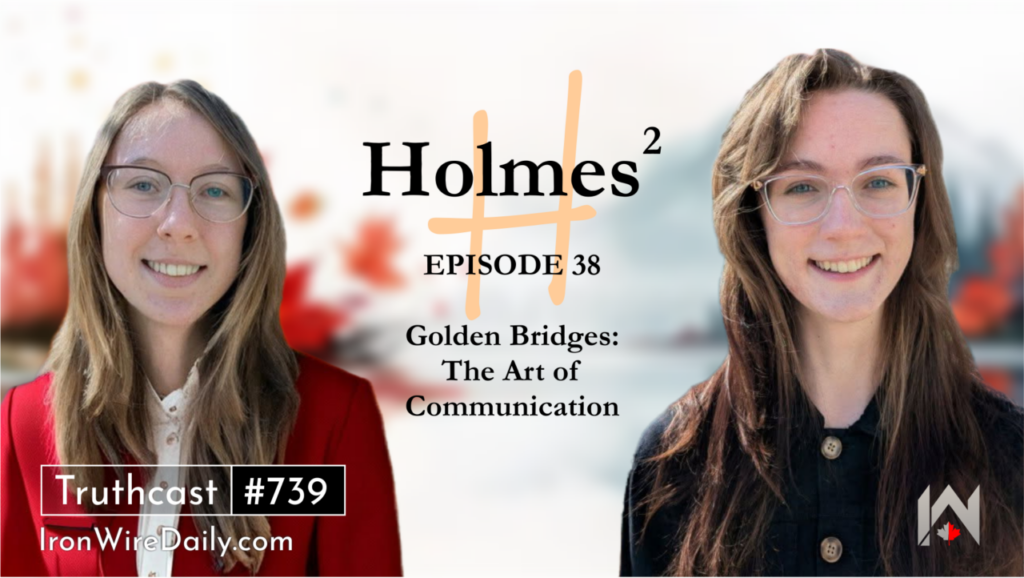
Madison and Maycee Holmes
Canada is in a state of managed decline, with an ever weakening dollar, a crashing economy and cultural attacks on our identity via immigration, DEI, and the trans agenda.
Chris Scott of the Whistle Stop Cafe has been fighting tyranny since 2020, and describes fighting the government as ‘swimming upriver against the current’. But, like many, he refuses to quit until our rights are restored.
Want more Holmes?
Find them on Substack, Rumble and YouTube
You can also contact the Holmes sisters directly at Connect@at-home-with-holmes.com
(0:00 - 0:03) Hi, everybody. I'm Madison Holmes. And I'm Maycee Holmes. (0:04 - 0:13) And you're watching Holmes Squared. And for today's episode, we have Alberta Royalty. This is Alberta Royalty. (0:13 - 0:20) And it's not just Alberta, though, because... It's Canadian Royalty. It's Canadian Royalty. And even the Netherlands know who this man is. (0:21 - 0:32) This is Chris Scott from the Whistle Stop Cafe. And I will have Maycee do a little bit of an intro. This will be a big one, because this man has his hands in many different pots. (0:32 - 0:46) And he has done a lot for the Canadian fight, the Canadian battle, doing freedoms across, even Alberta Independence, sure. But even just generally before that, it was regarding Canada. And even in his own life. (0:47 - 0:58) So we have Chris Scott here with us. And the interesting part about Chris is that he worked the iron actually, which is what our dad worked as well. So a bit of a, I don't know, some sort of bond. (0:58 - 1:03) What was that? I can't believe. Oh, we appreciate that energy. But so he opened up his business. (1:03 - 1:17) We know him from the Whistle Stop Cafe. And when we first heard about Chris, it was actually his story based on what was going on during COVID when the government were doing their crackdowns on businesses. And Chris was just like, no, I'm having none of that. (1:17 - 1:37) And then, as he said yesterday in the rally, that he basically started getting arrested for serving people coffee. So he has been fighting the good fight like against the federal government in the courts for a while, actually. And then slowly but surely, he has become a huge educational voice against government overreach. (1:37 - 2:00) And also towards how do we start thinking about how to actually sustain ourselves in our sovereignty, not just Alberta, but if we can do it in Alberta, potentially the rest of Canada could even follow suit if they so choose. So if you feel like I've missed anything, Chris, just go ahead and let our audience know a bit more about yourself. No, thanks. (2:00 - 2:08) And thanks for having me on. That was pretty accurate. The one small correction is it's not the federal government that I'm fighting. (2:08 - 2:24) It's been the provincial government, which feels really strange because I've got a lot of friends who are MLAs. You know, I was always friendly with the Premier, although not the first time I met her. I didn't even talk to her for like 45 minutes sitting beside her for supper because I was mad at her from the pre-gift. (2:25 - 2:37) Anyway, yeah, it is weird to be in that situation. It was a lot easier to fight the Kenny government because they were complete. I'm not sure what word am I allowed to use? I guess I'll use tyrant in this case. (2:37 - 3:06) Never been tyrant, but it was much easier to focus my energy on dragging them through court than it is the Smith government. However, the Smith government, with the amount of friends I have there, they still haven't really taken any steps at all to remedy the wrongs that were done to business owners in this province over that period. Yeah, so what I mean, this is kind of a large question, but we can kind of hop into it right off the hop. (3:06 - 3:44) So what has been your experience so far in fighting the provincial government? Because I feel like you are getting kind of a bit of a firsthand take now that not a lot of actual burdened citizens actually experience in their day to day. It's not like everybody can, is going to court with them all times and really being enmeshed in the beast that is not only just like the provincial courts, but also just the overall system as a whole. Well, the system isn't designed to either protect us or serve us in these types of things. (3:44 - 4:03) I guess I would liken it to, have you ever gone canoeing and your canoes capsized in a river or something like that, and then you got to swim up river to shore a little bit. Have you ever done that? Fighting the government is like swimming up river against the current. It's like, it's almost impossible. (4:03 - 4:17) It is impossible unless you have some help from a bunch of people or some heavy equipment. My heavy equipment is Jeff Rath with Rath and Company. The guy's an absolute powerhouse and he's my lawyer along with Eva Chipiuk. (4:18 - 4:52) So it's slow, it's draining, it's frustrating, it's extremely expensive. And the frustration actually ends up with a guy being a little bit angry because it shouldn't be that difficult for citizens to get the government to make right what they've done wrong, especially considering that a judge has already said that their actions were illegal and even the premier said that their actions were, you know, they were not correct. So that's what it's like. (4:52 - 5:00) It's like swimming up current. And that reminds me of the Ingram decision. Exactly, yeah, exactly. (5:00 - 5:11) Which I don't know if everybody would know about that because that was local here in Alberta and not a lot of people do. This is a Canada-wide show. This is the Iron Wire Daily. (5:11 - 5:28) Iron Wire Daily is with Will Dove who was formerly the Strong and Free podcast. And he actually spoke with you, me and Maycee, at the first We Unify conference. And I believe he spoke again with you this year. (5:29 - 6:07) So this whole show is for Canada-wide. So if you want to tell everybody a little bit of what that Ingram decision was and what that little win was. So the Ingram decision was Justice Barbara Romaine, she ruled in the case of Rebecca Ingram versus Her Majesty, His Majesty the King and Right of Alberta, that the COVID mandates and restrictions that were enacted by, or not enacted, but they were settled by Deena Hinshaw, our Chief Medical Officer of Health, were done ultra various of the Public Health Act of Alberta. (6:07 - 6:18) So basically what happened is there's legislation in each of our provinces that allow the government to do these things. So in Alberta, they use the Alberta Public Health Act. In Ontario, they use the Public Health Act of Ontario and yada, yada. (6:18 - 6:45) In our case, what was happening is our CMOH, Deena Hinshaw, was going to cabinet and presenting like a buffet of different things that they could do. So medium restrictions, high restrictions, low restrictions or no restrictions and letting cabinet choose what they wanted to do. And it's different if the CMOH says, under my advice as a medical practitioner, this is what we need to do to protect the health of Albertans. (6:45 - 6:57) That's one thing. Going to them and saying, we can do all these different things, not mentioning really health at all and focussing only on the political outcomes of the mandates, that's not allowed. That's illegal. (6:58 - 7:21) So the government of Alberta, cabinet and Jason Kenney, usurped the authority of the CMOH to put rules like that in place to protect the health of Albertans. And it was called out in court in the stuff that I'm doing right now. The judge says, well, it is possible and it looks like there's evidence of malfeasance within the government. (7:21 - 7:39) Like the government didn't act in good faith because they either knew or they ought to have known the legislation that they were working with. So the government's not getting a pass on this. So because the restrictions were done that way, Justice Romaine said they're illegal. (7:39 - 8:04) And the funny thing is, the really ironic part is, the reason why that happened was because the NDP and some NDP activist people actually took the provincial government to court to put masks back on children in schools. They said, no, this is crap. Children should be wearing masks in schools and we're going to sue you over it. (8:04 - 8:09) So they did. And they pointed this out. They pointed out that the restrictions weren't enacted the proper way. (8:10 - 8:21) And the judge is like, OK, well, yeah, then that was illegal. And oh, by the way, all of them were. So it was the NDP and their allies that actually brought the mandates down in Alberta. (8:23 - 8:40) That's that's beautiful irony. Yeah, it was awesome. It reminds me of one of the Jeff Raff spoke with you yesterday at the APP rally for Alberta independence, which we promoted on this show on our last episode. (8:40 - 8:59) And one of the things that he was really toting and why this even this Ingram decision and is the reason why people really need to be involved. It's like even despite a decision like that and where, like you said, it gets acknowledged that they did wrong. There are still so many downstream consequences that haven't been remedied. (8:59 - 9:27) And that's why things like the AGM, which Jeff Rath was advocating for, the UCP AGM is where, you know, you can vote on policies to help force decisions like even the Davidson report. A bunch of CAs had signed a little motion saying we should endorse this, like everything that was recommended in that report should be implemented by the government. But even despite that, nothing really happened. (9:28 - 9:53) So this year, you know, me and Maycee and the family have been going through the policies that are supposed to show up at the AGM. And one of them was an official policy to implement all of the recommendations in the Davidson report. And it's just, again, but real people like you have to write those policies and send them to the UCP board and then go to the AGM, which is expensive, in like three days, and then do the voting. (9:53 - 10:05) Because even despite a court decision, you get one win. Politics is an everyday effort, which is a lot of what you said also at the APP rally yesterday. Right, yeah. (10:05 - 10:42) Yeah, it's a kind of a hands-on thing, right? I spent the majority of my adult life letting other people steer the bus of my future, and it didn't work out well. So we can't do that anymore. My question is, like, before we, because you're largely involved into the specific Alberta independence movement, but before we kind of shift into that, there was a lot of process that probably led to you even coming to the mentality of, okay, no, this is the way forward, right? But I'm sure there were a lot of ebbs and flows in terms of how that was even going to come to be the final solution. (10:42 - 11:36) And so my question was, is even with things like, because when our family first got involved, we got introduced via TBA, and then it was like, okay, here's what an AGM is in the first place, right? And then you're trying to figure out how to, like, you have been tackling the provincial government, right? But then you've also been to an AG, like various AGMs, and you also understand how the policy, like how the policy system works in terms of what it is that you want the government to do, right? But because you've been, as you exclaimed already, the Jason Kenney government was a lot kind of like difficult to deal with, and so is the Danielle Smith one. But it's like, what kind of led you to thinking that independence was the way forward based on at first trying through our system, just straight up the Alberta system, but we're still in Canada. Like, what kind of made you, like, led you to the fact that it's like, no, I don't think that this is going to work anymore. (11:36 - 11:59) Like, because there's no, there's definitely no way of saying that we all and yourself included haven't been trying it. So a problem like this is like, it's like an onion that has a bad spot on it. There's a problem on this onion and you start peeling the layers back to get to where there's no problem anymore and you can, your problem's gone. (11:59 - 12:13) You have a good onion. That's what this is like. So my problem was, the government was interfering in my life and to the point where it was causing me severe financial hardship. (12:14 - 12:29) And then not only did they do that, but they use the system that's supposed to be unbiased and neutral. They use that system to punish me. So how do we fix that? And, you know, there's all sorts of people came up with all sorts of ideas. (12:29 - 12:50) Some of them were completely bonkers. Some of them sounded reasonable. But at the end of the day, when you're thinking about your rights and your freedoms, the first question you have to ask is, where do these come from? Are they being given to me or do I already have them? And I say, I already have them. (12:50 - 12:54) When I was born, I was born with those rights. They come from God. They don't come from the government. (12:54 - 13:17) And so you go back and you look through our our constitution, our Charter of Rights and Freedoms, and you start, you read it and you realise, wait a minute. This is written as if the government is telling me what rights I have. But they're also telling me that I only have them if they think I should have them or I don't have them if they say I shouldn't. (13:17 - 13:21) And we saw this. I felt this. I lived this during the pandemic. (13:21 - 13:31) I lived through a time when a government bureaucrat said, you need to do this because of this. And I said, I don't agree with you. Show me the evidence. (13:32 - 13:41) If you show me the evidence and you can convince me, I'll agree with you. And they said, the evidence is that I say so. I'm like, well, that's not good enough because you're a dummy. (13:42 - 14:01) So then I started reaching out and I started looking into these things. And I brought people like Dr. Peter McCullough on my podcast, Dr. Paul Alexander, Roger Hodkinson, Dr. Dennis Modry and many, many others that supported my position that what we're doing isn't right. It's causing more harm than good. (14:02 - 14:14) And we should stop or at least look and see what we're doing. Dr. Gary Davidson was another one in the beginning. He actually came to my cafe the very first week that I was open against restrictions. (14:14 - 14:20) And he said, this is who I am. This is what's going on in the hospitals. You're absolutely right. (14:20 - 14:28) We shouldn't be doing this and don't stop pushing back. And so that has stuck with me from then on. I'll never forget it. (14:28 - 14:39) And it kept me looking for answers. But as I look for answers, I found that it didn't matter. It didn't matter how much evidence I brought, how much facts I had or statistics to back up my claim. (14:40 - 14:51) What was happening is we were getting into court and the judges were saying, well, I'm not a scientist. So I don't have time to go through all these things. I'm going to defer to the expert who is the CMOH, who I disagree with. (14:52 - 15:05) And that's why people lost their cases in court, trying to fight the mandates and restrictions, because the governments were deferring to them. Well, that doesn't make any sense. Then where's our rights and who's advocating for us and who protects us? Then I started thinking about a little deeper. (15:06 - 15:22) I thought, well, AHS shows up at my restaurant to shut me down because the position of the government is that I'm killing everybody. So I need to shut down. So they get the RCMP to come and defend them and be their men with guns. (15:22 - 15:28) I have a different position. I also need to get to court. Who do I have to defend me? I have nobody. (15:28 - 15:56) I have nobody to advocate for me, nobody to defend me, nobody to defend my rights. Then I thought, well, if I can't defend my rights and the government can decide when I have them, do I really have them? And the answer is no, you don't. So everything else aside, and this is leading up into an independent Alberta, the Constitution and the Charter of Rights and Freedoms that we're taught as children are the reason why we're free, why this is the best country to live in, we'll always be free, blah, blah, blah. (15:58 - 16:23) They are not what we were told and that needs to change. So if it needs to change, you have to ask yourself, OK, well, how do we make this change happen? Then you go and you look into the Charter of the Constitution, the amending formula, and you realise that it's actually impossible. And the reason why it's impossible is because we were never actually intended to be free the way we're taught. (16:23 - 17:04) We were intended to be ruled and governed and kept in order and control so that the government and the crown could do their thing. And I wrote a very long, long blog post about this. And the title of it is What Business Have Ye With Me, Your Majesty? And the premise of that is that, you know, after you get through all these layers of the onion, you realise that Canada was not a grassroots movement based on unity in the people of the land at the time in which they decided that they wanted to be a free country. (17:05 - 17:34) It was quite literally a group of elite acting on behalf of the imperialistic crown, who at the time was, they were extending their tendrils all over the world. You know, India, Jamaica, Israel, all all over the world. It was this group of elite people that went to London and sat down with the representative of Queen Victoria to draft a constitution, which was the British North America Act 1867. (17:35 - 18:01) And the purpose of that was so that they could govern the colonies in Canada through the governor general, but allow the people to be semi autonomous and that they enacted their own legislation and things like that. And then it clicked. Why our constitution is the way it is, as opposed to the United States Constitution, the United States, their slogan is life, liberty, liberty in the pursuit of happiness. (18:01 - 18:12) They kicked the British ass out of their country. They declared independence. They wrote a constitution of the people for the people they put provisions so that they could defend their rights. (18:12 - 18:23) They defend themselves from the government with a well-regulated militia. They put right to free speech was which is essential in a free and democratic society. And actually, democracy is never mentioned in their constitution, by the way. (18:23 - 18:34) And they also put in there the right to bear arms. So if the government's going to have guns, well, then the citizens are going to have guns, too, because we never want citizens to be tyrannised by government. It wasn't like that. (18:34 - 19:00) It was completely different. And I theorised in that in that blog that it wasn't a, you know, an organic building of a country in a declaration of independence. It was a calculated business deal by the crown in order to prevent what was then the colonies of Western Canada and Upper Canada from being absorbed by the fast growing Republican state to the south. (19:00 - 19:18) And I spent hours and hours and hours researching this, going through tonnes of stuff. And I found that my theory was sound. So that's why after all of this, it's not like Alberta just needs to change some laws and we're going to fix this going forward. (19:19 - 19:27) Davidson recommendations, absolutely fantastic. They're a very good start. But the very foundation of it, our constitution has to change. (19:27 - 20:02) And the only way we can actually do it is if we start from scratch and the people write a constitution that is us telling the government how they may behave, not the government telling us how we may behave. And an independent Alberta is the only way to do that. And one of the reasons why is because I don't know if people know the actual, the numbers in our constitution related to not just equalisation, but even the Senate, just because of the disproportional. (20:03 - 20:41) And it is disproportional even regarding the Senate. So you look at the actual legal format of what it would take for, let's say us to request that they amend either equalisation, maybe the criminal code, whatever, even to add something, if not to remove something. There are minimum four steps and all of those four steps are really difficult, basically impossible because of here, specifically in Alberta, because we don't have the same numbers and people in those legislative positions because it was designed for the West not to have those numbers. (20:42 - 21:16) Yeah, I wanted to ask you, Chris, because you every time that you're doing a podcast now or like on your show, you bring up a book that you've been reading. And I actually wanted you to kind of share a little bit, like, is this from this book as well? Like where you've been getting your information about what you learned about the British North American Act, but also what you learned from because we've been at various meetings now. And you guys always continue to bring up the central quote, which apparently came from this book that you've been reading about the fact that the West was purposefully set up to basically just be a resource grab by the East. (21:17 - 21:31) So that's this book. That is Clifford Sifton, Volume Two: A Lonely Eminence, or The Lonely Eminence. And this is 1901 to 1929. (21:31 - 22:03) And the quote that you're referring to is on page 95. And it's in the second half of the first paragraph. And the quote is, now this is Clifford Sifton speaking in Manitoba in 1903 to basically a group of people from the West as to why Eastern Canada wanted the colonies of Western Canada of the West to join confederation. (22:03 - 22:28) So the quote is, we all desire, every patriotic Canadian desires that the great trade of the prairie shall go to enrich our own people in the East to build up the factories and the workshops of Eastern Canada and to contribute in every legitimate way to the prosperity. So that was Clifford Sifton, Minister of the Interior. And that quote kind of says it all. (22:28 - 22:42) You mentioned that open a change of constitution threshold is very high. You're correct. The criteria is you need seven of 10 provinces representing a 50% plus one of the population. (22:43 - 22:50) You need a majority of the Senate. You need a majority vote in the House of Commons. And the Supreme Court needs to vote a majority as well. (22:51 - 23:28) And considering what Clifford Sifton says and considering the issues around, not the issues, but the way our confederation was done and why it was done, you come to the realisation it was never designed to be amended so that the West could get a better deal. We've always been, we're supposed to be a resource colony, underrepresented. We have less representation in parliament per person in Alberta, quite a bit less than a lot of other provinces. (23:28 - 23:46) We have less senators per person. And we have, I think there's only one or two Supreme Court justices from the West. So it's always been designed, by design, that the rest of Canada was to support what the real Canada was, which is Ontario and Quebec, right? So that, yeah. (23:46 - 24:16) And there's another part of it. I used to think, hey, great, maybe we can use the referendum on independence in Alberta as leverage to force the other provinces and the federal government to open the constitution, hold a convention and fix these things. Then I realised, after considering that our prime minister in his book, Values, mentions that freedoms need to be tightly reined and leashed so that we can survive and the ordinary person, there will be some pain for the ordinary person. (24:16 - 24:28) Of course, he thinks he's extraordinary, but it's all for the greater good. And now he's talking about the notwithstanding clause and how maybe we should just ignore it. Maybe we shouldn't use that anymore. (24:28 - 24:42) Well, the notwithstanding clause was the only reason why Alberta and seven other provinces decided to join confederation. We, pardon me, decided to sign the 1982 Constitution Act when it was repatriated. Alberta didn't want to. (24:42 - 24:50) We realised that it sucked and it was going to give the federal government too much power, which was never the intention. It wasn't supposed to be that way. And we said, no. (24:50 - 25:26) So they added the notwithstanding clause and then we begrudgingly said, and the convention was, you know, it was passed into law. But yeah, it's a really big onion and it's a really long conversation. And unless you have some time or you have the desire to figure it out, it's really easy to just get lost in the idea that, oh, it's a free country, isn't it? Right? Yeah, that's actually, I'm curious why that, why were you invited to speak to the We Unify conference? Like they're all about reclaiming Canada. (25:26 - 25:45) That's the point of We Unify. So what did you feel was your place? Because everybody also knew that you were, you know, you're an Alberta advocate. So what was it, where does that fit in that sort of conversation in the grander scheme of things? Because that's not an Alberta conference. (25:47 - 26:02) So it's kind of evolved over the years. The first We Unify conferences were like taking back our rights, you know, putting government in their place, getting involved in civics, learning how to participate in civics so that we can steer the ship, those kinds of things. But it's changed a little bit. (26:02 - 26:07) It's still about that. And I wasn't at this year's We Unify conference. I missed it. (26:07 - 26:27) But my place in that, like if you want to zoom out and look and put it in the perspective of Canada. Canada right now, and this is in my blog about Alberta independence that I published about a month and a half ago or so. We're in what I refer to as managed decline. (26:28 - 26:40) Our institutions, our economy, our social structure is all being weakened with certain policy. And the country is on its way down. We've lost 50% of the value of our dollar in the last 10 years. (26:41 - 26:51) That on its own should be a huge wake up call to everybody in this country. Venezuela went through this not too long ago. We all watched what happened to Venezuela on the news. (26:51 - 26:59) Mind you, you girls are probably a little too young back then, but I know you know what happened. They were in a managed decline where their government said, you know, everything's fine. It's fine. (26:59 - 27:05) We're going to be great. Our GDP is up, you know, our economy is growing, blah, blah, blah. And the next thing you know, they're burning their money in the streets. (27:06 - 27:12) Like, yeah, they collapsed. And Canada, we're following the same trajectory. So our dollar is tanking. (27:12 - 27:21) Our economy is tanking. Our federal bureaucrats and politicians are making decisions that are not in our best interest. They actually weaken our country and they weaken our economy. (27:21 - 27:45) And they're celebrating it, glossing it over, calling it, you know, whatever they're calling it. Inclusivity or they're calling it, you know, they're putting rosy, nice names on it. Our society is devolving into a time where we see people who teach elementary school celebrating a father getting murdered on a pod on TV. (27:45 - 28:10) Like they're celebrating that. We have completely turned away from God and the idea that our moral compass is based on something other than our own flawed selves. We've we've sell it, not we've not just allowed the murder of babies, but we've actually seen people celebrating it and championing it as if it's some sort of a philosophical, moral, you know, victory to do these things. (28:10 - 28:25) So there's many indicators that show our country is on the way down. Another one of them, and I'll be called racist for this, is unchecked immigration. The biggest, most powerful empires on the face of this planet, every single one of them. (28:26 - 28:46) The number one thing that happened prior to their fall was they threw their borders open. They diluted their culture, not that the people that were coming in were necessarily bad. But when you dilute the culture and the values and the morals of a country with other non-aligned values and morals to the point where you can't recognise it anymore, you don't have your country anymore. (28:46 - 28:59) The Roman Empire, the Greek Empire, the all of these big empires were taught about when we're kids. They all fell because they couldn't maintain their culture, which built the empire. Canada is doing that as well. (28:59 - 29:25) So I say all this because I recognise that it's not just Alberta that has a problem. But I also say, and I've lived this, if you know something is wrong and you using a, I'll use a phrase from, or maybe I won't use that phrase. If you lay it on the line and you stick your neck out, you stand up and you say, this is wrong. (29:25 - 29:46) We need to change it. Very often one person can ignite something and make a change, right? We saw what happened to Charlie Kirk. And that was a huge ripple effect across this entire planet of people that decided, you know what? No, I'm going to stand up and speak truth now because this can't continue. (29:46 - 29:55) So now I think about that from the perspective of an Albertan. Alberta has unbelievable resources. We have agriculture. (29:56 - 30:03) We have rare earth minerals. We have a bustling tech industry. We do textiles here. (30:03 - 30:06) You name it, we have it. We have water. We have energy. (30:06 - 30:21) We have all of the things. We have timber, all the things we need to be prosperous. We also have a constitution and a legal pathway to independence, which is through the Clarity Act recognised by the Supreme Court in the 90s after the Quebec referendum or pardon me, early 2000s. (30:22 - 30:34) So we can stand up. And when we do, when Alberta stands up and says, no, Canada, you go into managed decline and we're not going with you. The first thing that's going to happen is the Canadian dollar is going to tank. (30:35 - 30:45) The second thing that's going to happen is the federal government isn't going to have money to buy votes from the east anymore. They're not going to be able to prop up the Atlantic maritime provinces. They're not going to be able to send Quebec money, which apparently doesn't want our money anyway. (30:45 - 31:02) They're not going to be able to use Alberta's wealth and resources to buy favour buying votes in the west and the east, pardon me. So that's going to cause the east to be like, well, you're not giving us money. Well, now maybe we're going to start thinking about these anti-human policies you put in that are preventing us from developing our resources. (31:03 - 31:10) Quebec sits on huge natural gas resources. Newfoundland, Labrador, same thing. Massive offshore oil. (31:10 - 31:25) My friend Brian Peckford, he actually fought for access to that back in the 70s and 80s. The maritime provinces should have the biggest tourism and fishing industry in the country because it's beautiful over there. They could do those things, but they don't because they don't have to. (31:25 - 31:42) So then they're going to stand up and they're going to say, we don't want these policies. The other thing that's going to happen is they're going to see Alberta successfully becoming an independent nation and they're going to realise, wait a minute, if Alberta can do that, we can do that too. Quebec, I mean, they've wanted to do that for a hundred years. (31:42 - 31:52) Anyway, the British Columbia, everywhere but the lower mainland has been talking about that for years. They don't feel like they're part of this. They don't want to go down that anti-human path. (31:53 - 32:22) So one person or one province standing up for themselves and setting an example and laying it on the line to take control of their future encourages other ones to do it as well. So when Alberta does this, the other provinces have a choice. They can remove the shackles of the federal government and prosper, or they can continue into, you know, into the path to a third world country. (32:22 - 32:37) It's really up to them. So that's why Alberta independence fits so closely in with fixing the country. Yeah, and one thing that me and Macy have shared many times on this is, again, there are so many Albertans. (32:37 - 32:55) They do love Canada. And I know when they say Canada, it's not about this higher, it's not the maple syrup and it's not the flag. They really enjoy what came out in the trucker convoy, you know, that Canadian camaraderie. (32:56 - 33:27) And they, I know like you're saying that if we got to separate, that we would have enough on our own two feet again, there's that document, the values and the financial budget that APP came out with. That's the one that has so many specific outlines about where the money would get allocated and where we would be benefited. That I know Albertans would want to help, say Saskatchewan for succeeding next. (33:27 - 33:43) And then even Quebec might want to do their thing because even them, they're not a have not province. I mean, they raise their oil two cents and then they don't qualify for the payments list because they don't, they're not, they're not in the ditch. They're doing just fine. (33:43 - 34:01) They just like qualifying, getting extra money. I mean, not even, it's just the way that the eastern upper power ups in the legislatures like to do their game, take money and give it elsewhere. But that's, I know Albertans naturally would want to help out anyway. (34:01 - 34:44) So it's like, it's not as an independent thing that we've just forgotten whatever it is that people think the Canadian identity is. That's not, that's just not how we work. AMT – That and also Maddie and I have talked about it before, where it's like, it's the, it's, it's a, you're on an aeroplane and if it's about to crash, you have to put on the mask to save yourself before you can go on and save the person next to you, right? It's like, and that's basically what Alberta is trying to figure out is how do we save ourselves in order so that way we can try and at least then we have the choice of our charity, right? It's like, it's not that we don't want to take care of our fellow neighbours and our fellow Canadians, but it's like we can barely take care of ourselves just based on the way it's been structured. (34:44 - 34:54) And it's, it's bullshit because we actually are quite capable of taking care of ourselves. We got two legs, got two arms and we can get to, and we, we get to work every day. That's our mentality. (34:55 - 35:25) And so it's just, it's frustrating when you have someone on your neck saying that you can't do a thing and it's like, then at least that way with independence, we could actually have our own choice then to be like, okay, now that our, like we've gotten ourselves off the ground, we can actually come and help and do a thing. And something that I think is very prominent that like actually not a lot of Canadians are aware of is the fact that it's like, as you mentioned, the Roman Empire and the Greek Empire, you said that this is what they taught us in school. This is not what they taught me in school. (35:25 - 35:44) I was never taught this in the sense of, of all, what does it take when an empire falls? And then how you correlate that to what's happening now, because the government's never going to teach you how to overthrow them. They're never going to teach you that, oh yeah, by the way, we're terrible too. And this is what it looks like. (35:45 - 35:51) No, they're going to do that. Oh, we're great. And the only thing that we do terrible on is now apparently is climate change. (35:51 - 36:03) And we need to kill off more people. And, oh, the residential camps and it's just all little minor things. They never tell you actually what the overlying structure and the root structure is that the problem with, with Canada. (36:04 - 36:26) Actually, Martin Armstrong, who Will interviewed on, I think, more than one occasion. He wrote a little book, which Will sent to me after one of our episodes. And it was on independence because Martin Armstrong was looking at, you know, the room after speaking at the Cornerstone event from Sean Newman, which the next one's already coming. (36:27 - 36:49) It's already tickets are all available for March. So he wrote it on after seeing the independence. Lay of the land, and he mentioned that very fact, and he went back to see what were some of the precursors and some of the things that they would do is like the immigration thing. (36:49 - 37:10) The the military and some of the police forces, they put people in there from foreign areas. That way they have no emotional connection to the people. So some higher oligarch, our empress saying, OK, I want you to go murder, you know, this coliseum of people and all of these political. (37:13 - 37:29) People that are rebelling against our our motives and just murder them, and it was very easy because they didn't know them. They're not from here. It's like even in the convoy when they had to bring in the they switched out when they switched out guards, the guards during the convoy. (37:29 - 37:40) Yeah, because because the guards that were there before, I guess the police over there before we're actually starting to go like, hey, wait, these guys are pretty cool. And it's like, nope, shoom away. In comes the new one. (37:40 - 37:47) And you're like, oh my God, this is so terrible. Yeah, so there's definitely precursors. And he did. (37:47 - 37:56) It was it was a nice break. I mean, it's not nice, but it was a concise breakdown about where we are now and the reality of it. Now, I know we can continue. (37:56 - 38:04) So this will this can be the first half. Do you agree? We're at 38 minutes. And that was that was pretty dense. (38:04 - 38:10) And I know we have more to ask about because I know you even read his article. I didn't get to finish it. So you finish it. (38:10 - 38:15) Can't say that. I know you read a portion of it. I'm I have to confess because we've been so amassed in policies. (38:15 - 38:25) There's like 300 and something something policies and our family reads all of them and ranks them all. So that's been our struggle this past week. I haven't even started. (38:26 - 38:37) We'll give you a cheat sheet. OK, well, everybody, without further ado, this is part one with Chris Scott from the Whistle Stop Cafe. Yes. (38:37 - 38:44) And so if you want to watch part two, that'll be coming out next week. So this has been Holmes Squared.