The Dutch Covid Inquiry Is Not Looking for the Truth
Across the world, the response to Covid looked strangely alike: the same lockdowns, the same shuttered schools and businesses, the same insistence that there was only one responsible course and that to question it was to put lives at risk. Country after country moved in near lockstep.
To me, that uniformity remains one of the most troubling features of those years. Measures so similar, so sweeping, and adopted so quickly are difficult to explain as dozens of governments independently reach the same conclusion. Whatever the truth behind that coordination, the Covid era cannot be understood one nation at a time. What was done to people’s freedoms — and how each country now chooses to examine it, or to look away — concerns us all. What follows is one country’s reckoning.
From a distance, the Netherlands can look like an open society settling its accounts with the pandemic.
A civil case is moving through the court in Leeuwarden. Seven citizens — one of whom has died since the case began — are suing seventeen defendants for harm they attribute to the mRNA Covid shots. The defendants are not minor figures: the former prime minister, Mark Rutte; the former health minister, Hugo de Jonge; Marion Koopmans, the virologist who sat on the team of experts advising the cabinet; Jaap van Dissel, who as head of infectious-disease control at the national health institute chaired that team — the Outbreak Management Team (OMT), which steered the country’s Covid response from January 2020 until 2022 — and was the public face of the lockdown advice; the chief executive of Pfizer, Albert Bourla; and Bill Gates. Gates argued that a Dutch court had no business judging him. The court disagreed and kept the case.1 It continues, slowly.
To a foreign reader, that reads as a country with room to ask hard questions.
It is worth pausing on what became of the man who brought the case. Arno van Kessel, one of the two lawyers behind it, spent 260 days in pre-trial detention. He was arrested in June 2025 — the day after he filed papers in the case — in an investigation into a network of self-described “sovereigns,” people who reject the authority of the state. To my mind the label sits oddly on him: his whole method was the courtroom. He is a lawyer who took the government to court, not a man who denies that courts have power over anyone. No criminal court has convicted him of anything; he remains a suspect, and a suspect only. In late February 2026 the judges suspended his detention, in part because the prosecution’s case was moving so slowly.2 By then he had been struck from the bar and could no longer stand beside his own clients. And so the lawyer who had brought that suit against Rutte, De Jonge, Koopmans, and Gates had himself been shut out of the courtroom.
Then, on 29 May 2026, the inquiry into the Corona policy opened its public hearings. And a similar picture appears.
A committee with the critics removed
For readers outside the Netherlands: a parlementaire enquête is the strongest investigative tool available to the Dutch parliament. It has the power to summon any witness, compel testimony under oath, and place the full truth on the public record. It sits closer to a US Congressional investigation or a British statutory inquiry than to an ordinary parliamentary hearing. It is the instrument a democracy turns to when normal scrutiny has failed.
This Covid inquiry has a long history, and that history is, in a sense, the whole story.
Parliament approved it almost unanimously on 4 November 2021, on a motion from Aukje de Vries — a member of parliament for the VVD, the country’s main traditional centre-right party. The committee’s mandate was broad and, on paper, exactly right: to establish the truth about what happened during the crisis and to draw lessons for the next one. It would examine the cabinet’s decisions and the reasoning behind them, the independence of the advisory bodies, how the government weighed public health against other interests and against fundamental rights, and how it treated critics of its policy.3 Truth-finding, fundamental rights, the handling of dissent — the inquiry was chartered to ask precisely the questions it now seems to avoid.
A preparatory committee was formed in 2022 to draft the research proposal. Its chair was Khadija Arib — by then one of the most respected figures in Dutch politics. She had sat in the House for 24 years and served five of them as its Speaker, re-elected to that chair in 2017 with 111 of 122 votes.
Three weeks after Arib took the Corona chair, an anonymous letter arrived accusing her of creating an unsafe working climate during her years as Speaker. An external investigation followed, built on anonymous complaints. By October 2022 she had left the House, calling the anonymous accusations “dagger thrusts” and the leadership’s conduct an abuse of power.4 Whether the timing was coincidence I cannot say. But it is a coincidence worth noticing.
The inquiry committee itself was constituted in February 2024 with nine members. It initially included parliamentarians from the two parties that had been most sharply critical of the government’s Corona policy: Forum voor Democratie (FvD) and the PVV (Party for Freedom). Both are relatively new parties, and both are routinely labeled “far-right” by the mainstream Dutch press. That political breadth did not survive.
The FvD members left after conflicts over the committee’s working methods. Gideon van Meijeren, a prominent FvD parliamentarian who joined the committee in 2025, resigned after just two weeks. A constitutional-law graduate who previously worked as a legislative lawyer at the Ministry of the Interior and at parliament’s own legislative bureau, van Meijeren knew the system from the inside. His reasons for leaving are revealing: he was not allowed to see the source documents himself, could not draft his own questions, and would not be permitted to question key figures under oath — conditions that, in his view, made genuine truth-finding impossible.5
He described a committee in which the official staff — around 20 people — decides which questions are asked, and by whom. The members were left with a subordinate role while the staff did the real work.
After the parliamentary elections of October 2025, the turnover was near total. De Kort is the only remaining original member left. What remains is a committee of five — VVD, GroenLinks-PvdA, D66, CDA, and the Markuszower group. Not one of them comes from a party that fundamentally opposed the policy under review.
The Wrong Question
Watch the first week of hearings and notice what questions are on the table, and what questions are not.
The questioning circles around whether the government acted firmly enough, early enough — whether stricter measures, taken sooner, would have spared the country more harm. The other questions never arrive: whether the state curtailed too much, whether the lockdowns did real harm of their own, whether the many people who argued for less intervention might have had a point. That conversation has no chair at this table.
Marion Koopmans was the first witness, on 29 May. She is a scientist with a reputable track record: trained as a veterinarian, she built her career on viruses that cross from animals to humans, came to lead the department of Viroscience at the Erasmus Medical Center in Rotterdam, advised the cabinet through the OMT, and advises the World Health Organization. Her frame is “One Health” — the approach that optimizes and balances the health of people, animals, and ecosystems.6 It is a frame in which the unit of concern is the population and the biosphere, not the individual and not individual liberty. Human rights, in that picture, come second.
She was allowed to state, as an authoritative expert, that the virus most likely passed from an animal to humans — and to frame the laboratory hypothesis as “a fairly political interpretation, largely from the United States.” No one pressed her. The lab-leak possibility — now treated as credible by several Western intelligence services, the FBI among them, no longer something that can simply be waved away — was left where the official narrative in the Netherlands has always kept it.7
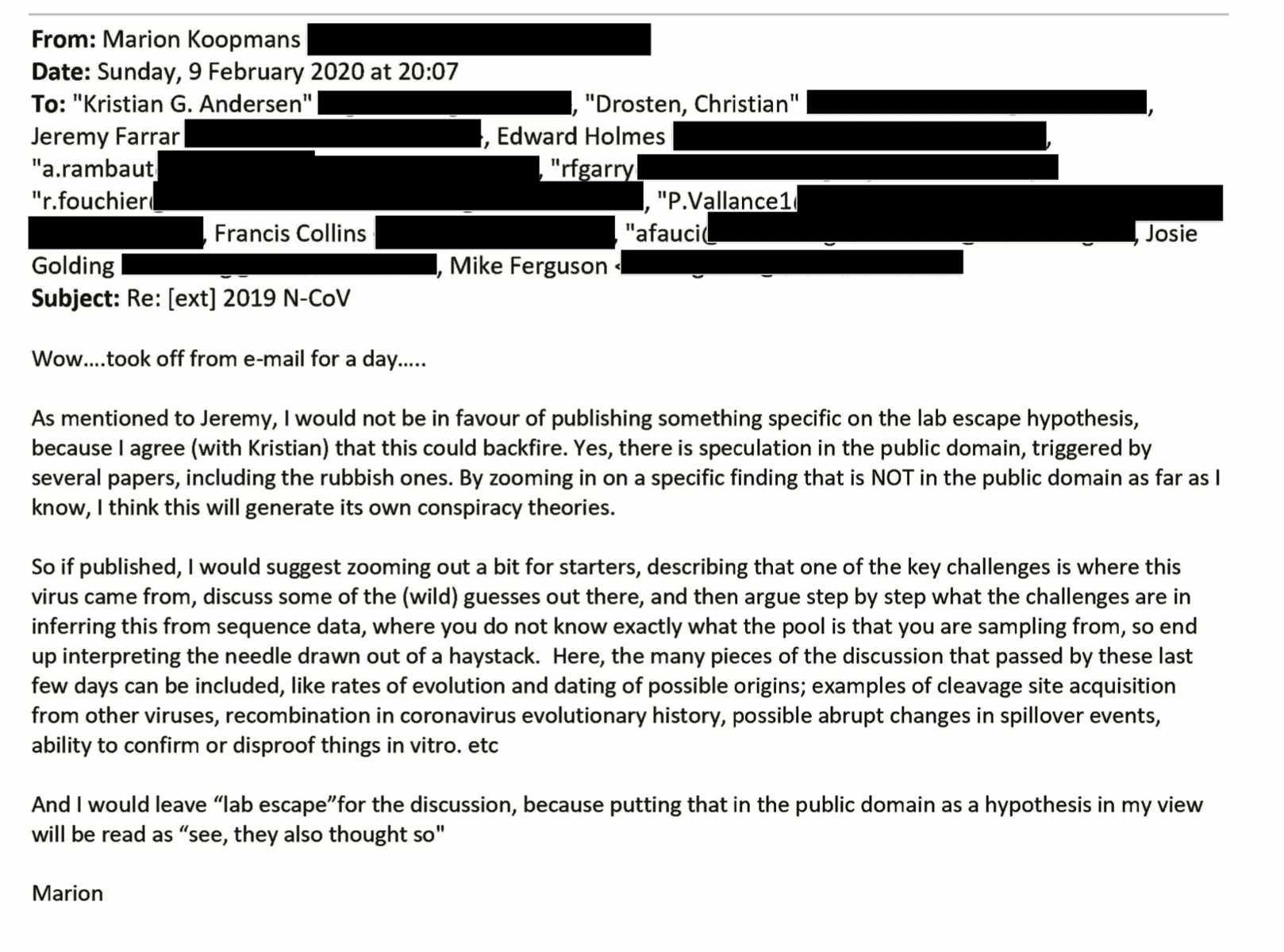
And no one asked her about February 2020. On 1 February of that year, Koopmans took part in the now-documented teleconference convened by Jeremy Farrar with Anthony Fauci, Francis Collins, Christian Drosten, and the scientists who would go on to write the “Proximal Origin” paper. On that call, two of them put the odds of a laboratory origin between 60 and 80 percent.8 Days later, as the paper was being drafted, Koopmans argued that it should drop the lab-escape scenario as a hypothesis — for fear, she wrote in an email released long afterwards, that airing it would “generate its own conspiracy theories.”9 Within weeks, “Proximal Origin” told the public that a laboratory was not a credible source.
None of this was put to her under oath. That is not a small omission — it is the difference between finding the truth and quietly setting it aside.
The Man in the Middle
The first week also brushed up against a bigger question, and then walked past it: who was really in charge during this period?
On 5 June, the last witness of the week was Pieter-Jaap Aalbersberg, who throughout the crisis was the National Coordinator for Counterterrorism and Security — the NCTV. He described himself as the crisis’s “oil-can man:” a neutral fixer, a switchboard. The description undersells him. In the first phase of the pandemic the real decisions ran through a ministerial crisis committee chaired by the prime minister — and the NCTV sat as its secretary.
Aalbersberg attended the Sunday sessions at the Catshuis — the prime minister’s official residence, used for informal political consultation away from the formal, minuted cabinet table — where ministers settled on the measures. He was in constant contact across departments. He pushed early for a national crisis structure, warned internally that officials at the health ministry were being run into the ground, and told the committee the whole apparatus should have been built faster — that he, from his background in crisis management, had seen the need before the health ministry did.10
Whoever organizes the meetings, prepares the documents, and decides which options reach the table can shape a decision without ever casting a vote. That is the position Aalbersberg held — and the committee largely let him define it for them. It had gained little sight of the Catshuis sessions, because the records were never made public. When members asked why the safety regions ran their contacts through him rather than through a minister, or why societal unrest barely appears in the official minutes, he pointed to the informal venues — the Catshuis, the prime minister’s office — and the questioning moved on.
It is a quieter picture of power than the one the country was shown. Officially the crisis belonged to Hugo de Jonge, the health minister whose face filled the press conferences. Structurally, the coordinating machinery sat elsewhere: under Justice and Security — the ministry of Ferd Grapperhaus, the ministry to which the NCTV reports, and where the most senior civil servant through the pandemic was a man named Dick Schoof. Hold on to that name.
“Where is the truth-finding?”
Khadija Arib was called as a witness on 3 June. At the end of three hours, against protocol, she asked to add something the questioning had not touched. She said the inquiry leans on drawing lessons for the future, but that she misses the emphasis on truth-finding, on accountability — the things, she said, a democracy depends on. The woman who was meant to chair this inquiry, sitting in the witness chair instead, told the committee to its face that she does not yet see it doing the one thing an inquiry is for.11
A Country That Does Not Feel Heard
None of this happens in a vacuum. Since 2020 the Netherlands has been governed, for roughly half the time, by caretaker cabinets — governments that have resigned but stay on with a limited mandate because no replacement is ready. Rutte’s third cabinet fell in early 2021 and lingered for a year; his fourth fell in 2023 and lingered for another year. For much of the period in which the country was supposed to be reckoning with the pandemic, it was led by a government already on its way out the door.
For its final stretch, until early 2026, the prime minister was Dick Schoof — a man who never stood for election. He took office party-less, the first prime minister without a party since 1918 — though he had belonged to the Labour Party (PvdA) for some thirty years, until he let his membership lapse at the start of 2021. He came to the office from the top of the security state: former National Coordinator for Counterterrorism and Security — the very post Aalbersberg held during the crisis — former director-general of the AIVD, the Dutch intelligence service, and, through the pandemic, the most senior civil servant at the Ministry of Justice and Security, the ministry above the NCTV. The country was led, in other words, by a man from the centre of the apparatus who had quietly run the crisis — installed by coalition negotiators rather than chosen by voters.
Since February 2026 a new three-party cabinet governs — and it, too, holds only a minority, 66 of 150 seats. A large bloc of voters has spent these years feeling unrepresented by the people making decisions about their lives. An inquiry that was meant to answer that feeling is, instead, confirming it.
The Pollster and the Newspaper
There is a counter-current. Maurice de Hond — for decades the best-known pollster in the country — and the columnist Marianne Zwagerman have built a parallel archive of the hearings, to make them genuinely accessible to the public: full transcripts, summaries, critical context, the questions the committee did not ask, and a tool that lets readers interrogate each testimony. Access costs a one-time twenty-five euros. The hearings are public; what the two added is the apparatus to actually study them.12
The reaction to that archive is itself revealing. Koopmans dismissed it in a public post: “You use AI to generate a summary, slap an FBI quote on it, and ka-ching. Corona controversy as a business model.”13 Maarten Keulemans, science editor of de Volkskrant, echoed it, asking how much De Hond had earned from Corona.14 Neither engaged with the content, both went after the man who made it. For more than half a century de Volkskrant has been the trusted morning paper of the Dutch left intellectuals. For Keulemans the move is familiar: critics have long noted his habit of attacking the person rather than the argument when someone steps outside the official line.
It is the line itself that is the deeper story. On 19 March 2020, on the radio programme Spraakmakers, Pieter Klok, editor-in-chief of de Volkskrant, said it was wise for the country to speak with one voice and to support the government’s line — which, he added, was “quite well substantiated; an entire institute is behind it.”15 Looking back that December on the same programme, he added that “you don’t want the policy suddenly not being followed.”16 By 2025 he went further, openly admitting he had deliberately held back critical reporting on the RIVM for fear of strengthening those who questioned the official institutions. He called it a dilemma of his editorship.17
In plain terms, this was a national newspaper deciding in advance which questions its readers would never be allowed to see asked.
When I first heard those words from Klok in early 2020, it was a watershed moment for me. Beneath the careful phrasing I heard something unmistakable: from now on, the newspaper would speak with the government’s voice, and any challenge to that voice would be treated not as journalism, but as a danger to be contained. Something in the way I had trusted the press died that day. I have never since been able to open a newspaper with the same eyes.
I shared what he had said with friends and family. Most found it irrelevant — or even agreed with him. There was no outrage, no alarm. I was left baffled by their lack of reaction.
What an Inquiry Is for
A parliamentary inquiry is the most powerful tool a parliament possesses. Its sole purpose is to force the truth onto the public record when documents are withheld and accountability is evaded — witnesses under oath, with nowhere to hide. Used properly, it is democracy defending itself.
By comparison, the United States has seen Senator Ron Johnson (R-WI) hold hearing after hearing that gave dissenting scientists and the vaccine-injured a public platform. Critics call them one-sided, yet the other side still gets to speak, on the record, in the people’s house.
The Dutch inquiry wields a far heavier instrument but has put it to a conspicuously lighter use. Critics were removed from the committee, questions are written by civil servants, and the hearings have focused almost exclusively on whether the government should have locked down harder — never whether it locked down too hard or at what cost to fundamental rights. The architects of the official narrative sat in the witness chair, while the questions that might have challenged it were never asked.
This is what feels so disorienting from abroad. The lawsuit, the sworn witnesses, the formal hearings — from a distance it looks like a country courageously examining itself. Up close, it is the opposite: the full machinery of a reckoning has been set in motion with the reckoning itself left out.
Khadija Arib, who spent 24 years in parliament and five as its Speaker, knows what real truth-finding looks like. She broke protocol to tell the committee she could not find it here. She is right. The inquiry was chartered to establish the truth, to weigh the cost to fundamental rights, and to examine how critics were treated. What we have instead does none of these things. The instrument built to force the truth into the open is being used to keep it shut.
Notes
1. Rechtbank Noord-Nederland, ruling on jurisdiction, 2024 (ECLI:NL:RBNNE:2024:4056): https://uitspraken.rechtspraak.nl/details?id=ECLI:NL:RBNNE:2024:4056
2. “Arno van Kessel eindelijk vrij,” De Andere Krant: https://deanderekrant.nl/arno-van-kessel-eindelijk-vrij/
3. Motion De Vries on a parliamentary inquiry into the corona policy, 4 November 2021 (Kamerstuk 25295, nr. 1470): https://zoek.officielebekendmakingen.nl/kst-25295-1470.html
4. “Khadija Arib (PvdA) vertrekt uit de Tweede Kamer,” Parlement.com: https://www.parlement.com/nieuws/202210/khadija-arib-pvda-vertrekt-uit-de-tweede-kamer
5. “FVD stapt uit corona-commissie — Gideon van Meijeren legt uit waarom,” Forum voor Democratie: https://fvd.nl/nieuws/fvd-stapt-uit-corona-commissie-gideon-van-meijeren-legt-uit-waarom
6. “The best way to address future pandemics is a One Health approach,” Erasmus MC: https://amazingerasmusmc.com/infection-immunity/future-pandemics-one-health/
7. Public hearing of M. Koopmans, parliamentary inquiry, 29 May 2026 (≈ 24–30 min): https://debatdirect.tweedekamer.nl/2026-05-29/zorg-gezondheid/enquetezaal/openbaar-verhoor-mevrouw-10-00/video
8. Farrar–Fauci communications on the 1 February 2020 teleconference, DocumentCloud: https://www.documentcloud.org/documents/23316400-farrar-fauci-comms/
9. Koopmans email, 9 February 2020 (US Right to Know): https://usrtk.org/wp-content/uploads/2023/11/Koopmans-email-Feb-9.png
10. Public hearing of Pieter-Jaap Aalbersberg, parliamentary inquiry, 5 June 2026: https://debatdirect.tweedekamer.nl/2026-06-05/zorg-gezondheid/enquetezaal/openbaar-verhoor-pieter-jaap-aalbersberg-14-00/video
11. Public hearing of Khadija Arib, parliamentary inquiry, 3 June 2026 (≈ 2h 47m): https://debatdirect.tweedekamer.nl/2026-06-03/zorg-gezondheid/enquetezaal/openbaar-verhoor-khadija-arib-10-00/video
12. The hearings archive: https://corona-enquete.nl/
13. Marion Koopmans, X, 5 June 2026: https://x.com/MarionKoopmans/status/2062949477309108274
14. Maarten Keulemans, X, 6 June 2026: https://x.com/mkeulemans/status/2063281079717409149
15. Pieter Klok, NPO Radio 1, Spraakmakers (Het Mediaforum), 19 March 2020: https://www.nporadio1.nl/fragmenten/spraakmakers/76aff6a8-c4dd-4f60-bb20-b02c9e58baf9/2020-03-19-het-mediaforum-met-pieter-klok-en-roos-schlikker
16. Pieter Klok, NPO Radio 1, Spraakmakers (Het Mediaforum), 21 December 2020.
17. Pieter Klok interview, De Nieuwe Wereld, 2025: https://www.youtube.com/watch?v=ntvDhSvHkwo
-

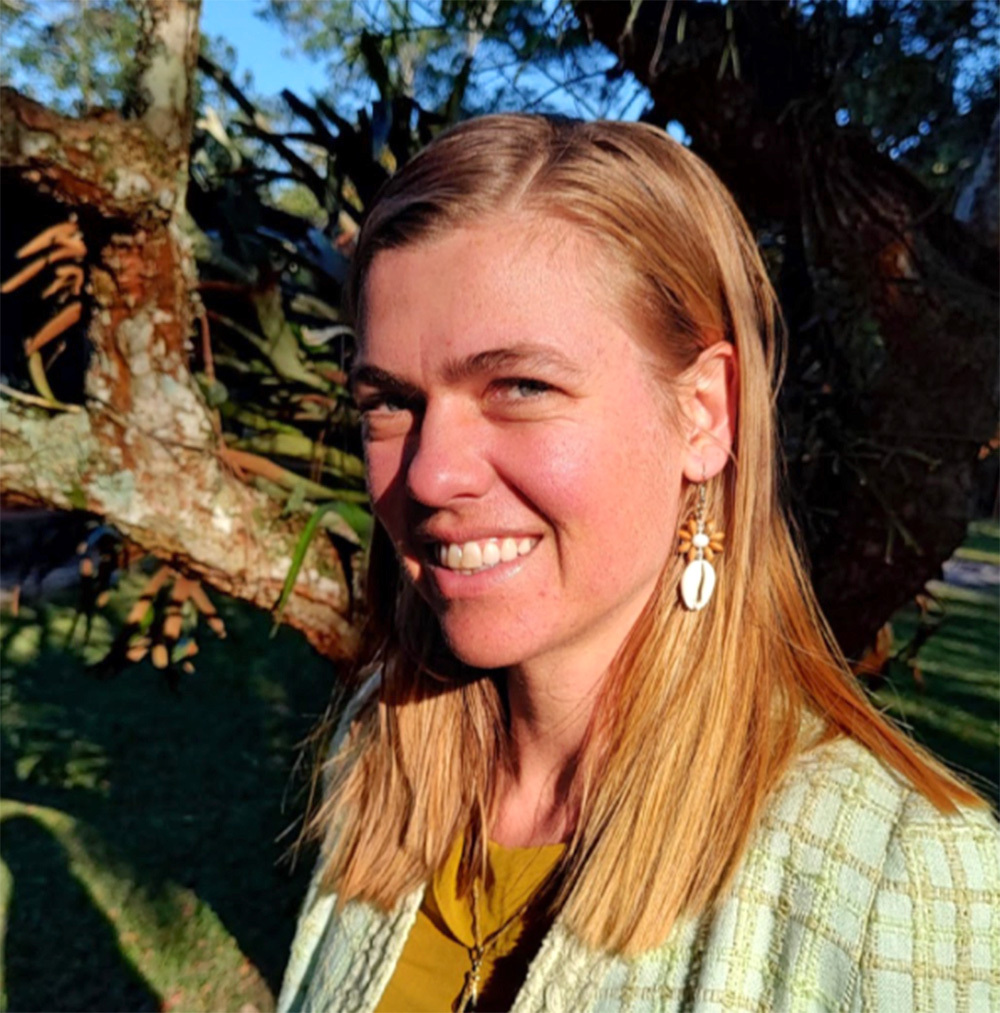
Elisabeth (Lisa) J.C. Bennink, MD, MA, is a Dutch elderly care physician with a Master’s degree in Philosophy (with honors) from the University of Groningen. She has extensive experience in geriatric medicine, dementia care, and palliative care, with a focus on reducing polypharmacy. During her medical career in the Netherlands, she was commissioned by healthcare insurers to develop innovative care models for elderly patients. In December 2020, she stepped away from conventional medical practice due to concerns about restrictive healthcare policies. She relocated to Brazil, where she studies indigenous spiritual traditions and ayahuasca culture.
Recent Top Stories
Sorry, we couldn't find any posts. Please try a different search.