Everything Wrong with Canada: Will is Interviewed by Americans
Iron Will interviewed by Glenn and Eric Meder
Recently Will was interviewed by Glenn and Eric Meder of the U.S.-based Privacy Academy. This interview covers everything from current bills that will turn Canada into a police state, climate lockdowns, MAiD, our economy, and the brainwashing of Canadians.
The interview is a warning to our American neighbors. If we fall the globalist agenda, they could well be next.
Buy precious metals at wholesale prices right here in Canada. https://info.newworldpm.com/154.html
Get Sound Financial Advice: adrian@itstartswithgold.com
Take back Canada! Find and Join your LOCAL Freedom Community FREE. https://freedomcoms.org
Originally posted 2025-11-04 18:15:39.
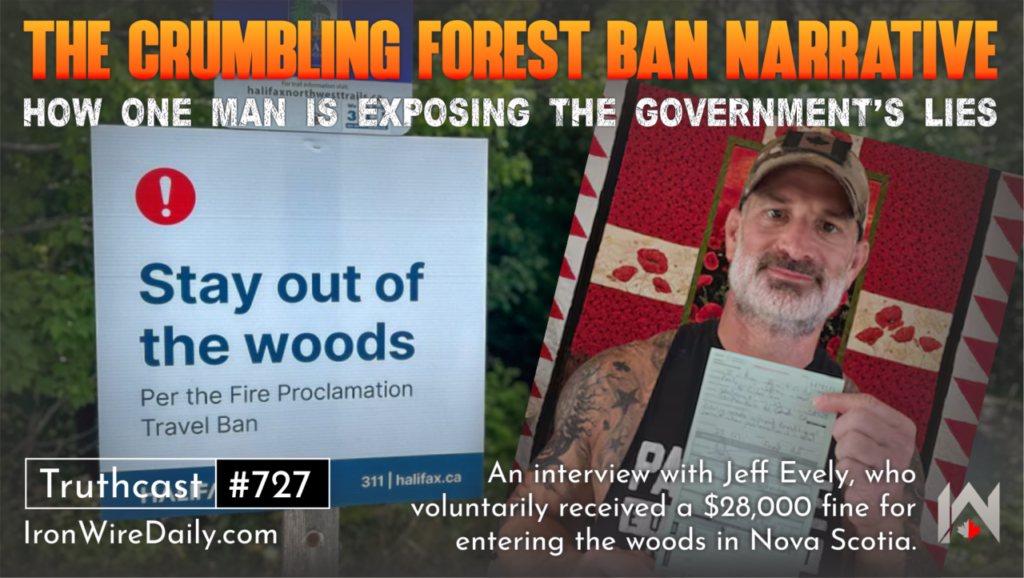
(0:00 - 3:12) How's it going, everybody? We're excited about today's podcast because we've got Iron Will with us. How are you doing, Will? Very well, thank you, Glenn. How are you? Good, good. So you're up in Canada. You're going to kind of give us a report on what's going on with Canada and that. And really, Canada has, if you look at Canada like five years ago or 10 years ago, it is such a different place now than it was back then, isn't it? I mean, it's just such a dramatic change. Yeah, Glenn, I mean, Canada has always been a socialist country, which some of us don't much care for. But in recent years, yes, you're absolutely right. It's moved towards communist totalitarianism would be the right term. Yeah. Yeah. Yeah. I mean, it's you look at I mean, we can see all of this stuff that's happening in the world is a globally coordinated event. And this is something I still I think still most people don't understand. This is globally coordinated what's going on. It's highly sophisticated, but there are some places that we can really see kind of the front lines of what's going on. And I think UK and Canada and probably Australia are really at the real forefront of what we can see is coming. I mean, obviously, China, but but in the Western world, Australia, Canada, UK, they're just going all in with this. So tell us tell us a little bit more about what we need to know about what's what's changed in Canada. Wow. Okay. I think what we really should start doing is let's start with what the government's up to. And you're absolutely right. When you talk about Canada, UK, Australia, we're kind of competing to see who can move towards globalist controlled totalitarianism as quickly as possible. And so, you know, there's already different things that are happening. I want to talk about some of the bills and acts that have been passed in Canada in the last, yes, five to six years. For your viewers, of course, who are on top on Canadian politics in 2015, Justin Trudeau was elected Liberal Party of Canada. And of course, the Liberals have always been the most socialist party. Unlike the US, we don't have a two party system. But effectively, speaking of the federal level, we do, because neither, you know, the Liberals or the Conservatives always form the government. On a provincial level, we've had some what, farther left or right parties. But so anyway, so last 10 years, we've been under the rule of the Liberals. And there's a bunch of bills that I want to talk about that I think your viewers are going to, quite frankly, be gobsmacked by, that this is happening across the border from them. But let's talk right now about the three most egregious of them that are currently before the House, two of which have already passed second reading, and that's Bill C-2, C-8 and C-9. So let me tell you what those bills are, folks. Bill C-2, which is called the Strong Borders Act, this would give the government and officials warrantless access to subscriber data, IP addresses from telecom and social media. (3:12 - 6:18) So they could go to your internet service provider, and they could demand all of your information from them without a warrant. They would allow Canada Post to open your mail without a warrant. For any reason. It would empower non-police officials to conduct device searches. So any government official, any government official could demand that you hand over your phone, your laptop, your computer. Once again, no warrant required. That supposedly, under border security, which actually takes us back to something called Bill S-7, the Custom Act Amendments. And once again, for your American viewers, if it starts with a C, it was put forth by an MP, a member of Parliament, elected official of our federal government. If it starts with an S, it came from the Senate. And unlike in the US, our senators are appointed. Right now, about 80% of the senators in Canada were appointed by the Liberal Party and Justin Trudeau in the last 10 years. Our judges are also appointed. Another problem. So let's go take a little quick look back at S-7. And these were Customs Act Amendments that were passed in 2022, which allows Canada Border Services Agency to access personal devices without suspicion or judicial oversight. So if you're crossing the border and they demand that you hand over your device, you have to. And they don't need a warrant or a reason. A 2024 report documented 10 cases of journalist devices accessed between 2022 and 23, with one of them losing confidential sources after Canada Border Services Agency shared the data with RCMP. Freedom Convoy organisers, some of your viewers will have heard of Tamara Litsch, Chris Barber, the two who were primarily the ones who were organising the Freedom Convoy and have been heavily persecuted for that. Tamara Litsch had her devices seized when she crossed the border. But let's get back then. So that's Bill C-2. Let's get into C-8 and C-9. And these are all, by the way, all of these could be passed by Christmas. And if they are, folks, Canada will become a police state. And for anybody who's confused about the difference between a democracy and a police state, it's quite simple. In a democracy, the police can arrest you if you've conducted, if you've committed a crime, or you're suspected of having committed a crime. In a police state, they can arrest you for any reason. Because they want to. And that's where we're headed in Canada. Tyranny is total tyranny. Yes, that's exactly what it is. So with Bill C-8, called the Critical Cyber Systems Protection Act, any cabinet member, so once again we're getting back to those MPs, we're not talking about the police here, we're not talking about any kind of law enforcement agency. These cabinet members can secretly order internet phone shutdowns without any kind of judicial review. So if they don't like your communications, they can order that your connections to your phone, your internet, be shut off. There are fines of up to $50,000 a day for non-compliance. (6:20 - 8:33) Or, if you're a corporation, $1.5 million per day. So there's no, I mean, there's no reason for it. They don't have to give a reason. They can just say, well, we don't like what you're saying, so we're going to shut you down. It's heavy censorship. Then we get into C-9. Now this is where it gets really crazy in Canada, folks. The Hate Act in Canada, "hate" quote-unquote. This is the Combating Hate Act. I want to get into the part of this that people are going to find the hardest to believe. If you remember that old movie with, I call it an old movie now, Tom Cruise called Minority Report, where they were arresting people in advance for crimes that they haven't committed yet. That's what C-9 would allow. If someone believes that you're going to commit a hate crime, and a hate crime in Canada under these new rules is saying something that somebody finds hurtful, basically, you can be arrested and put under house arrest because someone thought you might say something offensive. And it gets better. They can do this anonymously. So you have no right to face your accuser in court. That's unbelievable. I mean, this is worse than China, really. I mean, this is literally China that we're talking about right now. Well, this is why Canada is frequently referred to by critics such as myself as China-da. Yeah. Because that's where we're going. Yeah. Now, okay, so there's one more here that I should outline before we get into some discussion of these. And that's Bill C-63, which is called the Online Harms Act, which is actually somewhat connected to C-9, this Combating Hate Act. Bill C-63 was actually proposed a couple of years ago, tabled by Trudeau's liberals. And the only reason why it didn't get passed was because Trudeau prorogued Parliament in December 2024, when he stepped down. And so the bill died at that point. They're wanting to bring it back. So let's talk about what Bill C-63 would do. (8:37 - 10:33) Okay, so that was the one with the preemptive house arrest. It'll be retroactive to old posts. So if they pass this bill, and you have ever posted anything that could be seen as hate speech, I can be pretty darn sure that a lot of my interviews will be seen that way, they could then come and arrest me under this bill. And it really goes after religious groups. If you have protested against, say, drag queen story hours, or you're just a pastor in Canada who has said that you disapprove of homosexuality, you don't even have to attack them. You just have to say, well, you don't like it. Well, that's hate speech, and you can be arrested. And for people who think that sounds crazy and dystopian, remember we were talking earlier about how Canada, UK and Australia are competing to see who's going to be the most totalitarian. Under very similar laws in the UK over the past couple of years, an average of 12,000 people per year have been arrested for online posts. Yeah. Yeah, it is nuts. What is going on is really crazy. Now, let me ask you this, Will. Does the average person have any idea about all of this stuff? No, they do not. They do not. Yeah, I mean, it's really this thing about, do they listen to mainstream government propaganda media? And if they do, they have no idea any of this stuff exists. And if they listen to you and me and other things, then they're like conspiracy theories, and they're dismissed. But how long can this go on without the average person knowing about what's going on? I mean, what they're actually doing? There's two answers to that, Glenn. (10:34 - 14:18) People are waking up, which is good. You know, I started my campaign for the truth back in 2020, fighting the COVID narrative. And back then, I would say maybe, maybe 2% of Canadians had any clue of what was going on. I would say that today, probably 20% are at least suspicious, that there are things happening that don't make any sense, that are not being done in the interests of Canadians, that these are outside forces, globalists, and I use that term very broadly to mean any wealthy, powerful individual who feels they should be running the world. And they're manipulating events in Canada, and they own our government. In fact, Klaus Schwab, who was the former president of the World Economic Forum, publicly stated that they owned over half the Liberal cabinet. So on the one hand, yes, we've got people who are waking up, but on the other, Canadians are so frustratingly complacent. I'm going to give you a little bit of maybe a funny story. I've recently launched on what I hope is going to be my next career. Not that I'm planning to quit journalism. I've started writing novels. I've always wanted to. So I'm writing right now a science fiction slash fantasy trilogy. And my main character is American. And the reason why he's American is because I can make him unapologetically right-wing, and nobody's going to bat an eye. If I made the same character a Canadian, oh, well, this guy's a lunatic conspiracy theorist. And one of the backgrounds of the... I based the character very slightly upon myself, just because it's my first novel. It makes it much easier to write the character if I base him on myself. So one of the things that the character and I have in common is that he was an independent journalist before all the events of the story happened. And so he's talking about that a little bit at the beginning of the book. And there's a little paragraph in there where he says, I was just on the verge of proving that the, quote unquote, all the homes that have been burned by forest fires were in fact being caused by a directed microwave energy weapon, which by the way, I can prove and have. But if I'd made that character Canadian, and Canadians read the book, they'd be like, oh, well, this guy's just a nut job. Right? But if he's an American, oh, well, wait a minute, he's fighting for truth and freedom. And so, yeah, we've got this horrible complacency in Canada, where, well, let me give you another personal story, because I think it answers your question. I always thought that my family were, you know, they were good people, that they would do what was right, if things ever went bad. And the last five years, well, let's see, let's start with, I mean, I have to say some nice things about my family. My eldest brother and his wife have, for the last five years, have been caring for my elderly mother, who's now 92. She lives with them. She's still mobile, but she can't look after herself entirely. So that's great, very nice of them. But for two years, my family and I were not allowed to visit my mother, because we didn't take the vaccinations. And for the last three years, you know, on those rare occasions when family gets together, the one person at the table who's not allowed to talk about what I do, or what I know, is me. Because my family, who I thought were these good, moral people, have stuck their heads in the sand. They're buying the government BS, they're listening to mainstream media, and they're believing it all. And the reason why they're doing it, and this is the important thing, is because that's comfortable. If it's true, if the things that I know and say are true, well, then you have to do something about it. (14:19 - 17:01) It's much easier to pretend it's not happening, because then you don't have to do anything. And that, unfortunately, is Canada. And so are we ever going to wake up? I don't know. There's some hope, for at least some of us. I live in the province of Alberta, and right now we're seriously discussing independence, of separating from Canada. And is Alberta more along the lines of liberty, protecting people's liberty, that type of thing? Yes, we are definitely the most conservative province in the country. There's still a lot of left-wing crap here. We just had civic elections. Our city of Calgary, which is where I live, a city of about a million people, we've had a far-left civic government now for years. There's some hope that there's been a lot of changes, there's been a lot of new people elected. There's some hope that we now have a substantial number of conservatives on the city council. But on the other hand, there's things like the school boards. My wife ran for the Catholic school board here. Now, she did very well, extremely well, yet there were almost no changes. And it's very much a leftist board. And the Catholic boards here, by the way, are no better than the public ones when it comes to things like the trans agenda and all of that. They're just as bad. So that kind of gives you a picture of the fight we have ahead, even here in Alberta. Another example would be in the provincial election a couple of years ago. The entire province, other than three ridings, voted conservative, which was great. However, in the previous provincial election, it was almost all NDP, which is the New Democratic Party, which is a far-left liberal party. Basically, the foundations of the NDP were about 80 years ago, and they started out as an openly communist party. So we're fighting all of that here, trying to get people to wake up and understand that if we remain as part of Canada, we're going down the tubes with the rest of them. And we are. Mark Carney, who is a Canadian in citizenship only, the current Prime Minister of Canada, he spent far more time in Europe during the course of his life than he has here. He has very strong known globalist connections, and he is absolutely working to undermine Canada's future and to tie us to the European Union, which is probably going to go to war with Russia, and they're going to lose. And so if Canada's tied to them, we're going to go down the drain with them. (17:03 - 17:28) Yeah. I mean, from my perspective, I can't believe that people can't see what's going on, and I can't believe that people, I mean, anywhere, anywhere around the world, I can't believe that people can't see this. But I guess what's going to have to happen is they're going to have to be enslaved with this new control system that they're putting in place. (17:29 - 18:44) With the, we haven't even really talked about that today, the digital ID and all of that stuff. But the, you know, all the craziness, I guess it just has to get much worse. But my problem with that is people that go, or places that go down the leftist communist area, let's say California, Venezuela, Cuba, all of that stuff, you can just say, okay, well, maybe they'll learn their lesson and they'll come back. They never come back. They always go down this death spiral. I mean, Portland, Oregon, how can they, how can people still be voting these people in that are destroying their place, where they live? And they love it, supposedly, but they just bring, they just keep voting these people in. So I don't know. I am of the opinion that we just got to get people to stand up now. And we have to do it. I think that's, yeah. Anyway. Well, we're in agreement on that, Glenn. I would say, though, that they do come back. Argentina, Yavi and Malay, that's a good example. They only come back when it has crashed and burned. (18:45 - 19:44) When the leftist socialist communist government has collapsed completely, and the people are starving, and there's no law and order, that's when they turn it around. And I'm very concerned. I mean, they haven't done that in Venezuela. They haven't done that in Cuba. You know, sometimes it comes back. Sometimes it doesn't come back. I don't know. I mean, well, it's a gamble, I think. Yeah, well, I think you've got a point. But I'm very concerned that that's what it's going to take in Canada, that it's going to have to get to the point where, okay, here's actually, I think, a better way to discuss this. When we had that federal election this past spring, and Canadians once again elected a liberal government, which has been a demonstrable financial disaster. Forget about all the violations of our rights and freedoms, and the illegal things that that government has done, and the corruption of Justin Trudeau and his criminal activities, which have been well documented. (19:45 - 21:31) Let's just take a look at what's happened to the country financially. In those 10 years, we went from being one of the top G30 nations, economically, to being second from the bottom. Among the G7, we are now rock bottom on every major economic indicator, affordability, taxes, government spending, healthcare, the whole nine yards. Canada sucks. It's like a third world country. And yet, there's still enough, and I'm sorry to pick on these people, because they're not all the problem. A lot of these, I know people who are in their elderly years, I'm 60 myself, so when I say elderly years, I'm probably talking about people who are my age and older, who are aware of what's going on and are fighting it. But the vast majority of these people, they have their pensions, and they've got their homes that they paid $50,000 for 50 years ago, and that are now worth $800,000. They've got their vacations. They've got their new car sitting in the driveway. As far as they're concerned, everything's fine. And the data showed that it was those people who elected the liberals again. And so until one of two things happens, either those baby boomers die and get replaced by younger people like Eric's generation, who are seeing this happening. I know it's happening to an extent in the US as well, with affordability and individual rights and freedoms, or it reaches the point where it impacts them too. It's going to take one of those two things happening before it's going to change here. (21:31 - 25:40) Now, fortunately, we are seeing. Go ahead. Well, I wanted to bring up another point, and that is the, I think they call it the MAiD programme. So Canada has had this euthanasia programme for a while. And I think about five years ago, it took a turn for it's not just like, OK, if you want to, you can kill yourself. But they were actually pushing people to kill themselves. They were actually promoting people to kill themselves. You call into this suicide hotline, and then they would just say, yeah, we suggest that you kill yourself. But now it has become, as I understand it, they've got this new thing where they are allowing, they're trying to, I read an article talking about how they're trying to open the talks with people that they deceive, or children that they determine mature children. So I was going to ask about that. Well, you're absolutely right, gentlemen. So what we have in 2016, MAiD, Medical Assistance in Dying Assisted Suicide, was legalised in Canada. Today, Canada is the assisted suicide capital of the world. And I don't mean per capita, I'm meaning raw numbers. Over 60,000 people in Canada have now been put to death by assisted suicide. And this is a whole, wow, this is a rat's nest, guys. We can really go down the rabbit hole on this one. And let's start with the narrative that says that this is a peaceful, dignified death. Well, we don't know that. There's three drugs that are given to them. And the first one is, it'll come to me because it's also one of the drugs that's used to treat COVID patients and has killed many of them. I'll think of it in a minute. But what this drug does is it paralyses the person. So they die by drowning in their own fluids. That's what the drug that kills them does. And we have no way of knowing if these people might actually be aware of what's happening to them. Yeah. Midazolam, that's the name of the drug. Okay. And it's very commonly used. And that's, you know, one of the drugs. And so that's the first drug they get, the midazolam, and it paralyses them. So first of all, people are being given this narrative that we have no evidence whatsoever is actually true. It could be a horrific, horrifying, terrifying death. We don't know. Now in 2016, it was legalised for people for whom death was foreseeable in the near future. It was like, okay, you are terminally ill, you are going to die. And even I didn't have a problem with that. In fact, it was in 2016 that I went through stage four cancer and had to think about, okay, if I reached the point where the tumours went to my brain and started to affect my behaviour, and I started turning into a, you know, a real jerk to my kids, is that the father I want them to remember? And I even thought about that, if that happened. Fortunately, it didn't. But, you know, if it had. Okay, tell me, I want to run about verse 20, 21, I believe, when they amended it. So death no longer had to be immediately foreseeable. Now that when that was track one made, and you're right, Eric, it's not just, you know, calling into some kind of suicide hotline. We've had multiple instances of veterans calling for aid and being told, well, you know, made is an option, of people who are suffering from some sort of medical problem, but not a terminal one, and being told, well, made is an option. We even have multiple instances of people going to food banks, poor people, asking about made, because it has become so very difficult to be poor in Canada. And that's all what's happened under track one. Next year, 2027, they'll bring in track two. (25:40 - 26:35) I believe this will be in February, I'm sorry, not next year, then next year, 2027, February, track two, which means made will now be available for people with mental illnesses, which is very broadly defined. And yes, mature minors, without parental consent. And there is no legal definition of mature minor. A doctor gets to determine that. A doctor who spends five minutes with this kid in terms, well, yes, this person's a mature minor, they understand what they're doing, and therefore I'm approving euthanasia for them, and the parents have no say. Which could lead to the horrifying situation, and I've been preaching on this for years, of some poor parent who gets a phone call from a clinic or hospital saying, come down, pick up the body. And that's the first thing they hear about their child being dead. Wow. It's just pure evil. (26:35 - 33:36) It is. It's amazing. It's amazing that this is going on. And that's just, it's, what's happening is, it's a, this is what I mean by it's a very highly sophisticated, globally coordinated event, because they're coming at it from every different angle. There's so many different angles to what's going on, because then we can talk about property rights. We can talk about, we can talk about the digital side of things, which we haven't even touched on. The digital ID, the social credit system, the CBDC, all of these things, they're just coming at it from every different angle, plus the illegal immigration. All of these things are just, it's all intentional, and it's all got a big picture purpose, and it's all bringing us to one place. And I think Canada can serve as a warning for the rest of the world, and including the U.S. I think the U.S., there's a little bit more difficulty there because of the U.S. Constitution, but the U.S. Constitution is, they just see it as an obstacle. There is, there's ways to get around it. They're going to figure out how to get around it. They're already trampling on it. Yeah. I want to talk, I was really interested to talk about, I think it was Nova Scotia, but they were talking about limiting people going into the forest, and climate lockdowns. Yes, no, that's, that's absolutely happening, yes. So this is once again part of the whole false climate alarmist narrative, and reports from our government that forest fires in Canada have been increasing in recent years, and they're in the U.S. as well, are the result of global warming. Now, first of all, I'm sure many of your viewers understand that the entire global warming climate alarmist narrative is utter BS, and easily disproven. It's not happening. It's not even remotely happening, but it's convenient excuse to limit rights and freedoms. And so, yes, in Nova Scotia, right now, there are the first climate lockdowns in North America, where for the last several months, Nova Scotians and tourists, whatever, have not been allowed to go into the woods. And in fact, this has been challenged by a man named Jeff Evely, who very intentionally went into the woods. In fact, he went and he talked to the conservation officers first. He says, I'm going to go into the woods. And so they followed him, and he walked 13 steps into the woods. He came back out, and they handed him a fine for $28,000. Now, it gets deeper, though, because I interviewed, not long ago, a man named Peter MacIsaac, who's a Nova Scotian, and who has about 40 years of experience in forest fire management. And so there's been some very suspicious things going on. Nova Scotia, not long ago, got rid of the one helicopter they had that was actually capable of fighting forest fires. They removed all the watchtowers. They said they were going to have people with their cell phones keeping an eye on it. How many times have you guys walked into a forest on a hike, and you didn't have a cell phone signal? Right. So now they've gutted the forest fire response system. They've gotten rid of the watchtowers, and now they're keeping the people out. And then I asked Peter, I said, so how do you tell the difference between a forest fire, because he said, actually, the majority of forest fires in Canada are the result of arson. Now, prior to five or six years ago, well, I'm going to say specifically prior to 2017, because I listened to another interview I did not long ago, the vast majority of those arson forest fires, they were just people being jerks. So, you know, I wanted to start a fire. Now, it's a coordinated effort, and that gets into, actually, an American who I interviewed a while back. His name is not coming to me. I gotta apologise for that, folks. At this point in the last four years, I've interviewed over 500 people, so names sometimes don't stick. But anyways, this gentleman has all of these pictures of very suspicious things about these forest fires. And he's in California. He was investigating them there. Homes burned to white ash. The temperatures required to do that do not exist in a forest fire. Autoglass melted. The temperatures to do that do not exist in a forest fire. Polygraphs of fence boards, where the board was burned away around where the nails were, but the rest of the board was fine. Any structure that had metal in it, like a mobile home or a camper, toast, gone. Well, I did some research, and that's just the highlights. I mean, I would urge people, if you're interested in that, go to IronWiredaily.com, look for that interview on forest fires, and see all the evidence for yourself. But I did some research, and I found that all of it aligns with a directed microwave energy weapon, which we know the U.S. military has, that's confirmed, and which could be fired from a jet 10,000 to 20,000 feet up, powered by the engines, and would result in exactly what we are seeing in those forest fires. Peter MacIsaac was also the fellow who, a few years ago, when this whole global warming forest fires narrative was getting traction from our government, posted online a satellite image of about 20 plus different forest fires, all starting in Quebec, at the same time, at exactly the same time, over an area of several hundred square miles. You know, seem a little suspicious? So they're doing this, once again, to prevent people from moving around. And this is something that's happening a great deal in Canada. I don't know about the U.S., but here in Canada, just about every city in Canada has a 15-minute city plan. And they're going to sell this to the people as, well, this is going to make living so much more convenient, because everything you'll need will be 15 minutes out of view. Well, no. What it is, it's a preface to preventing people from travelling. Basically, it's another form of lockdown. You have to stay in your neighbourhood. And, of course, they bring in- I just want to say, for people in the U.S., there are places, there are states in the U.S. that are now passing laws that give the government the ability to limit how much we can travel, how much we can drive. They're setting the stage for this. This is why they want us to move to electric cars. This is why they have these new control systems in cars, where they're going to be able to limit how much your car is able to charge, based on your carbon credit score and all of this other stuff. I mean, this is a plan that they're working out. It's highly sophisticated. It's coordinated. It's amazing what they're doing. (33:37 - 33:59) And if I'm recalling correctly, there was a law passed there in the U.S. that said starting next year, all gas-powered cars have to have electronic kill switches in them, so that the police could turn the car off if necessary. Well, except, of course, if you've exceeded your credits, you get into your car in the morning and it won't start. Yeah. (33:59 - 34:36) Now, it's interesting to me that people don't question this, because forest fires are natural. This is what happens to forests. Yes, I think you're right that these are planned. I've been very suspicious of all of the forest fires, especially the ones in California that burned all those houses down. The one in Hawaii was very suspicious, too. Canada has been very suspicious. But in general, forest fires are just natural phenomena. And in fact, they're good. I mean, they're part of the natural ecosystem. (34:37 - 35:08) They're part of the natural how things work. How can people just not question these narratives that the government gives them? I mean, they just say, OK, we're doing this to save the environment. OK, well, where's the critical thought? Just like an ounce of critical thought that goes into that and says, that's stupid. You're doing this. This is not why you're doing this. This doesn't make any sense. You don't have the right to do this. You don't have the authority to do this. There's no questioning of this stuff. (35:09 - 35:41) That's the same reason I gave before, Glenn. If people questioned it, they might discover that what they believe, what they've been told, is a lie. That's the case. Then they have to do something about it. And they don't want to do something about it. And the primary reason they don't. And let's get into the psychology of tyranny, because it explains a lot of this. Tyrants gain power through fear. Fear of loss. And specifically, five things. Loss of life. Loss of health. Loss of income. Loss of freedom. Like I say to travel. (35:42 - 36:35) Loss of social acceptance. And never underestimate that last one. And the degree to which many people will go to avoid being ejected from the herd. If they allow themselves to question these narratives. And they come to the conclusion they're being lied to. Well, now they have a very difficult choice. Do they continue to go along with the lie, knowing it's a lie? Or do they speak up and be ejected from the herd? Because they will be. You guys know this. I know this. You know, when we started speaking out against the COVID narrative in 2020, we got death threats. Literally got death threats from people who were buying the BS. I mean, just simply going through a grocery store without a mask. And you know, I wouldn't wear a mask. And you go through and you just get these death stares. And it is like a powerful force of all this social, you know, people looking at you, people judging you. (36:37 - 36:50) You know, even I could feel it that you get this social pressure on you. You could feel it. And there's a lot of people that would just come up to me and say, good job for not wearing your mask. (36:50 - 38:47) But then they would keep their mask on. They wouldn't have the courage to take their mask off. Some of them did. Some of them would take the mask off once they saw me not wearing the mask. But a lot of them just, even if they agreed, they say, yeah, good job. But then they keep their mask on. Yeah. And I was the same as you. I absolutely refused to do it. And yes, I got accosted several times by people who were very angry with me. Yeah. It's what you're talking about. The psychology is very, very interesting because I remember getting kicked out of a restaurant. It was like a Dairy Queen. I think it was a Dairy Queen. So you go into the Dairy Queen, you go up to the counter. It's like 10 feet from the door to the counter, two feet away from where they're standing. There's a table and it's like a high table. They're sitting same level as, you know, their head is the same level as mine. Not that that makes any difference. But once you're sitting and you're eating, you can take your mask off. But walking up to the counter to order, you have to wear your mask. And they kicked me out. And I said, what the hell are you talking about? These people right here don't have their mask on. And you're not allowed to have your, you don't have to have your mask on if you're eating. Yeah, but they're eating. What the hell? That doesn't, I mean, there's no absolute logic in it at all. But it's, well, it's this social conditioning that they're doing. And if you look at the punishments that are built into the social credit system, they target all of those points. They're designed to target all those points, social isolation, financial isolation, geographic isolation, information isolation, no access to food, no access to health. I mean, they strip you of all the things that it means to be a human in society. Yes, you're absolutely right. That's exactly the plan. Yeah. So, okay, go ahead. I'm sorry. (38:48 - 40:34) Sorry, I might have just lost my train of thought. Because while you were talking, there was something else I wanted to comment on. Yes, nudging. We'll talk about nudging. Once again, not long ago, I had an interview with a British psychiatrist, Dr. Gary Sidley. And he wrote a book on nudging. And what nudging is, is sort of these subtle social pressures that are put on people to conform. You know, when they talked about, I mean, you know, wearing the masks or maintaining the six feet of distance. And that was presented as that's a way to protect grandma, right? And well, who doesn't want to protect grandma? Yeah. And the interesting thing that came out of that conversation with Dr. Sidley is that every government and virtually every major corporation in the world today has a nudging department, staffed by psychologists, psychiatrists, people who are experts in human behaviour, to manipulate the behaviour of the public. Because here's the major problem that the globalists don't have when it comes to exerting their control around the world. And certainly, you know, and I'll tell you right now, there's a lot of Canadians such as myself, conservative Canadians, who have been celebrating Donald Trump. Because quite frankly, Donald Trump might actually be saving the world. Not that we would ever have expected that years ago. But, you know, you actually have a Republican government that is doing its best to protect the rights of the people, that's working for the American economy and protect American interests, which is exactly what your government is supposed to do. Yes, Donald had every right to impose tariffs on Canada. It wasn't for the reason that he said it was, but we might talk about that later. But the point is, he's protecting American interests, and that's what he's supposed to do. (40:35 - 41:24) Our government, on the other hand, is selling us out. So when we start looking at, you know, that nudging, and what's happening, and the fact that the globalists don't have an army, they can't send in jackbooted soldiers to point guns at everybody's head and say, complier will shoot you. What they have to do is get the willing compliance of the public. And that's what the nudging is for. Yeah. That's the brainwashing. Yep. Yeah, I always say the most dangerous people out there right now are the ones still wearing masks. I mean, there are a lot of people that have been conditioned to be like Gestapo. And if you look at communism throughout history, it runs on the back of people like that. I mean, it's all about snitching on people. It's all about not trusting anyone. (41:24 - 42:37) And it's scary to think about how many people out there would do that sort of thing. How many jurisdictions during the COVID lockdowns had snitch lines, where you could call and you could report on your neighbours. And you look at the bills that I told you guys about earlier here in Canada, about the hate speech laws, which basically means saying anything the government doesn't like. And they're trying to pass laws that means that somebody can anonymously accuse you. And you have no right to face your accuser in court, or to even know who that person was. Yeah, it could just be fake, too. I mean, you know, they can just, they could take you away and say some, you know, whatever excuse they wanted. I mean, let's look what happened to people here in Canada who did stand up for our rights. I mean, fortunately, I escaped relatively unscathed. They tried to silence me by throwing some fines at me, there were some threats made, but nothing ever came of it. But then when you look at people like Tamara Lich or Chris Barber, the organisers of the Freedom Convoy, they just went through the longest mischief trial in Canadian history. Mischief, by the way, is like a police officer saw you tip over a public garbage can. (42:37 - 43:30) That's mischief. Every single one of these people who were involved in these truckers demonstrations got charged with mischief. And Tamara and Chris, both of whom I know, went through this very long trial, and have now been put under house arrest for peacefully protesting violations of our rights. The Coutts Four in Alberta, and a lot of people, even Canadians, a lot of Canadians don't know about these guys. Four guys who were falsely arrested for organising the Coutts border crossing demonstration that happened at the same time, the border with Montana. And all four of them spent over two years in prison, and two of them are still in prison. They committed no crimes. These are political prisoners. And I'm talking right now, I'm talking to your American audience, folks. (43:31 - 44:09) Listen to this. Just north of your border, there is a government that is imprisoning people, political prisoners, because they said things the government didn't like. And if anyone in America is watching this and say, yeah, this is happening in Canada, it's not going to happen in the US. I mean, you're no different than the people in Canada that are blind to what's going on. It's happening everywhere. It's globally coordinated, and it's happening in different ways, at different speeds. But this is the agenda. So Donald Trump is the only reason it's not happening wholesale in America right now. If the Democrats had gotten elected, if Kamala Harris was president right now, I guarantee you the same stuff would be happening there. (44:10 - 45:19) Yeah, I'm not happy with the way... I mean, there's been a lot of things that have changed because of Trump, but one thing that hasn't changed is they're still going full speed on the surveillance state, the digital ID, CBC, all of that stuff seems to be moving forward just as fast as ever. So I... I completely agree that Donald Trump's not perfect by any means, but he's a damn sight better than Kamala Harris would have been, at least in my opinion. Now, I'm not an American. I wasn't there to vote in it. But I mean, looking at the two choices, I'd say you guys definitely got the better of the two options. Yeah, I mean, it's... I don't have faith in either party, personally. I kind of think that there's a lot of corruption at the top, and it's... I think what it comes down to is local, at a state base, because, you know, the whole point of the internet and everything that's going on is they have centralised a problem, so at such a high level, it's out of reach for everyone. So what people need to do is they need to come together, they need to form local communities, do parallel economies, support farmers, and actually hold their local communities accountable. And I think that's... that's the key to getting out of this. (45:19 - 45:40) And we have an advantage here in the U.S. where we have the Constitution, which... And guns. Well, yeah, we have guns, and we have the Constitution, which... And so I will start with this. One of the advantages in the U.S. is there's a very large percentage of the people that believe that our rights come from God and not the state, and that the state doesn't have the authority to infringe upon our rights. (45:40 - 46:33) That's the starting point for me. I think that's the foundation. Then the next level is the Constitution. The Constitution is not being followed right now in the sense that the federal government has very limited powers, actually. All the other powers are given to the states and to the people themselves. So in the U.S., definitely local is where we can stop this. Local and on the state level, we can stop this stuff. So I was... one of the things I was going to say is, you were talking about the 15-minute cities. I recently got involved in Lincoln, Nebraska. That's where I live. Lincoln, Nebraska is... there's a local group there, Children's Health Defence. And I'm quite amazed at the stuff that's going on in Lincoln for this 15-minute city stuff. (46:34 - 47:31) This 15-minute city thing, I always think, okay, yeah, it's happening there, it's happening there, it's happening there, but it's happening where I live. It's happening in the cities in America right now. They're moving forward with this 15-minute plan. I was surprised to see that they're doing it there, but maybe I shouldn't be surprised at that. I don't know. Well, first of all, I want to agree with absolutely everything that Eric said. You're absolutely right. It does need to start from... let me make voices a different way. The problem we have right now is centralisation of power, and Canada is a beautiful example of this. Now, it might interest your viewers to know, and there's even some Canadians who don't know this, our constitutional structure isn't that different from yours. Legally, under the Constitution, the provinces do have a great deal of right to self-administration. But what's happened over the last 30-40 years is that they've given out more and more of that to Ottawa in exchange for money. (47:33 - 47:53) So if you go look at the actual Constitution, the provinces do have the right. For example, right now, the Premier of Alberta, Danielle Smith, is refusing to cooperate with the federal government on certain things that they're trying to do to kill our energy sector here, which is huge. I mean, 60% of Canadian exports are oil from Alberta going to the US. (47:55 - 48:26) And so the federal government is trying to restrict our energy sector here to prevent that, to assume poverty along with the rest of the country. And let's not even get into the transfer payments of $20 billion every year that were set up by Trudeau's father, Pierre Trudeau, when he was Prime Minister back in the 80s, where Alberta's got to give to Ottawa every year approximately $20 billion of our oil revenues, which then gets redistributed to provinces that don't have our resources. It's called the National Energy Act, and it's unbelievable. (48:27 - 50:25) But anyways, the problem that we have, though, with getting the power away from this centralisation, bringing it down to the local governments, is, as you've just mentioned, Glenn, a lot of these local governments are also being controlled by globalist forces. They're doing the 15-minute city thing. They're moving towards more and more totalitarian regimes of restricting the rights of the people, and they're doing it in really sneaky ways. I don't know if this is happening in your cities, but I tell you, it sure is happening in Canadian cities. Bike lanes everywhere. In Canada, for six months of the year, it's freaking cold outside, okay? You don't see too many cyclists when it's minus 20. And by the way, you can use that in Fahrenheit or Celsius, I don't care which one. There's lots of days in winter here when it's minus 20. You're not going to see too many cyclists. Why have they done this? In order to make driving as frustrating as possible. And it's always been a problem in Canada, where you would drive past a construction site where there were lanes closed, and you would drive past them, there's nobody there not doing anything, right? But that's become far more common in recent years. Multiple instances of that, where I've driven past on major city roads, where two, three lanes of a four-lane road will be closed, and you drive past, and there's nobody there. They're not doing anything. Why? Because they're trying to make driving as frustrating as possible. They're taking away, they're building more and more multi-family dwellings, apartment buildings, with no parking lots. We notice that in Lincoln. We notice that everywhere. Oh yeah. Everywhere. They're everywhere. So this is another problem that we have, is I agree with Eric very much, that we need to decentralise the power. But to do that, we have to take our local councils back. And that has to start from the ground up, where we've got to be educating our children. And fortunately, this is some of the good news, that I'm seeing a lot more people Eric's age, who understand what's happening in the world, and are pushing back. (50:26 - 50:51) My own daughter understands exactly what's going on. She's 24. I've got on the Iron Wire, we have two young conservative ladies here, sisters, the Holmes sisters. They're 21 and 23, and they produce a weekly show for us, a weekly commentary on all the violations of our rights, and the globalist agenda, and the corruption within our government, and all of that. And they are very aware of what's happening. So we are seeing it starting to happen. (50:51 - 51:19) But unfortunately, it's going to take a lot of time, and we have to wonder what's going to happen in the meantime. Yeah. Oh, and that's, oh, wait a minute. Yeah, you talked about gun rights, let's get into that. Let's talk about Bill C-21 here in Canada. It's probably surprising to many viewers, that per capita, Canadians actually have just as many guns as Americans do, depending upon where you look, you know, maybe not as, say, Florida, but overall, we do. (51:19 - 54:34) The difference is, we don't have the right to carry them in public. You need a permit, say, to, and there's very strict rules about how you can transport a gun, say, from your home, to the shooting range, and back. But we do have them. And in recent years, the federal government has been pushing Bill C-21, the Firearms Act, to take guns away from law-abiding Canadians, under the guise of, you know, shutting down organised crime. Of course, none of these laws in any way will affect organised crime, because it's only registered guns. Well, criminals don't register their guns. Yeah. So what they're trying to do is disarm the populace, because a disarmed populace is easy to control. If you want evidence of this, go to Mexico, where you will see police with machine guns standing on corners, while the people themselves do not have guns. And that's what they're trying to do in Canada, disarm the populace, so that we can be forced to comply. Because once you have a disarmed populace, you don't need a jackbooted soldier for every citizen, you need a jackbooted soldier for every thousand citizens. Because they guns and we don't. Joe? Well, it's been a great conversation today. Thank you, Will. I think it's a very eye-opening conversation. You know, I think we can see Canada, I think it's the canary in the coal mine. And I hate to say that to you, because I don't want to dismiss what you guys are going through. But I mean, for us in America, I think it's got to be a warning sign. And I hope you guys stand up to it. I hope you guys stand up to digital IDs, you know, the control grid. I hope you guys wake up. Because it really... Huh? I was gonna say, yeah, I completely agree. The commonwealth countries, the world is looking to them in fear right now, but also in hope. And I think that can be very empowering for you guys, where if you guys can stand up to this, that will be a bigger beacon of hope than even America to the rest of the world. Like if you guys can push back against this, the whole world will be super proud and triumphant. And I've got a tonne of respect for you and what you're doing. You're a strong freedom fighter, and you're at the front line. So a lot of respect. And yeah, so you want to tell everyone where they can follow you? Certainly. If you can see my old sign on the wall behind me, ironworldreport.com, but that's about a year out of date. I've got to replace that sign. But however, you can go there and still arrive at our site. It's ironwiredaily.com. And you'll find all of my interviews there. You'll find our commentaries. You'll find our show Truth Rx, where we have a number of very ethical doctors, one of them being Dr. Peter McCullough, who contribute to that show every week to bring people medical truth. And yes, folks, Canada is one of the canaries in the coal mine. Keep your eyes on what happens here. Because if it happens here, it can happen there. And the time to stop it isn't once you've lost your rights and freedoms. The time to stop is at square one. The first time they try to infringe upon your rights, you put your foot down and say, no, we're not going to do that. We're not going to allow it. (54:35 - 55:06) Yeah, absolutely. Yeah, we need strong, courageous people right now. And I would say a lot of people look at what's going on, and they just say, well, okay, I want to just kind of ride under the radar with this. But I think this is the time to be courageous. And if you're not doing it out of fear, I'm sorry to tell you, but it's going to get worse for you. Like you have to be willing to sacrifice or else it's going to be a greater sacrifice down the road. So you need to stand up. This is the hill to die on. Well, we don't, we don't encourage people do it out of fear. (55:07 - 55:37) I don't know if that's what you were saying. No, no, don't do it out of fear. But I mean, just logically. That's not what Eric, I don't think Eric was saying. He's saying, if you're afraid now, you're going to be more afraid later. Yeah. So you better do nothing now. Yeah. Yeah. Yeah. For the sake of your loved ones. If not for you, then do it for your kids and your grandkids. So anyway, thank you very much, Will. Pleasure to have you on with us today. Thank you, Glenn. Thank you, Eric. It's always a pleasure speaking with you.