The Increasing Involvement of Youth in Politics
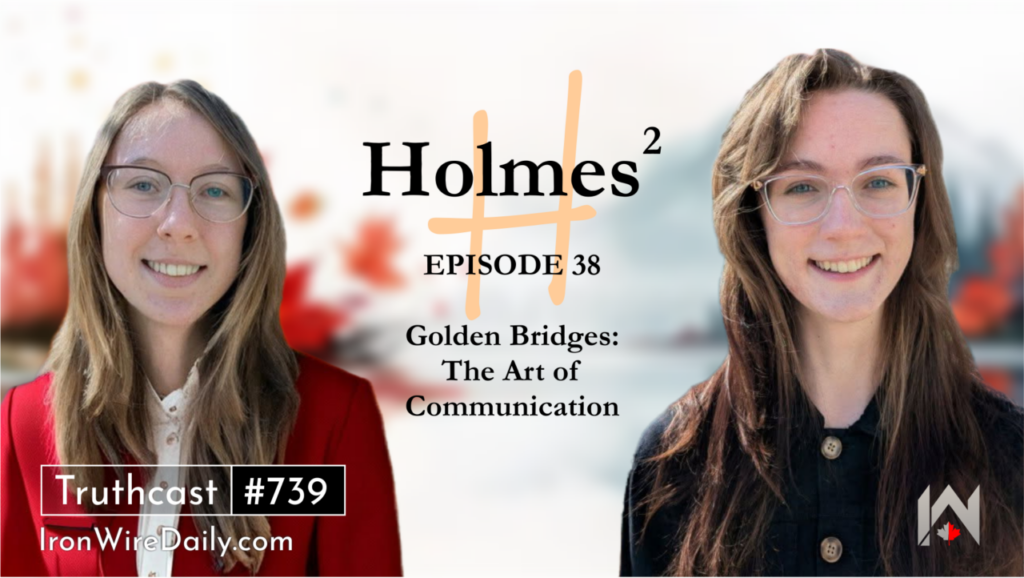
Madison and Maycee Holmes
Five of our youth discuss what first got them involved in conservative politics, and share candid opinions on Alberta separatism, national unity, education reform, flags, fluoride, and merit-based grade promotion. The tone is optimistic about skyrocketing youth involvement in the party while acknowledging real internal tensions over sovereignty and federal-provincial relations.
Want more Holmes?
Find them on Substack, Rumble and YouTube
You can also contact the Holmes sisters directly at Connect@at-home-with-holmes.com
Buy precious metals at wholesale prices right here in Canada. https://info.newworldpm.com/154.html
Get Sound Financial Advice: adrian@itstartswithgold.com
Take back Canada! Find and Join your LOCAL Freedom Community FREE. https://freedomcoms.org
The Privacy Academy: https://privacyacademy.com/ironwiredaily/
(0:00 - 0:06) All right, everybody. Hi, I am Madison Holmes. And I am Maycee Holmes. (0:06 - 0:11) And you're watching Holmes Squared. And we're back on Zoom. We apologise. (0:11 - 0:28) Yes, we're on Zoom, but our editor will figure it out. Yes. So for today's episode, this is really exciting because not only is it our largest interviewer session, because we got a lot of people here today, but it's also, I guess you could call it a youth roundtable. (0:28 - 0:40) This is our debate team from the AGM. So Maycee, as we said in the last episode, the two episodes ago, because we recently just interviewed Samantha Steinke. And we talked about the youth debates. (0:41 - 1:13) And these are the lovely people that ended up debating alongside Maycee here. And so they have graciously agreed to do a podcast with us to not only discuss the debate experience, but the AGM, because we have been getting emails on me and Maycee on what was it like? What's the reading in Alberta right now? Because even people, I don't know if you guys know this, but this podcast is not Alberta-centric, it's Canada-centric. And so we have people in Ontario that are asking, what's it like in Alberta right now? Because Alberta is a hot topic. (1:14 - 1:31) So we are going to get everybody's opinions on how the AGM went, and then their personal opinions on some of the debate topics we went over, which Maycee did allude to in a couple episodes ago. So Maycee, do you want to start us off? Well, first, let's just do a little introductory roundtable. So we'll start with Avery. (1:31 - 1:54) Avery, introduce yourself to the audience and kind of give them a bit of an idea of, well, what led you even to coming to this moment here, where you're sitting down having a discussion with all of us young folks on politics. So I've been, most of my political engagement has been provincial. I started, my very first time I ever got engaged was when Rachel Notley tried passing a bill, I think it was Bill 6 or something. (1:54 - 2:07) Where it took away rights of younger farmers to drive tractors and help out on the farm. And so I built signs, marched around my kitchen, and was like, this is not happening. I can't stand this NDP government. (2:07 - 2:18) And that was the first time I was introduced to politics at like probably seven or eight. And then got really involved around 14 when I could become a party member. And that was also during COVID. (2:18 - 2:35) And I didn't like some of the things that were happening internally with the party during COVID. And so that kind of just pushed me, I guess, where I am now with the youth debates and being on my constituency association board and a federal committee as well. It's nice to know another youth on their CA board. (2:35 - 2:42) Me and Maycee don't know a lot. I can't believe you've been in, like, since you were seven or eight. That's insane. (2:42 - 2:51) Yeah, you have me and Maycee dead to rights. Oh, hell yeah. Well, so does Abi, because Abi, you're like, what, 20 now? And you're already an Edmonton director. (2:51 - 2:55) Like, that's insane. Yes. I guess that's a good transition into Abi. (2:55 - 3:24) What's your story then that led you into even going towards an Edmonton director as well? Yeah, well, I think I was always very involved in kind of like community. And so being involved in different things in my family was very, I'd say not political, but politically aware. And so we knew our MLA and MP and would go to our MP's house for New Year's Eve and and so just very politically aware. (3:24 - 3:43) And then my mom started kind of moving more in the direction of politics. And when the UCP party first formed, she was the one of the first central directors for the UCP. So I kind of got to see that. (3:43 - 4:02) And then she moved into a position as an MLA now. So I think just kind of from my family, I was very aware of it. And so I kind of was just like, yeah, this sounds like we need to fight for our values and make sure that we can fight for those in our province as long as we can. (4:02 - 4:18) So I'm more provincially political, but all areas are important. And then I moved to Edmonton this year and didn't have a lot, like I wasn't very busy. And so I was like, I need to get involved in different things. (4:18 - 4:27) So that took me towards getting involved politically, because there was by-elections going on at the time. And I just loved it. And I was like, let's do more. (4:27 - 4:37) Let's get more involved. So joining a CA and then ultimately running for Edmonton director for the board. Running and winning everybody. (4:37 - 4:52) Abi did run for Edmonton regional director. She's the youngest. Because in one of our videos, we did a little bit of a recap and inviting youth to come to the AGM to vote for the UCP board and vote on important policies. (4:53 - 5:02) Of which one person commented saying, you know, an AGM is basically an echo chamber. Yeah, they were like, it's a political circle, jerk. Yes. (5:02 - 5:11) And they're not wrong. In part, I was like, I can agree with that in some ways and then not in others. My first question was, have you ever been to an AGM? That was the first question. (5:12 - 5:19) And it hasn't been as of late. I feel like that's maybe how it started. Or that's how it eventually got to, which is just constant echo chamber. (5:19 - 5:27) Because people stopped being politically involved. But lately, I feel it's definitely not an echo chamber. There's a lot of push-pull here. (5:28 - 5:46) And Seth, what about you? Avery, it's funny you mentioned Bill 6. I think Bill 6 might be a good idea just for me. I went to BC once and I drove a tractor and I nearly broke a guy's shed. This is why I don't have a driver's licence. (5:47 - 5:59) I'm Seth Brown. I'm 16 and I'm a member of the board of directors for Sherwood Park. I got involved in politics because just over the last 10 years under Trudeau, I saw kids around me and myself. (5:59 - 6:10) Things have not been very good. And especially looking forward to the future, who knows if we'll be able to own a home, get a job, live in a safe community. So I decided it's time that I got involved. (6:11 - 6:24) I've also been concerned about education. That's why I've gotten involved provincially. I think that our education system right now could definitely be improved to make sure that students are interested in courses and they don't feel like there's an incentive to skip classes. (6:25 - 6:32) So one day, it was Canada Day this year. I talked to Nate Glubish. I met him at the Canada Day celebrations in Sherwood Park. (6:32 - 6:41) And I told him, I want to have your job one day. And he said, well, I'm not going to stick around forever. So contact my CA and we can get in touch. (6:41 - 6:49) And then I got in touch with the CA president, David Billick. And he's made me part of his youth committee. And I've gotten involved all across the party. (6:49 - 6:59) It's been very easy to build a network and get involved in all sorts of ways. And that's really a strength. It's so easy for young people to get involved within our party. (6:59 - 7:07) And I'm really looking forward to what I can do as Sherwood Park director. And who knows what I'll do in the future. Yeah, I'm curious about that. (7:07 - 7:22) Because we actually have a lot of viewers from Sherwood Park that have emailed us. But last time I looked at for even some family in Sherwood Park, I thought it was an NDP MLA. Is that correct? Yeah. (7:22 - 7:31) So Sherwood Park is divided into two ridings. There's like an eastern portion that gets part of Strathcona Sherwood Park. And that's Minister Nate Glubish's riding. (7:32 - 7:46) But my riding, and that's the majority of Sherwood Park, that's under Kyle Kosowski, who is a member of the NDP. From 2019 to 2023, we had Jordan Walker of the UCP as our MLA. But he unfortunately lost in the 2023 election. (7:46 - 7:56) So here's to 2027, I guess. Right. Now, that's one thing that's interesting here about that I've heard. (7:56 - 8:13) So Avery and Abi, both you guys have been more provincially central in your political engagement, which me and Maycee also. We've only this year really got involved municipally because we didn't really know we could do that. So we started with provincial, as you guys have. (8:13 - 8:29) And then Seth said it was definitely Trudeau. Trudeau for me was so far-fetched, I can't do anything about that much. But I have heard, and me and Maycee have engaged with a lot of other youth that were even attended the AGM this year. (8:29 - 8:44) People like Fletcher Gotti, he is on the board for his federal riding, which there's even that I didn't know, because there's federal ridings and then provincial ridings. So all of that I learned within the last two years. Me and Maycee are just getting on. (8:44 - 8:50) But we got 16, we got 20. How old are you, Avery? I'm 17. Wow. (8:50 - 8:54) Holy Hannah. Okay. It's funny because we're literally older than you guys. (8:54 - 8:58) I did not realise. Because I'm 21 and Maddie's 22. So yeah. (8:59 - 9:01) Yeah, that's insane. You guys are very much your age. I win. (9:01 - 9:13) Who's the youngest competition? Yeah. So that's a surprise for me to have people younger than me and Maycee that are involved and paying attention. That is very encouraging. (9:13 - 9:34) And I think it'll also be encouraging for the younger audience. That's why me and Maycee even got this podcast segment in the first place, because we had some people that were like, you're young and you're paying attention to the world? Really? No. So I have like my, Maddie, I don't know if you're okay with this, but I have a question that I wanted to kind of ask you guys specifically. (9:35 - 9:48) And it's, I guess you guys mentioned a bit, like even with the Avery, the bills. I'm sorry, which bill was it? Six? Is that what you said? It was, I can't exactly. I can't remember exactly what the reference number for the bill was, but it was, it had a six in it or something. (9:48 - 10:07) Yeah, it was so long ago. It's a good segue into the fact that you're trying to figure out what is the problem you want to solve, right? And I think that is something that I'm kind of curious about is as you guys have been involved, Avery, you've been involved since you were like seven or eight. And then Abi, you and your family have been very much engaged and involved. (10:07 - 10:33) And then Seth, you're only 16. Like, that's insane. So what I guess has been kind of the problems that have, I guess, struck you the most as you're going through this journey, the things that bother you the most, and then also just what is the most, I guess, the solutions that you guys gravitate towards that you actually genuinely care about and why you even, the kind of thing that gets you out of bed in the morning, still pursuing this direction. (10:34 - 10:50) So we'll start with Avery. Okay, I really started to get involved during COVID because I didn't, I really had a difficult time with the lockdowns, to be entirely honest, because family is something that's really important to me. And we have a lot of family that's local. (10:51 - 11:03) And so it was difficult to meet with my family and my grandparents. And sitting outside, social distancing with my grandparents wasn't the same as going to their house for a sleepover and hanging out on their couch. And so that was something that really affected me. (11:03 - 11:32) And something that I saw was very, very negative towards the development and the growth of kids my age and the kids younger than me. And so I got involved, mostly involved then, I guess I would say, and then what I'm seeing now as a result of what's coming from COVID and the answers that we're starting to see are the Davidson Report. I'm really, really, really satisfied with the results of the Davidson Report and what the provincial government is doing with the Davidson Report. (11:32 - 11:50) And honestly, governments worldwide, the American government has used the Davidson Report. And I'm so very thankful to be in Alberta where the Davidson Report is from, because that's such a privilege to be able to say, hey, I'm from where that started. Yeah, well, it was interesting. (11:50 - 11:57) We did a one-on-one. So, well, not we, Lougheed, Calgary Lougheed, they did a town hall with Danielle Smith. It was like one-on-one with Danielle. (11:58 - 12:34) And during that time, because Calgary Lougheed has put on two events now called the Injection of Truth, where they had a bunch of different doctors that came out that were kind of like, okay, like we are getting basically like... This is Dr. Gary Davidson, by the way. Yeah, we're getting basically squandered for us trying to say that, hey, maybe we should be questioning the effectiveness of this treatment. I'm putting quotation marks for those listening, because clearly we haven't scratched the surface on all the data and what data is out there. (12:35 - 12:50) You know, so people were reading the Pfizer reports and they were like, okay, guys, this is not looking as good as it's being portrayed. This has got to be some sort of propaganda bullshit. Because, and at the same time, they're like, why would we have reason to lie? We're literally losing our licences talking about this. (12:50 - 13:15) So why would we lie to you? You know what I mean? And so then the Injection of Truth, what was centred around that is you had people like Dr. David Martin, you had Dr. Mark Trozzi, you had Dr. Jessica Rose, you had all of these different doctors that were coming on trying to like blow the whistle. And then I think it was on our one-on-one with Daniel when Low Heat had it. It was Daryl Kamek, who just recently ran for our UCP President of the Board of Directors. (13:15 - 13:26) He didn't win, unfortunately, because I was rooting for him. But when I came- Still glad that Robson- Still glad Robson has won though. And then, so when they did the one-on-one thing, he was interviewing Danielle. (13:26 - 13:40) He was talking to her and was like, why are these mRNAs like not off the schedule? Like they should, they are not safe right now. And we need to get more data. This mRNA is a new technology when it comes to the flu vaccines. (13:40 - 13:50) So we need to really look into this more. Otherwise, people are getting hurt and or killed. And so Danielle, I think she was saying, well, I think I need to consult my guy. (13:50 - 14:11) And that was Dr. Gary Davidson. She's like, I need to consult him, right? And then that's what led Gary Davidson to go and create this report, right? And that's why I thought it was just so cool because all the evidence in it, even he himself, I listened to a couple of interviews that he was doing with like on the Chris and Carrie show. And he was like, it was so hard to try and get information from AHS. (14:11 - 14:18) It's like it's own little mafia. Like they won't open their doors to anything. They're gatekeeping knowledge right now. (14:18 - 14:46) And so a lot of the information he even had to say, like I confess a lot of it was also just straight up from regular people who took screenshots from things that are now removed and off the basically internet of things. And so that was pretty insane that that came out of it. But, and then I think it was a policy that we voted on here at this AGM on trying to implement everything that was put into the recommendations of the Gary Davidson report. (14:46 - 15:12) Yeah, that's another reason why for people that saw the C-U-C-P or just AGMs generally as an echo chamber and everybody just slapping each other on the back. These policies lead the direction of the party. And regardless of, I know Abi, as you were on the board, one thing that even Samantha Steinke and everybody in the UCP who's a politician, their goal is also for elections. (15:12 - 15:23) Win the election next year. Me and Maycee are a little bit withdrawn from that one because we're not politicians, but also- That in my brain goes like, you'll win the election if you actually do your job well. Right, right. (15:23 - 15:46) You don't have to campaign if you just run on good platforms and policy and then things will kind of naturally fall into place. It was very exciting to see a unanimous room of green but yes votes to implement the Gary Davidson report. I thought that was really encouraging, especially in Edmonton, which is known to be a bit more of the liberal leading NDP. (15:46 - 15:54) So it was nice to see the unanimous vote there. Yeah. Did you get to finish, Avery? I totally feel like I completely interrupted that. (15:55 - 15:58) That's okay. I think I said everything I needed to say. I think you're good. (15:58 - 16:09) Okay. So Abi, then same question for you then. I guess the problems that it is that you have found are the most difficult and struggling for your own soul that you are trying to figure out how to solve. (16:09 - 16:35) Like, what are those to you? Yeah. Well, I'd say like, I'm really interested in this because I am a Christian and that kind of represents all my views on everything and influences what my politics are. And so like, obviously like freedom of religion and I want to have a family someday where I can make sure that my kids are being taught truth. (16:35 - 16:57) So I need freedom of education and just a lot of things like that, I think are very important. And I also like very, very pro-life. And so what's happening with abortion and euthanasia, I think it's a big battle to fight, but that's something I'm super passionate about. (16:57 - 17:13) And even at the AGM, there was a policy passed on labour abortions. And so seeing a unanimous vote on that, so encouraging to see. And I hope to continue fighting for that to save the innocent lives. (17:14 - 17:28) It's funny you bring that up. Seth and I were actually talking before the debates had started on that very topic. He was bringing up some of the pro-life and anti-life clashes that were going on. (17:30 - 18:05) Seth and yourself? Well, I'd say within the party, just on that level, my biggest issue, it is trying to restore the Diefenbaker, McDonald, Disraeli tradition of conservatism back to our party. When we made that whole decision as a movement to merge the reform, fiscal, social conservatives and the progressive conservatives together, I feel like we had a takeover of the more libertarian leaning people. And over time, traditional conservative voices got suppressed. (18:05 - 18:28) And we've become a very ideological movement that, for example, Diefenbaker, he lobbied Prime Minister Meehan for public sector pensions. And he was very concerned about their social assistance policy. And right now, you don't see many conservatives out there who are concerned about social assistance. (18:28 - 18:44) I think we've got to restore that view to our movement. But on the policy level, my biggest issue is national unity. We have so many people across this country who are competing and they feel like they're in this hierarchy where I'm at the bottom and everyone else is at the top. (18:44 - 19:06) And it's all these different groups, the Quebecers, Alberta separatists, Indigenous people, they all feel that they're at the bottom of an unjust hierarchy. And I think that our public policy is to make sure that people can come together as Canadians, as one nation, where there is no hierarchy, where nobody can feel unfair because they're all one people. That is interesting. (19:07 - 19:29) I don't know how that's going to be achieved. Me and Maycee have done a lot of looking into, I guess, the nature of the Canadian political system and how Canada came into being. So we've definitely done a lot of flip-flopping in terms of even the idea of being politically involved. (19:30 - 20:00) We've at times been discouraged because looking at the system and knowing how corrupt it's gotten over the years. I mean, if I were to look at Canadian prime ministers, the fact that you bring up John Diefenbaker, he's like the only one that I think was actually worth applauding in my personal opinion, in terms of Canadian prime ministers. And in actually the Injection of Truth 1, because there were two, their campaign was actually the speech that he made regarding Canada. (20:01 - 20:08) Because it was a beautiful speech. And going back to- The I am a Canadian, the free Canadian. Yes, exactly. (20:09 - 20:22) But even despite that, I mean, I think we have strayed. And I don't know, it's because I think there's two, maybe you guys can comment in on this. I believe there's two different versions of what people see Canada as. (20:23 - 20:48) And maybe you guys can all paint that picture of what it kind of means to you. Because I feel, even in the Alberta independence movement, a lot of the things I've been hearing people say is that they aren't leaving Canada, Canada left them. I think it's because they actually share the same sentiment you're describing, that moral that John Diefenbaker might have stood for, it's gone. (20:48 - 21:03) And they would like something like that, but they don't believe they can do it within the system. I mean, hence we have Mark Carney in right now. The federal game, in my opinion, is kind of lost to our hands. (21:03 - 21:34) So yeah, there was, before you guys go on to comment on that, it's all in line, because a lot of the, once the AGM is over, there's the media, all sorts of different videos and stuff. And I saw that Daniel Smith was talking about the memorandum of understanding the MOU. She kind of gave a little bit of like a teaser and a taste of what does her audience think, right? By kind of asking an indirect question, by making an explicit statement, just to see what the audience was going to do. (21:35 - 21:58) And they all booed. They were like, we don't like this memorandum of understanding, because I think, and then I read in some of the comments, because even I was like, oh, okay, so I want to know what people's thoughts are. And it was like, some were kind of disappointed to see that she got booed, right? But at the same time, there were some people that were giving a retort and saying a rebuttal, because they were like, she asked and we answered. (21:59 - 22:30) We don't agree with it, right? And in a sense where it's like, okay, so you can maybe work with Prime Minister Mark Carney to build a pipeline for Alberta, but at the same time, you do have to understand the game and the politics of making, because if they see us as basically a slave class, which is what Alberta and a lot of Albertans do feel, like based on, it was even in, if you guys have seen Chris Scott's show, The Chris & Kerry Show, he's reading this book right now. I'm forgetting the name of it, Maddie, you might be able to pull it up. Oh, Clifford Sifton. (22:31 - 22:48) Clifford Sifton's book, and it's got a quote in it that basically says, in the founding of when Alberta was becoming its own province within Canada, it said we're going to use the resource. Yeah, this is the book. We're going to use the resources of the West for the East. (22:48 - 23:03) And it's literally in there at right as Alberta's becoming its own province. And so it feels very slavery-like. And the reason I'm getting, I'm saying this is because, so in their eyes, they're like, it's basically like, we'll give you something to make you happy. (23:03 - 23:55) You talking cow, right? But that's about it because it doesn't, some people are still like, it doesn't solve the fact that when you as Alberta, or like as Albertans are trying to figure out how to have your voice in the Senate, we know that the numbers are stacked against us because you need a majority when it comes to making any sort of important decision of which Alberta doesn't even have. And yet a lot of Albertans, if you look at even the equalisation calculations, and that's why when APP came out with their PDF on like the value of freedom, and that was basically a financial plan, what they were saying is we are over at like, over contributing by 44 to $47 billion because the money that we received back, we're not getting it in full. And so we are basically paying for the majority of what Canada offers. (23:55 - 24:25) And so when people say they like Canada overall as like an identity and unity, it's like everything that's beautiful about Canada, a lot of which has been because of the West and because of Alberta. And so that's why I think a lot of the discrepancy is like, as you were saying, Seth, in the beginning, you start to go like, man, like people can't afford homes right now, inflation's off the freaking roof, right? And that's where I think a lot of Albertans from the sovereignty movement would not disagree with you. They'd be like, like, you're right, there's a problem. (24:25 - 24:51) But the problem is they can't figure out, well, they've tried to, they've tried to figure out how do we negotiate with the federal government and the higher ups? And there's just, they can't find anything that's actually going to be that tangible solution that you're talking about. It doesn't mean that they hate Canada or Canadians. It's more like when the plane's crashing, most of the time you have to grab your own face mask to save yourself before you can hand it over to someone else. (24:51 - 25:28) And I think that that's where a lot of their concerns come from is how do we help ourselves so that we can, in our own choosing, help the rest of Canada? Because with equalisation, we don't really get much of a choice in that. But if we wanted to become independent and we have our own money, then it's as simple as, OK, now I get to choose what kind of charity I want to contribute and I would want to contribute instead of having it just taken away from me. Let's go around the room and get everybody's opinion on that because that was also one feedback me and Maycee got from not only people from our CA board, friends that we've been politically involved with and, you know, they've been in the UCP party for years and years and years. (25:29 - 25:51) But there's also, as I mentioned to you guys before we hit record, there was this Western Standard article written by Morgan, who's actually, me and Maycee have interviewed. For our viewers, it is the guy who's been on every side of every political affiliation ever. Yeah, for your guys' context, he calls himself a communist. (25:51 - 26:07) Right, he calls himself a communist and yet you can have a normal conversation with him and you would never know. Yeah. And this, again, expressed the surprise about the standing ovation and the opinion regarding the independence that Jeff Rath got at the AGM. (26:07 - 26:19) So let's go around the room. Was that a shock for you guys? Is this something you guys have looked into at all? Let's start with you, Avery. I think regarding kind of what you were talking about before, how Albertans are unsatisfied. (26:20 - 26:33) I think it's totally fine to pay into a system. And like we're in a country, so we're all Canadian, at least for right now, we're all Canadian. And so I think it's OK to be like, OK, we're going to help Ontario. (26:33 - 26:49) And then one day, Ontario is going to help us. But I think that the idea that's coming from the people that stood up and cheered for Jeff Rath is that Ontario doesn't help us. Quebec and the Atlantic provinces, we've been a part of Canada for 120 years, and we're the ones who are sending help all the time. (26:49 - 27:04) They never send us back help. And so I guess the idea on independence, and I wasn't entirely surprised to see it because even among my constituency association, I've I've heard a few people say, oh, I've heard some more things. I've heard some more things. (27:04 - 27:24) And there's been, I think a little bit it's been rising clearly. And so it's interesting to me to look into that and see maybe what that looks like. And then if we don't like that option, then we can always not go that direction and say, OK, I think we'd like to stand in Canada before we make any rash decisions, it would be, I think, wise to look into it a little bit further. (27:25 - 27:36) That's good to know, because you're you said the Highwood constituency. I would is. I would, I think, at least attempted to sponsor the injection of truth. (27:38 - 27:47) And so there's different we have a member of APP on our board, Tanya Clemens. She's a fantastic speaker. I think regardless of whether you agree with her or not, she's an incredible speaker. (27:48 - 28:14) And so it's interesting to hear because we have lots of different perspectives on the board. And so it's interesting to hear the different perspectives on the board and then see the perspective at the AGM from from everyone who stood up and cheered. Well, yeah, I will go on to Abi's response right after the thing that I like that you were talking about is at the very least, we should still be diving into the idea and the question because it's still it's something that Albertans are concerned about. (28:14 - 28:37) And I think that it's interesting because even seeing like the 85 percent of people that were like cheering for Jeff Rath, I was like, you know, a lot of the times you'll hear unfortunately and and yet not. It's like the politicians will say, well, we need to appeal to the member base because there are members because of the people because they are making an effort to pay in. And then they're saying, here's what it is that we want. (28:37 - 29:06) Right. And so I think that some of the things that were upsetting to, I guess, the Alberta sovereignty movement, specifically people like Jeff Rath, I think, is that the UCP wasn't really it's kind of like an elephant in the room and it's not being talked about as well as it should be, because he was like thinking, well, clearly look at the AGM. That's evidence that a lot of your member base is in favour of this idea, even if they're not necessarily like I'm going to vote yes right now. (29:06 - 29:51) It's more like I'm in favour of us talking about this because we are like, as Albertans, we're like, how are we going to prosper in something that is basically like like I said, a plane that's about to just crash. Like, what do we do? And so I think that that's that's the part that I think I kind of liked about it is the fact that at least we're having the dialogue and the conversation, because you can't say that even with the PDF they wrote, they talked about how what would an RCMP system look like? What would it look like for indigenous people? What will a pension plan look like? What would all the federal services that we get now? How would we take care of them? You can't say that they aren't trying to really, truly, structurally think it through. But Abigail, so what's what's your take? Yeah, I wasn't surprised to see that reaction at the AGM. (29:52 - 30:12) And I think my reason for that is that the people who come out to the AGM are the people who are passionate, are the people who want to see see something happen. If someone doesn't really care about anything, they're a lot less likely to come to the AGM rather than someone who's like, I want to see change in this area. Let's make this happen. (30:12 - 30:18) Right. The sovereignty movement right now is full of a lot of people who are very passionate. Right. (30:18 - 30:34) And so I think those are the people that are coming out to the AGM. Whether that reflects the party more abroad, I can't really say. But that reaction at the AGM, I wasn't surprised to see what it was like there. (30:34 - 30:50) And I grew up in central Alberta where I think sovereignty is a lot more, is a lot more accepted there rather than in Edmonton. Now people are more hesitant to do it. So it's kind of interesting to see those dynamics. (30:51 - 31:20) But yeah, it was, I don't think it was unexpected to see at the AGM. And then have you heard much opinions like Avery heard from her CA board? Have you been hearing murmurings? And because you got that diversity, what are some things that you've been hearing down where you are? Yeah, well, I've gone to one CA board where everyone is like, we need separatism. We can't stay in Canada anymore. (31:20 - 31:31) This isn't going for us. And then, so I heard that one. I think at probably six other CA meetings I've gone to, nothing was mentioned about it. (31:31 - 31:45) So either me. And then I have had someone say, like, you know, there's a lot of people in our party who are strongly opposed to it. So it's interesting dynamics. (31:45 - 32:15) I think even when I was campaigning, a lot of I was phone calling a lot of people and someone was asking me, well, well, what are you hearing on on sovereignty? And I think a lot of the people who bring it up are in favour of it because that's the issue they're concerned about. Right. A lot of people who are against it, they don't bring it up because it's not their biggest concern. (32:15 - 32:29) There may be more concerned about other issues. So that's what they bring up. So I think people who are for it are very loud and I don't know where other people stand on it that aren't bringing it up. (32:30 - 32:49) Yeah, that's a similar dynamic on the municipal level. We interviewed a bunch of people running in Calgary for our city council and people would bring up, like, what's your position on blanket rezoning? Because in Calgary, we had that blanket rezone vote and nobody... Not a real vote. They just basically said... Not a real vote. (32:50 - 33:01) Yeah. And like you said, because it was the passionate topic, they brought it up and asked, like, what's your position on it? Because that would really make or break whether they were going to vote for you or not. So that is a very common thing. (33:01 - 33:14) Before we get on to Seth, my contribution to what Abi just said is what I think it was when we were interviewing Samantha Steinke. Is it Steinke or Steinke, guys? Help me out. I think it's Steinicke. (33:14 - 33:16) I don't know. Okay. All right. (33:16 - 33:28) So I'm not the only one who's confused. Sorry, Samantha. But when we were interviewing her, the thing that I asked her was... So she set up the youth debate, right? And I was like, that's a great thing. (33:28 - 33:39) And kudos to you and your team for doing that. And we'll get into the youth debate after we hear Seth's thoughts. But when I asked her, I said, so you were able to accomplish this thing. (33:39 - 33:42) You made it happen. You presented at the AGM. She was like, yeah. (33:42 - 34:01) I'm like, do you think that we should be having debates across a kind of like Alberta with all sorts of age groups discussing these kinds of topics, these important topics, right? Because I'm like, I know one thing. I'm young and I'm stupid. So I'm like, I can only go so far. (34:01 - 34:21) There are people who have thought this through way longer than I have, right? And so then she was like, that's actually a good idea because when the Alberta NEXT panel came out, I was pleasantly surprised and I was happy because it was like, we're trying to figure out for Danielle, we already know where she stands. She wants a united or strong Alberta within a united... Sovereign Alberta in the United Canada. Yeah. (34:21 - 34:30) So then she starts talking about those cute little videos that she made of like what the possibilities look like. Alberta police force. Yeah, equalisation, all that. (34:30 - 35:04) Honestly resonates what Seth alluded to earlier. It was like that goal of looking for that unity is that all of those things that were brought up at the Alberta NEXT panel, all of them were aiming towards like a more sovereign Alberta, but that also gives more unity because I'd think people would understand. If you can hone your own household, when people are in survival instincts and then they can't take care of themselves or other people, you're not thinking about other people because you're too busy thinking about yourself. (35:04 - 35:31) How do I meet the next bottom line? You're living pay cheque to pay cheque. But when you have prosperity and you're in a good position financially, your health is taken care of, then you can start doing what Avery alluded to earlier and set that unity with taking care of others, giving people the charity, giving money to Ottawa if they needed it, which they don't. But if they did need it, then a lot of Albertans, if we were in a better position, I know they want to give. (35:32 - 35:45) Canadians kind of have that in common. That's the Canadian identity that people like to pride themselves on is we're very giving. And it very well would still be the case, I think, if we weren't doing so poorly. (35:46 - 36:03) Yeah, we're very conscientious people, like especially Albertans because if we're the type where we're the working force, it means that we give a shit of work hard to earn for your family and now we're at the point where it's like we're working hard but we're still not seeing anything. This makes no sense. The math's not adding up. (36:03 - 36:22) And then otherwise, we can't take care of the rest of Canada because we are literally dying here. But what I was bringing up with the Alberta Next panel is the fact that I liked that they were exploring those ideas. That's actually a lot of what, it's funny, the Alberta Prosperity Project has in their document is asking what do these questions look like. (36:22 - 36:29) The only thing I actually, I think it was a member of the communist group or whatever that was infiltrating those little panels. It was funny. They were like, I'm with the communists. (36:29 - 36:38) And then they would just start. But I actually agreed with something that they kind of said. I mean, I can counter what they said, but also agree with what they said. (36:38 - 37:05) Two things are true at the same time. And so I agreed in the sense where they were like, okay, so you're having these panels and you guys get to decide what is the important topics, right? And at the same time, I'm like, well, that's because they're listening to the members and the members decided regardless. But what I agreed was, okay, if we had more of a discussion like along the lines, because I understand the contention has been made the whole time and I've heard this a lot that the UCP was never put in place to be an independence party. (37:05 - 37:56) So I can understand why they're not talking about independence because they're like, well, that wasn't what we're running on. So I get why Danielle's doing what she's doing. The only thing that I would probably can like bring forward is like a suggestion that I wish I was seeing is when we were doing the Alberta Next panels, right? It's almost like have a discussion about what it looks like as we're trying to figure it out within if we were to stay in Canada and then also have a debate and a conversation about what would it look like and what are the some of the hurdles that some people are finding to that theory of, okay, so let's say we stay in Canada, listen to the people that think they actually have found where there's hurdles and there's loopholes that we're going to have to try and figure out how to navigate and have a discussion with the more sovereigntist minded individuals and the strong Alberta within the United Canada because the amount of common ground that is there is fucking insane. (37:56 - 38:03) Pardon my language, but it's fucking insane. So that's what I would say. But Seth, so now let's get your thoughts on all of that. (38:05 - 38:15) I think now I'm in the strongly opposed category. I don't think we should separate. I think what we should instead do and I've talked to separate, I talked to separatists at the AGM about this. (38:17 - 38:32) Some were just very adamant ideological and but like you said, there are the ideological we've got to separate people and there are the maybe we should separate. Maybe we shouldn't. I don't want to commit people and they seem more open to constitutional reform. (38:32 - 38:57) One thing I think is really important is giving provinces full jurisdiction over what is in their jurisdiction, which includes natural resources and energy. They should be able to overrule federal laws that deal with that, as well as climate change, because each province is a different climate situation. Prince Edward Island, they don't have much of a dependency on fossil fuels or coal. (38:57 - 39:05) They can very easily meet the goals, the climate goals that the federal government wants. We can't. We are dependent on oil. (39:05 - 39:12) We have so much oil. It's the majority of our grid. And so we should be able to make our own climate policy solutions that work for Alberta. (39:12 - 39:37) And I think that that would really soften what is really a core issue for all of the people who think that Canada doesn't work anymore. I was very surprised when people booed our own premier because no matter what you think about Alberta sovereignty or Canada or whatever, when you do that, that's all that the media is going to be talking about. And that's just giving fuel to the NDP. (39:37 - 39:51) So they've really been working against our party by doing that. And I didn't find that really productive to do. Jeff Rath, as well, using question time to just interrogate the premier and berate her. (39:51 - 39:59) That was also very disrespectful. I think we've got to solve our internal disagreements as a party. Absolutely. (39:59 - 40:17) And we've got to make sure that we can stay united. But if you have a problem with the party, don't be like Peter Guthrie and that other guy, Scott Sinclair, leaving the party and calling it the far right party, forming their own party and splitting the right wing vote. Don't be like Peter Guthrie. (40:17 - 40:28) Stay within the United Conservative Party and maintain our unity so we don't get an NDP government in the next election. Mm hmm. I love how that always that's always the way it always comes back. (40:28 - 40:32) I think I've heard that. Yeah. And don't let the NDP in. (40:33 - 40:41) Walgro's part two. Please, no. Well, now that we've got everybody's thoughts kind of on that, because that was one of the big topics of the AGM. (40:42 - 40:55) We should, as Maycee alluded to, we should touch on the debate, because not only was this everybody here minus me debated. Um, Avery won the debate. Yeah, I did. (40:55 - 41:02) Guilty as charged. Guilty as charged. So that is something. (41:02 - 41:06) Congratulations again. Thank you. Congratulations to you guys. (41:06 - 41:13) Abi, congratulations on winning and congratulations on winning your Rising Star Awards, ladies. That's fantastic. I keep forgetting that. (41:13 - 41:20) Oh, my gosh. Yeah, this this is the handy. Can everybody see this? You guys can see this screen share. (41:21 - 41:22) Yeah. OK, awesome. Yes. (41:22 - 41:29) This is the lovely, the lovely team here. The word that Avery is alluding to. This is me and Maycee. (41:29 - 41:35) This is Samantha. If you guys haven't seen her. And then this was the moderator of the debate, Chantal de Jong. (41:35 - 41:41) Yeah. Is she the youngest MLA? Yeah, she is. I think she is, yeah. (41:42 - 41:57) Yes. So it was definitely a productive. I was also one thing that I think I was excited about this year is because we Avery, you saw last year when we did the debate, the it wasn't a full room. (41:57 - 42:06) Not every table was full for the debate because it was going on during lunch hour. So it's not optimal, but it wasn't on the schedule. It wasn't on the schedule. (42:06 - 42:14) It was in a separate building. It was in an entirely separate building. Yeah, it was nature of the Edmonton arena that we picked or Red Deer Arena. (42:14 - 42:23) But this year it was a full room. And I also think personally, I think that also is a little bit because Abi, who is running. Thank you, Abi. (42:27 - 42:45) But that's something that I think we all agree also the next year that now that we have all got contacts with people like Rob, Sam, Abi, the Youth Committee, that we're going to if we can get it in personally. Actually, I also want your guys's opinion on this. I think the next gen room is retarded. (42:45 - 42:50) Forgive my R word, but forgive my R word. Exactly. Yeah, I don't. (42:50 - 43:03) I just I found that people would just talk with people they already knew. And I felt like I was like high school where you're like in the lunch room and everybody's sitting at their own table to talk to one another. And it's like you all in a room. (43:03 - 43:14) I don't know the solution is because I'm like, what did we do? Like ice breaking games? Well, I mean, not like that. No one's talking to anybody, but they actually don't know. I think the next gen room was fine for meeting new people. (43:14 - 43:27) I met a lot of new people there. But for the debate doing it, that was, I think, the only word to describe that is the word you used. We should have done it on the main stage. (43:27 - 43:43) I think that if you want to get more youth involved as a party, you have to give youth, you have to pull out all the stops for the youth. And that includes putting the youth debate up on the big stage in front of the big audience and not in a tiny little room. I don't mean to sound entitled or anything like that. (43:43 - 44:00) There were people that even Sebastian Avery, who participated with on your team last year, didn't know that there was a debate this year. So but having it on the main stage tells all the youth this is something that's actually going on. I mean, I think everybody here is already involved. (44:00 - 44:03) Exactly. Yeah. There were people who just figured it out. (44:03 - 44:13) There were people who found out when Avery got on the stage and got the certificate or something or not yet. It sounds like they have a plaque or something. Oh, nice. (44:14 - 44:21) They should have given it to you on the stage. Two of her animal pelts up there. Well, I can't claim all of these. (44:21 - 44:25) This is all family. Oh, yes. My own deer is not in here. (44:26 - 44:30) The fact that you have one. The antlers were too small. Badass. (44:30 - 44:48) I'm jealous, no lie. Yeah, I think it's a good. I actually appreciated that it wasn't on the main stage simply because it kind of takes a lot of pressure off because when because there's so much media in that main room because they're all set up and they're like, well, we may as well just sit here and eat our lunch in here. (44:48 - 45:06) There's so much media there that if we say something that doesn't align with the party or is too conservative or is not conservative enough, then we could be really pinned for that. And I actually really appreciated that it was in a smaller room because then we're not representing the party necessarily. We're more so representing ourselves if we're on that big stage. (45:06 - 45:19) We're representing the party and we have to be very, very conscious of what we're saying. And so it took a lot of pressure off to have it in a smaller room, which it felt like a last minute change. But I think the whole debates were thrown together last minute. (45:20 - 45:35) And so I think with the way that they were thrown together, with the amount of time that we had, I think it went excellently. I think next year, obviously, there's improvements to be made, but I think in everything there's improvements to be made. And so I actually really did appreciate that it wasn't on the main stage. (45:35 - 45:54) Maybe if it was in a bigger room where we had more seats or more food or more space that people could come watch. Or even if it was streamed in the big room, I think it maybe added a little bit of, it added substantial amounts of pressure when I thought that it was going to be on the main stage. Logistically, we talked to Samantha and she said they didn't have enough time. (45:54 - 46:05) So I understand why it kind of went the way it did and not a lot of people knew about it. Because even with the regional things, she didn't want them to be on Zoom, but they kind of had no choice. Otherwise next year, she's like, I want them to be in person. (46:06 - 46:12) And I didn't even know about it until my friend sent me the email. I didn't even get the email for it. And they're like, hey, have you seen this? I'm like, oh. (46:12 - 46:24) So I feel like a bit better advertising as well. And so that way people are aware. But at the same time, I know, Abigail, that you said that no one really showed up to your regional one. (46:24 - 46:35) But for ours, there were 14 people that signed up and only five showed. So it's just, it's just, yeah. And yet, so that seems to be the biggest turnout because everybody else didn't really have a turnout. (46:35 - 46:51) Which is surprising. Where do you stand, Abi? What did you think of the debate format and how it went? Yeah, I think kind of just we needed a bit more time. Like, yeah, there was nine people who signed up and I was the only one who showed up. (46:52 - 47:01) And part of that, I think, was that I signed up. And then for about a month, I didn't hear anything until like two days before. And then I was like, here's your debate talk. (47:02 - 47:16) That's very fair. And so if we just kind of have a bit more time and planning, then I think people will be more aware, hopefully a bit more publication. Because like, I'm so glad I got to debate and debate with all of you. (47:17 - 47:35) But I'd love to see 20 people contending for each region and really have a competition really high. That'd be so cool to see. And I think like even for a lot of the older people in our party, it's so encouraging to see the youth. (47:35 - 47:48) Um, I don't know how I feel between the smaller room and the main stage. Main stage, you're going to have a lot more. People are going to know about you a lot more. (47:48 - 48:00) But like Avery said, I was a lot more comfortable in that room. So I don't have a strong opinion on that one way or another. But I thought it was amazing to see it packed out. (48:00 - 48:08) Yes, the room being packed. I was upset. I recorded at the beginning before the flood of people came in and I should have done it afterwards. (48:09 - 48:22) But I think maybe a middle ground might be possible too because we could do still a small room, but do it not at a lunch hour. That way you can always guarantee a packed room. So maybe something like that would be better. (48:22 - 48:46) Like instead of doing the next gen room, you have that designated to free up schedule or time in the schedule for the debate so people can come instead of people skipping their lunch. Well, the policies were literally happening right when we were reaching the end. So even for Avery and Cess, kind of like final showdown, a lot of people had to leave because it was like, we have to go write policies now and that's a big portion of why people come as well. (48:46 - 49:00) It's not just to vote, but because of the policies. And so I think that scheduling, like I agree with Abi, scheduling it where it's not lining up like that is a bit better. So that way people can just chill, relax and not have to worry about having to catch the next thing. (49:00 - 49:23) And then in terms of where I would stand with the big stage versus small room, I think that if they put us on the big stage, I can see what Avery means by now. I feel like we're going to have to represent the party. I think that what that would have to include then is like some sort of disclaimer because at the same time, like even if the media portrayed something that was like, oh, look at it. (49:23 - 49:45) That's not like... Like they're doing to Seth. Like, yeah, like... Misrepresenting my quote. Like to me, I don't care about that to be completely honest because I'm like the whole point is the people that are living and breathing and looking and being at the AGM that see that this is, A, that's not what happened or B, that there are young minds that are thinking for themselves outside of the party. (49:45 - 49:59) That's something that to me is healthy. I think that's a good thing. So if we were on the main stage and we said something that I guess would be necessarily against the party, but still for ourselves, I still think that that is encouraging some good like critical thought real time. (49:59 - 50:12) And I think it's also... It's also admirable if the party did that. But I agree with the small room slash compromise assessment of it might take off a little less pressure though. And it might be a bit more comfortable. (50:13 - 50:22) And also it gives people incentive where it's like, no, if you want to go see what youth are up to, then go. There's the opportunity. The room's called 106. (50:22 - 50:32) Like, you know what I mean? Well, what Seth alluded to earlier, which is like, okay, you have some differing opinions. I mean, you're going to have overall aligned values. Obviously. (50:32 - 50:51) But even showing people that you don't need an entirely different party in order to function. You know, if we can... We don't need all these splintering. You know, divide and conquer is something that every manipulative oligarch that has ever existed, empires, tyranny, whomever. (50:52 - 51:03) Divide and conquer is what they do. So they would love to see 30 different Alberta groups because we can't just get together. So also showing the difference of opinion to show people it's not an echo chamber is also a good thing. (51:03 - 51:17) Would keep us, if anything, that kind of like that division in thought might keep us together because showing we allow for that. Right. And so on to that, I wanted to get your guys'... Let's go over the debate topics because I wanted to know your guys' real opinions. (51:17 - 51:58) The thing about debates that I failed at, which is actually why I didn't end up going through is because I gave away my real position when I actually thought... Yeah, Maddie was in the... Maddie was doing the regional. But I think she told them what she actually felt. I did. It just... My lesson though. But the point of that is that the debates are supposed to figure out both sides and then the audience has to guess which side you were for. So what was it like for you guys? Did you guys find it difficult to argue? Because most of the three policies were not having flags that aren't like government flags on public property or governmental buildings. (51:58 - 52:11) That includes things like schools and then your city halls, etc. So not having any unnecessary flags there. And the decision was only pass students based on academic skill and proficiency. (52:12 - 52:14) Merit. Merit, basically. Yeah. (52:14 - 52:18) And then the final one was fluoride. And the practise of community water fluoridation. Yes. (52:18 - 52:42) So, I mean, on face value, a lot of people are saying those are all pretty conservative policies. There were some people that came up to me like, how are you going to argue like the academic skill one? Because they were like, that's such a liberal thing, like only passing kids based on, like, I don't know, participation ribbons and just trying to make them feel good. So how are you going to argue against that? Of course, we should pass them only on academic skills. (52:42 - 52:54) So that's why I think that this is a fun question. What was hard for you guys? And also, where do you guys stand? Yeah. I mean, the room voted unanimously yes for all three of those policies. (52:55 - 53:04) But what did you guys think? Let's start with Avery. I'd have to say I agree with the room on all of those policies. I think the flag policy was fantastic, which I argued against. (53:05 - 53:11) I said it went too far, but honestly, I was splitting hairs. I love the flag policy. I think it's great. (53:13 - 53:29) And then I debated for the second and third ones. And the second one, I really appreciated because obviously you don't move on until you can fit before you can complete what you're working on right now. That's not how life works. (53:29 - 53:34) And that shouldn't be how we're teaching our students. That's how life works. And then the final one, we talked about fluoridation. (53:34 - 53:59) I 100%, I was so glad I won that coin toss because otherwise I would have been like, oh no, how am I going to debate against this policy that I love so much? Because fluoride is something that I've been thinking about for a while. And so to be able to prep both sides makes my arguments, my rebuttals better and makes my closing statements. It makes everything about my debate better is when I prepare for both sides. (53:59 - 54:07) Yes, absolutely. Amen. Abi? Yeah, I like same, agreed with all those policies. (54:07 - 54:23) But I think even getting to argue them opened up my mind more. And even on the flags one, I was like, I agree with what this policy states. But in my argument, it was more so not what the policy states, but how it's written. (54:24 - 54:53) And even like there's a flaw with saying federal, provincial and municipal, which we only have jurisdiction over provincial. And I was like, okay, do I, like when it came to policy, I'm like, do I actually want to vote yes to this? Because I was just arguing that there's a flaw in how this policy was written. So even making me think more about things, those things I think was very good. (54:54 - 55:10) That's a good point. I think me and Maycee also felt from the first year, Avery, maybe you can comment on this too, because you debated with us on the first year. Some of the policies, because me and Maycee's approach was less of, because we agree with ending fluoridation. (55:11 - 55:26) Absolutely. And me and Maycee don't like arguing against our values, which is kind of what Abi said at the beginning, Christian values is like, you don't, when you have a conviction, me and Maycee don't like to argue against it. And everybody says, oh, it's a debate, just argue what the NDP or the liberals would say. (55:26 - 55:52) I can't do that on principle. And so me and Maycee, usually what we, also what another debater or an older friend of ours who used to debate said, present the alternative arguments, provide if you don't like this one, even though you like it, if you're taking the position of, I can't be for this policy, present a better policy rather than disagreeing with the moral, which you don't disagree with. Yeah. (55:53 - 55:58) Just find a better way to end. It's like the concept of like, oh, maybe it doesn't go far enough. Right. (55:59 - 56:25) Or maybe I think it was, I forget which one that I debated and I had to go against. And I kind of use the example of sometimes it can be caught in a do nothing-ism thing. Oh, I might've been arguing for, cause then it's like, if we say based on the splitting hairs that you guys are talking about, if you get too caught up in the splitting hairs, right? Then now you're going a whole year without this thing being at least on the, on the government's mind, right? And so then I'm like, you can get caught in a do nothing-ism thing. (56:25 - 56:31) So it's like, it's still me saying, technically for this, but. Yeah. But we basically also last year got caught up. (56:32 - 56:43) Once we were like, oh, we've come up with better solutions than what this policy has provided. We're like, oh, do we still vote yes for it? I've done that. So I don't want to sidestep assessment either. (56:43 - 56:51) So I'll just say my quick two bits since I guess I was debating with you guys. Yeah. And then I want Avery, if you've got, if you got that syndrome and you're like, nah, it was easy. (56:51 - 57:30) I just totally. I, I did that last year when it came to, I think one of the policies I think we had to argue against was fixing the immigration problem. And the way that I did it is I was like, well, we wouldn't have a problem if Alberta was in a position to be a good host to who is coming in, as in if we were prosperous and we actually had our shit together and we could create our, and we were less of a export our natural resources, like in a sort of colonialism, feudalistic past system that was like from the past. (57:30 - 57:42) And it was more like a, we actually refined our own oil here. We actually made our own, like we're basically now an economy, not just of natural resources, but of materials and products. Like we make ourselves here at home. (57:42 - 57:54) I was like, well, that would help us exponentially economically. And then we wouldn't be worried about an influx because we could take them because we can actually provide for you. It's like, I invite you into my home and yes, I have the bedroom for you. (57:54 - 57:59) Yes, I have the extra food. Yes, I, but we don't. And that's where my thing came in. (57:59 - 58:14) And I remember I was explaining to my friend, my point, just, you know, kind of like the aftermath of the debate. And you're kind of sharing, you're excited about what it is that you've learned or what it is that you've, how you've thought differently on it. And then she was like, oh, well then what do I vote for this one? I was like, oh, probably so. (58:14 - 58:22) Yes, we still should probably pick this one. And then, and then even with this year, I had another friend of mine. It was for the academic one. (58:22 - 58:42) And when I was making the points against, which I agree with Avery was like, yes, you should, you should know to read and write. But when it came to having to argue against, I was like, well, first we should get specific about what kind of an education system do we want, right? Because maybe it's flawed. He was like, shit, I don't know. (58:42 - 58:54) I feel like I wanted to vote against because you convinced me. And I was like, oh, that's funny. Avery, did you get that syndrome? My background, like my debate background is policy debate. (58:55 - 59:25) And so I just kind of do basically what you said is say, this policy is unsatisfactory because of the wording or because of the, and it's kind of difficult at a conservative thing to say, I disagree with this policy because of the morals, because this is like the top 36 out of like 850 or a thousand or however many policies were submitted to the policy to PPGC this year. But so it's difficult to look at those and go, I can't agree with the morals of this. So I just kind of look at it and go, OK, I can't agree with the wording of this because it covers too much or it doesn't cover enough for it. (59:26 - 59:34) Blah, blah, blah. I think that we should convey a different idea to the government of what we're looking for. So generally, it's in your own press. (59:35 - 59:44) No, I don't think so. You're a better than me and Maycee. We're like, oh, maybe that's a good idea. (59:47 - 59:53) OK, I guess that means, you know, if there's a reason you won the debate this year, we'll say that. Yeah. Yeah. (59:53 - 1:00:10) Oh, my gosh. We could go down a whole rabbit hole of what I know I did wrong. But OK, Seth, so what are your views then of how the debate format and all of that went and your own views and how hard was it and all that? I think the most awkward moment for me wasn't in the finals. (1:00:10 - 1:00:16) It was in the qualifiers. Me and Avery, we had to debate transgenders in bathrooms, transgender people in bathrooms. Right. (1:00:17 - 1:00:23) And I am not a supporter of transitioning anybody. Right. So I had to defend that. (1:00:23 - 1:00:31) And I had to say, well, actually, maybe we should be transitioning people. That was very awkward for me. That's kind of my issue, too. (1:00:31 - 1:00:38) So yeah, exactly. That's totally unfair. My issue, my top issue out of all the resolutions we did would probably have been the flags. (1:00:38 - 1:00:46) That was the one I was most passionate about. I think that it's unity is most important. So, of course, being able to unite under one flag. (1:00:46 - 1:01:03) I would have also voted yes to the second resolution, even though what I said, I think it is just better for students so they don't fall into bad habits to be held back grades. But for the third one, I don't really have a strong position either way. I don't I don't really care. (1:01:03 - 1:01:08) I don't think fluoride really impacts me very much. And that's just my personal opinion. So it was hard trying to find like a conviction. (1:01:09 - 1:01:30) I was thinking, of course, oh, if I get the in favour, I can just go freedom, freedom, freedom. But it was hard to find a defence against the resolution. But it is, you know, this is really, really important, really important skill to have, because you look at you look at what people on the left say about us. (1:01:30 - 1:01:56) They say that we're fascists and then we call them communists and we get into that habit of mischaracterising everyone. So it's important to know other people's views and know what they're really doing, because we like to talk about the NDP is going to raise your taxes, but the NDP and other provinces, they've done tax cuts. So if we just look at everything black and white, we'll never get ahead. (1:01:57 - 1:02:15) And that's why debate is so important and understanding other people's perspectives is important, because just on a small national policy level, that's how you get things like the Trudeau carbon tax, him adamantly defending it while there are people suffering because of it. And if you take it to the extreme, that's how you get people committing genocides. They don't understand other people. (1:02:15 - 1:02:39) So it is very important to have that core value in a society of free debate and understanding other people's perspectives. And I'm really glad that Samantha organises this for us so we can have that value and great at us in a young age. Yeah, I guess it also that's something that both Abi and Seth, you kind of touched on, which is the research aspect. (1:02:39 - 1:03:02) So Seth, you with the fluoridation, I guess, because there would have been a couple policies that I know for me and Maycee, for or against conservatives really value their statistics. Facts aren't everything, because facts, you know, do you guys know that quote where it's like, it's not about what you say, but how you say it. And that sounds very touchy. (1:03:02 - 1:03:12) That or the whole nobody cares how much you know until they know how much you care. Right? Yeah. And the facts don't care about your feelings is a really catchy conservative quote. (1:03:13 - 1:03:20) But the reality is when people start yelling at you, even if they're yelling truth, it doesn't matter. You're yelling at them. So people are going to pay attention. (1:03:21 - 1:03:49) And that's one thing that I think me and Maycee have also learned more and more doing things like debates is that even with the value of statistics, how you say things, it's not just about having lots of facts. I tried to actually avoid turning it into a statistical argument, because in the modern age, you can always find a study that proves your bias. And so facts really don't matter anymore. (1:03:49 - 1:04:03) And that's a problem. Because no matter what you think, there's always a study by some hack who thinks that what you think is wrong, actually. And what the debate I feel would have turned out if I had just gone, well, here's a study is we would go back and forth. (1:04:03 - 1:04:06) My study is right. No, your study is wrong. My study is right. (1:04:06 - 1:04:09) And, you know, we keep going. Right. The trust, the science thing. (1:04:10 - 1:04:29) And that's that's where so one thing for that's an actual problem. And even some people that we've there were some younger people, like I'm having issues because I can find statistics for both sides. If you're trying to argue objectively or you are maybe like you said, you didn't have a position or you're like Abi, and you're very open if you haven't yet done a lot of research. (1:04:29 - 1:04:50) But now you're doubling in and you're and you're stuck because, oh, I have found statistics for both sides. So where do I go to get through that? Then you look at, OK, who funded the studies? So people will look at the studies. But then once you go and look at, OK, what are the financial incentives? Because what's that? Show me the show me the money. (1:04:50 - 1:04:54) I'll show you the incentive. Show me the incentive. I'll show you the outcome. (1:04:56 - 1:05:17) There are a lot of studies, even Avery, who I was I was very surprised with some of the the fluoride, even though you were talking for it. I was surprised with your your approach, because I guess me, me and Maycee have done looking into some fluoride. So we're a bit more avidly against it because of some of the harms. (1:05:17 - 1:05:30) You took such a such a casual approach where you were like, look, if you want it in your water, which me and Maycee agree, that's the individual choice because having it is true. You can't rely on a government to flip flop. You know, great. (1:05:30 - 1:05:40) You vote it out. But then if an NDP government gets in, they're just going to vote it back in. So instead of doing that, having individual choice and then you brought up the individual here's fluoride toothpaste. (1:05:41 - 1:05:44) Yeah, I just love it. You're like you literally did buy it. Yeah, it was. (1:05:44 - 1:05:47) I loved it. I didn't even think of that. I was like, oh, that's so smart. (1:05:48 - 1:05:56) But it's true. It's true. It's like people can still implement it in their lives without it being forced upon them or not forced upon them. (1:05:56 - 1:06:03) There are ways that you could acquire it. I thought that was very interesting. For the for the fluoride one, I'm sorry, I just I can't help myself. (1:06:03 - 1:06:14) When I was watching, I was dying because I really wanted to be on that stage. Because I thought I have such a good argument against actually, because I was like it was hard. I was like, how do I? Because I'm four getting blown out of the water. (1:06:14 - 1:06:35) But I was like, well, maybe if you make it like for individual choice, share like individual like households themselves can just decide if they want to put in their own filter or not. Right. And then I was thinking, like, if you if you ran on a policy that said and was more specific in terms of an incorporate, like individual choice. (1:06:35 - 1:07:04) Right. And you ran on the policy that integrated that more, as in like putting it into the households, like making it so that there's there's tablets like fluoride tablets that people could take if they wanted to, like your average person. Right. Like if you just ran on that, if an NDP government came in and they were like, oh, no, but like, look, it's like they took away your I don't know, your health and your ability to. It's like your ability to what? Choose. And so I'm like, it's political suicide, suicide to try and go against something like that. (1:07:04 - 1:07:08) So I just thought it was a good point. Yeah. Yeah. (1:07:08 - 1:07:30) I tried to go the route of its health care and its government's responsibility to do health care, even if people disagree with it. And that would have worked if it was like, should we force people to go into surgery if they get shot? But this is putting fluoride in the water, saving you 16 dollars on your dental bill. That's not really something as drastic where that argument would work. (1:07:30 - 1:07:55) I think if I had to do it a second time, I would have probably done the municipal government argument. I would have said this is a municipal decision and I think that government works best when it's closer to the people. Right. That is that is definitely that was one of the things that Abi, you mentioned that you found was the overreach, the overreach aspect. And I thought it was a good argument. I'm like, yeah, because when I first read the academic skills one, I or I think the flag one. (1:07:56 - 1:07:59) Yeah. And it said municipal in there. I thought to myself a little bit. (1:07:59 - 1:08:12) This seems totalitarian. Like to me, I actually was like, this seems a little top downish to me. Like now you have a bunch of people going to a bigger political entity saying come come squander the local political entity. (1:08:13 - 1:08:36) And I was like, that doesn't just get involved locally. Then what's wrong with you? It does show that there's a problem of engagement, though. And that's one thing that I think one of the biggest takeaways from this whole podcast with you guys and I think our viewers will really appreciate is just all you're all involved and seeing young people on the stage winning debates will encourage other people next year to participate. (1:08:36 - 1:08:48) And then seeing Abi, youngest person on the board of directors will encourage people to get involved. And I'm not I'm never going to advocate. I'm a little less inclined, like Seth, to go, oh, I want to be the next MLA. (1:08:49 - 1:08:57) Kudos to those who do. I've not gotten there yet. But there is there is a place for that. (1:08:57 - 1:09:35) Me and Maycee just try and do stuff more like culture, have these dialogues with people and then encourage what Seth you alluded to, which was the the friendly debate, you know, encourage people to argue for both sides because you might just be like Abi and find, oh, I that's actually a consideration that I didn't have before, you know? So that's this has been a very good conversation for that because this is just going to show people that there is a place and it might not always look the way you initially imagined. I mean, I'm sure, Avery, you going to argue against because you want to ride your tractor. You didn't think, oh, now I'm going to be on my CA board. (1:09:36 - 1:09:43) You know, no, that was never the thought that entered my head. I was like, oh, look, there's a bunch of big semi trucks outside of Okotoks. That's cool. (1:09:46 - 1:09:57) Yeah. And Abi, we're definitely going to have to have you on when it comes to asking you what it's like to be a regional director, because we've gone on for a long time. So I don't want to be too mean to the audience because, you know, short attention spans. (1:09:57 - 1:10:02) Just kidding. Just kidding. Got to make it vertical, but like family guy in the bottom. (1:10:02 - 1:10:05) There you go. Right? There you go. Yes, exactly. (1:10:05 - 1:10:19) But so is there any closing remarks that you guys want to leave the audience off with or something we didn't touch on that you want to just lastly put out there for the. Yes. I think the more people that get involved, the better. (1:10:19 - 1:10:30) So if you're watching this and you're not involved, you better start getting involved because now is the time get involved. You're not going to be the youngest person in the room anymore. I can guarantee you that because I was the youngest person in the room for a long time. (1:10:31 - 1:10:51) And and now you won't be the youngest person in the room because there's so many more youth joining in. And I think that the youth debates last year and the youth debates this year, having to have the regional debates and having upwards of 10 people sign up per region is is really just a signature or a sign of of how much the youth is getting involved. And I'm so excited to to be a member of the youth that is getting involved. (1:10:51 - 1:11:06) And I'm so excited that you guys are all also members of the youth that are involved. I love how Avery went first. I freaking knew it because when we were at the at the debate in the room, she was just like, should we get this thing started? Like, I know Samantha's not here, but I think we could just do this right now. (1:11:06 - 1:11:10) I was like, hold no. I'm like, she's a go getter. She's like, I'm just take this over right now. (1:11:11 - 1:11:25) Well, yeah, you have you have a larger family. I mean, by today's standards, because, you know, people that have more than two kids are like, well, you're ambitious. You know, but so I mean, you have a bigger family, which me and Maycee do as well. (1:11:25 - 1:11:41) We got seven people in our household. So I think that that's also why I was so shocked that you were 17. But I really shouldn't be because you have you have brothers and having brothers and then a big family and you can kill a deer. (1:11:41 - 1:11:52) I mean, your constitution is sound and it definitely showed in that debate stage. So you just pushing getting through. It was it's definitely inspiring for me that I was not at 17. (1:11:52 - 1:12:03) I was a little bit more like, Seth, you talked about your story on the debate stage. You're like I had a tumultuous upbringing at 17. I was I was lying to my parents about relationships. (1:12:03 - 1:12:11) I was addicted to social media. So you are miles ahead. And I'm hoping that if I, you know, like, Abi, I want to have a family one day. (1:12:11 - 1:12:20) I'm hoping they will be just as intelligent as you at 17 or maybe even younger if I'm lucky. Thank you so much. Thank your parents. (1:12:21 - 1:12:24) Yeah, I will. For sure, I will. OK, Abi. (1:12:25 - 1:12:39) Yeah, like it's so it's a lot of fun getting involved, like even getting to meet the people who are on this call and and getting to go to an AGM. And so just just do it. Get involved. (1:12:40 - 1:12:47) It can be intimidating. It can be scary. But people do want you there and it inspires people. (1:12:47 - 1:13:00) And so step up, reach out to your local CA or whatever and get involved in the youth debates that are going to happen next year. And it's just it's great. Fight for the values that we have. (1:13:01 - 1:13:19) And let's make sure that this next generation is the most conservative one yet. And then Seth. What I'd say to young people is, you know, there's problems, you know, there are many problems and you know, you're going to have to face them in the future. (1:13:20 - 1:13:27) So now is your chance to step up. Now is your chance to say, I don't want my future to be like this. I know things can change. (1:13:28 - 1:13:41) And we as a party, we have so many opportunities out there for you to step up. You can join your local CA. They're holding AGMs now, but in a year they'll hold AGMs again and you can run for the board. (1:13:42 - 1:14:00) In the meantime, reach out to your local CA president, email your CA, get in touch. And we will help you find a way that you can help make a difference in our movement in Alberta and in Canada. Thank you guys so much for joining us today. (1:14:00 - 1:14:21) I hope this will not be the only time we get together because we got to interview more youth. But if with that all being said, Maycee, do you want to take her home? Yeah, OK, I'll just, we can say thank you for watching. And this is how it goes. (1:14:21 - 1:14:23) And this has been Holmes Squared.