What (and How) Should Our Students Be Taught Today?
In an age like the present, which is choking on the virtually exclusive valorisation of technology, what (and how) should students be taught, or putting it differently, what should they learn? Just consider the proliferating crises affecting the entire world population – the ongoing war in Ukraine, the fluctuating Iran war and its broadening ripple effect on energy prices (which is already affecting, not only availability of oil and petrol, but food supplies as well), and the social and political strife connected with ‘illegal immigrants’ in the US, Britain, and Europe, to mention only some – then it seems a daunting task to answer this question.
There are many – too many – intellectual sources, contemporary as well as throughout the history of the world, from which I could draw to answer it in a very provisional manner, so I’ll have to be selective, but here goes. My perspective is mainly Western.
From the ancient Greek thinker, Plato – who had assimilated the insights of his predecessors, from Thales through Empedocles, Anaxagoras, and others to Heraclitus and Parmenides, and, of course, his teacher, Socrates, who claimed that he had learned from a woman named Diotima – we learned that Being and Becoming are the two poles constituting the tension field in which things appear in the material world of the senses and of particular things, on the one hand, and the intelligible world of the universal Forms, on the other.
Aristotle, Plato’s Macedonian pupil (who taught Alexander, destined to become The Great), argued that the universal Forms are not outside of particular things, but their intelligible part instead. Together, they comprise what he called an entelechy. Moreover, Aristotle gave us an encompassing conceptualisation of causality as a sort of ‘fourfold’ (a concept that later returns in Martin Heidegger’s philosophy, denoting the touchstone for a truly human mode of living), which is far richer and more fecund in explanatory terms than its modern reduction to only one of these. The four Aristotelian causes are the material, formal, working, and final causes, respectively.
A tree, for instance, has a material embodiment, or matter (the trunk, branches, leaves, and so on). It also has an intelligible form – not its shape, but its comprehensible essence, and a working cause, which accounts for its change, or growth. Its final cause, or telos, is perhaps the most important, insofar as it explains why the tree develops in the way that it does.
Obviously, for a human being this schema is more complex, although easily comprehensible. We have bodies (material cause), a formal, intelligible essence which makes us what we are, as distinct from other things, a working cause which explains changes in the course of our growth, and a final cause or human telos, which instantiates that towards which we ‘grow’ or what we strive for, both as a species and as individuals. For every individual the telos or final cause is different; some work towards the ideal writer they want to become, others strive for excellence in cooking, or singing, and so on. In this sense, our future(s) is a crucial factor for understanding what we do at present.
From the above it is already apparent that learning in what Bernard Stiegler calls a ‘transindividual’ manner – where knowledge is transferred from one individual to another, or others – always involves an incremental complexification. In this way, Plato, for instance, synthesised the accumulated knowledge of his predecessors, and Aristotle took this process further, giving us a synthesis that was even more comprehensive than Plato’s.
Furthermore, while Plato was more mathematically oriented than Aristotle – as shown in his ‘creation myth’ (recounted in his dialogue, the Timaeus), where numbers, and not only Forms, are posited as essential mediators between God and individual things – Aristotle did justice to the empirical world of experience through observation.
He can be credited with laying the basis, more than 2,000 years ago, for the empirical sciences. This pattern of the progression of knowledge should tell us something important about teaching and learning – particularly at present, when Artificial Intelligence (AI) is becoming a substitute for people’s (including students’) memory, against which Stiegler has warned.
In modern times (around the 17th century), this complex schema was reduced to only one, namely what was understood as the ‘mechanical cause,’ which, in the present era, has been replaced by causality articulated in terms of genetics (something going back to the 19th century), electronics, and digitality. Needless to emphasise, this does not come anywhere near accounting for the complexity of human beings; Aristotle’s causal quartet is a far richer schema for that purpose. I’ll return to this.
I mentioned the ancient Greek thinker, Empedocles, earlier. He explained the world by means of four elements – air, water, fire, and earth – which are combined and separated by love (philia) and hatred (neikos), respectively. In the 19th century Sigmund Freud drew on this when he argued that civilisation is continually pulled in opposite directions between what he called Eros (love) and Thanatos (the death drive), respectively. With regard to love, we should not forget the profound civilisational role of Jesus of Nazareth, the crucial figure in Christianity, however, whose teachings on love are today more significant than ever. Love plays an important role in other religions, too, of course, and this constitutes a possible point of convergence and conciliation between different religious beliefs.
The Christian Middle Ages can be grasped through the teachings of Saint Augustine (who interpreted Christianity through Plato’s philosophy, although he also displayed a keen insight into the human psyche, on which even Freud drew), and of Saint Thomas Aquinas, who did the same thing via the thought of Aristotle, when the latter – after centuries of being inaccessible to Western thinkers – was rediscovered through contact between Eastern (Muslim) and Western (Christian) cultures.
Ironically, the Crusades played an important role in this. Here an opportunity presents itself to teach students that, and how, learning never occurs in an historical vacuum – there is a very real connection between the hallowed halls of academia and concrete historical events (something that the 19th-century German thinker, Georg W.F. Hegel emphasised in his dialectical philosophy; he was writing his magnum opus when Napoleon’s conquering armies were entering the city where he lived).
Rather than elaborate on the above thinkers, I want to point to the paradigmatic significance of the educational schema employed in medieval times, namely the so-called Trivium and Quadrivium, comprising the seven ‘liberal arts.’ The former consisted of the three disciplines – grammar, logic (or dialectic), and rhetoric – which prepared students for the four that made up the Quadrivium, namely arithmetic, geometry, music, and astronomy, considered the mathematical arts.
Consider that all of these four disciplines are based on numerical and geometric relations; even astronomy was understood in terms of musical proportions. Shakespeare reveals his knowledge of this where, in The Merchant of Venice, Act 5, Scene 1, the ‘music of the spheres’ is referenced, when Lorenzo remarks to Jessica – a propos of the celestial harmony created by the motion of the stars and planets, that: ‘There’s not the smallest orb which thou behold’st / But in his motion like an angel sings…’ Here one witnesses the synthesis of ancient Greek thinking and its Christian appropriation – another chance to enlighten students about the way that learning unfolds in successive eras.
Taken together, the seven liberal arts of the Trivium and Quadrivium formed the core undergraduate curriculum in medieval universities during the 12th and 13th centuries, serving as prerequisites for the study of philosophy and theology at a higher level.
Considering that the Trivium was regarded as teaching students to master language and thought through the study of grammar, logic, and rhetoric – the ‘three ways’ of literary education – it may be seen as a powerful reminder to us today that unless one knows how to employ language at these three levels, it would be futile to proceed to a different, and higher, level of study, because an inadequate grasp of linguistic meaning, logical relations of validity, and the rhetorical nuances of speech would invalidate understanding at all further levels – even in computer science, where linguistic communication is as essential as in the humanities.
In our predominantly technological era, this insight is often lacking, resulting in the underestimation of the importance of language – even for computer scientists, as David Gelernter, until recently Professor of Computer Science at Yale University, has demonstrated in his book, The Tides of Mind – Uncovering the Spectrum of Consciousness (2016), where he argues against ‘computationalism,’ which reduces the human mind (as model for AI) to mere logical functions, neglecting its many other capabilities, witnessed in the creative arts. Gelernter is the right person to impart this insight to especially computer science students, because he is also a poet and an artist.
I must single out the significance of rhetoric, among the three disciplines comprising the Trivium, for today, when one is incessantly bombarded with misinformation and disinformation – especially from government sources – in an attempt to wield power over one’s actions. Rhetoric is the linguistic art of using language precisely to gain power over one’s audience or interlocutors; by employing various figures of speech – such as metaphor and metonymy – one is able to distract someone with the purpose of subtly getting them to identify with what these tropes represent.
The contemporary equivalent of rhetoric, which similarly employs figural tropes, is discourse. Discourse is language, but not in an innocuous, descriptive, or constative form. Rather, it is language, where meaning and power converge, and where meaning actually serves power. Put differently, discourse is the linguistic guise of ideology, which is unavoidably inscribed in language. Such discourses are usually inscribed in the underlying assumptions and contexts which operate tacitly in one’s teaching and learning, and unless teachers are aware of this, they may remain unwitting agents for these discursive interpellations.
One can easily test this, by asking which the most influential discourses of the present are. Traditionally it was patriarchy, but today, obvious candidates include neoliberal capitalism, so-called ‘stakeholder capitalism’ and ‘transhumanism’ (of the globalist organisation, the WEF), AI-centred discourse, and iatrocracy (discursive medical tyranny, which was evident during the time of Covid, as Giorgio Agamben disclosed in Where are We Now?). Students should be able to discern discursive attempts to colonise their thinking and actions, and therefore it is imperative that universities design courses which offer introductions to these linguistic strategies. Failing this, students are defenceless against discourses that manipulate their actions willy-nilly.
The Quadrivium, in turn, followed the Trivium and included arithmetic, geometry, music, and astronomy, or collectively, the mathematical arts. Strikingly, both components were regarded as essential for a thorough education. Today, the equivalent would be a combination of (at least some of) the disciplines considered humanities and social sciences, on the one hand, and (some of) those under the rubric of the natural sciences. The advantage of this would be that, instead of students ‘specialising’ in one of these overarching scientific fields, they would be able to see more of the proverbial forest than before, and not only some of the trees.
Admittedly, this was easier done in previous eras (such as the Middle Ages), when the reigning worldview was accessible even to the illiterate, through the stained-glass art of Romanesque and especially Gothic cathedrals (with their scrupulous use of light), for example, which made their worldview visible to worshippers. Today the sheer intertwined complexity of the world – particularly considering the character of the so-called ‘network society’ – is almost prohibitive of any kind of coherent grasp, and yet, with an intellectually nuanced approach to teaching and learning it can be done.
As an example of a minimal application of the idea of integrating humanities and natural (as well as juridical) sciences (in the process gaining a measure of intellectual coherence), I used to teach a course in the philosophy of science to second-year university students (sophomores) from a variety of faculties – all assembled together in a large lecture hall. It was aimed at providing them with the philosophical rudiments for grasping the difference between everyday ‘lifeworld’ knowledge and science, the epistemic and ontological status of hypotheses and theories in the diverse sciences that they study, and how these are rooted in the lifeworld.
Generally, students provided positive feedback on whether the course helped them to understand their own scientific orientation better. Some were actually persuaded to register for courses in philosophy afterwards. The point is that such a philosophically mediating approach serves the much-needed purpose of bringing some coherence to what is often a highly confusing mismatch between what students study and the rapidly changing world in which they live.
The world of today is probably – at least potentially – the most confusing world imaginable, partly because we are witnessing the birth of an unprecedented change of paradigm at the level of a Weltanschauung, or what Michel Foucault called a novel epistemé. If modernity was still characterised by a belief in the scientific and philosophical ability to find coherence in the multitude of perspectives available to humankind, postmodernity shattered that conviction.
The 19th-century poet and thinker, Charles Baudelaire, made a distinction between two tasks facing the modern poet: on the one hand, he said, she or he had to capture the incessant change (becoming) in which people lived around the middle of the century, while, on the other, they should foreground what is stable, essential, or lasting (being) within this sea of becoming.
Applying this to modernity and postmodernity, one could put it more or less in this way: the modern corresponds to finding the lasting (being) within change (becoming), while the postmodern corresponds with the acceptance of incessant change at the cost of stability. Taking my cue from poststructuralist thinkers, a major educational challenge facing us today is to demonstrate that we should learn to think change (becoming) and stability (being) together, because this is the only way to do justice to the unmitigated complexity of reality – by demonstrating the validity of a ‘both/and logic’ in the place of the erstwhile Aristotelian logic of ‘either/or.’ This way we can give our students a handle, as it were, on the reality we face – and experience – today.
This can be done in many ways, educationally speaking. In philosophy, critical cinema studies, literature, architectural and psychoanalytic theory, to mention only some disciplines, this poststructuralist insight can readily be demonstrated. In literature, for example, one could employ the lens of Barbara Kingsolver’s novel, Flight Behaviour (2012), to cast light on the complexity of nature.
Here it is a matter of a fictional narrative exposing the interconnectedness of all natural eco-subsystems, which together make up the encompassing Earth ecosystem, of which human society is a supremely important part – given the principle underpinning the geological era of the ‘Anthropocene,’ which affirms the ability of humans to change the very conditions on the planet. Specifically, Kingsolver’s riveting story is set against the backdrop of an entomological eco(sub)system, to give readers insight into the manner in which human activity affects biotic reality (causing disruption of the annual migration of one of the most iconic butterfly species in the world).
This is employed to drive the point home of the intimate interconnectedness of all complex eco-subsystems in the world – much as it may ‘boggle the mind,’ all of us are literally (inter-)connected with everything else in the world, albeit through many millions of intermediaries. Paradoxically, therefore, we carry the ‘trace’ (as Derrida would say) of everything that we are not, in ourselves: we are, and we are not, ourselves.
The point of this literary demonstration of the character and implications of complex interconnectedness is to provide a powerful incentive for the transmutation of curricula in schools and universities across the world in the direction of a design that recognises and presupposes such complexity. In this manner, no item in a curriculum will blindly suggest its isolation from everything around it, but, on the contrary, acknowledge its unavoidable interconnectedness.
The work of development theorist Urie Bronfenbrenner testifies to this. Bronfenbrenner’s account (called ‘develecology’) of complex social conditions indicates that every individual action in a social situation has an effect on the actions of others which, in turn, change the social context, and the latter, once again, influences future actions of the people involved.
This unadulterated complexity of social and natural reality can be demonstrated in multiple ways (such as through literature, as shown above), one of the most telling of which concerns the complexity of one’s identity – which most people naively regard as being fixed, monolithically unitary, such as the claim that ‘I am an excellent driver.’ Notwithstanding the driving skills that one has mastered, one small lapse in concentration on the road could cause one to swerve inadvertently, and collide with an approaching vehicle or a tree next to the road.
The problem lies with the word ‘am’ in the sentence above. As Jean-Paul Sartre has argued, it is a matter of ‘bad faith’ (mauvaise foi) to assert anything in this fashion, because human beings ‘ex-ist’ – the ‘ex-’ indicating that we continually ‘stand out of ourselves’ towards the future, and at any moment what the ‘am’ so confidently asserts could be turned upside down. As he put it, we are ‘condemned to be free.’ Hence, one’s identity is never accomplished, once and for all, but is always subject to modification through unpredictable future events and the fact that having to choose is inescapable.
In Lacanian psychoanalytic terms, one’s supposedly ‘stable’ self (or imaginary ego), which is the locus of what we believe to be our immutable identity, is constantly destabilised by the symbolic register (language, which always allows for revision of one’s utterances) and by the unsymbolisable ‘real,’ which surpasses language and images. In other words, our vaunted ‘identity’ is a complex, constantly shifting amalgam of precariously interacting registers of subjectivity. This, too (together with discourse theory), has to be conveyed to students in our teaching, so that they can resist ideologising attempts to impose a straitjacket on their ostensible ‘identity.’
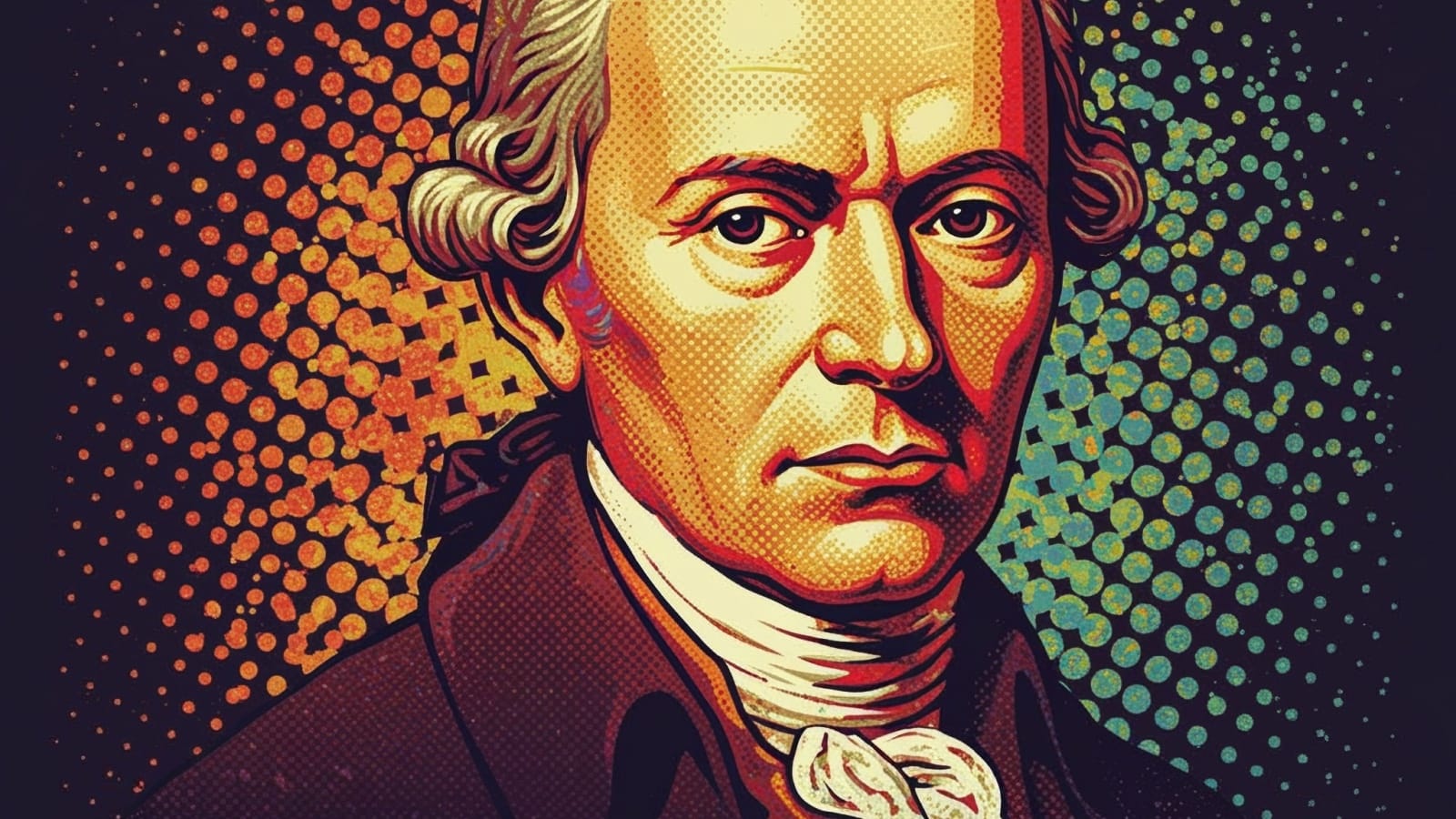
An educational angle of incidence that, in my experience, is didactically effective in disabusing students of the naïve idea that the world we live in is simple, and easily comprehended, is to introduce them to the thought of 18th-century thinker Immanuel Kant, who described his own philosophy as having brought about a ‘Copernican revolution’ in thinking. He was not exaggerating. Just as Copernicus demonstrated that Earth is not the centre of the universe, but that it, together with the other planets of our solar system, orbited the Sun, so Kant argued that we must change our conception of the foundation of our knowledge.
Instead of thinking that the world impresses itself on our minds, producing knowledge in the process, Kant demonstrated that our knowing faculties (comprising our ‘reason’ or Vernunft) – namely, the (sensory) forms of intuition, namely space and time, the concepts of our understanding, and ‘pure reason,’ which addresses its limits – provide the ‘formal’ conditions for knowledge, while the ‘manifold of experience’ (of what we call the ‘empirical world’) supply the ‘material content’ which are comprehended through the concepts (categories) of the understanding, such as causality, modality, quality, quantity, and substance.
Put succinctly, Kant showed that human reason was the transcendental prerequisite – or condition of possibility – of knowing anything at all. Without it, we would not know a ‘world’ as a rationally structured whole. In doing this, Kant mediated between the rationalists, who claimed that reason alone could know the world, and the empiricists, who argued that experience alone was sufficient to gain knowledge.
In the process of articulating his philosophy of ‘transcendental’ reason (not transcendent; there is a big difference), he anticipated the quantum mechanics of Werner Heisenberg and Niels Bohr, which rests on the principle that the mere act of observing something changes it. Reflecting on the paradoxical logic underpinning this insight exacerbates the complexity of our world, almost unbearably. The counter-Bildungsroman novel by John Fowles, titled The Magus, provides ample opportunity for teaching the connections between Kant’s revolutionary epistemology, Lacan’s psychoanalytic theory, and quantum mechanics.
Having pointed to a literary work of art for optimising learning on the part of students creates the opportunity to draw attention to the validity of German philosopher and writer Friedrich Schiller’s claim, – in his book, Letters on the Aesthetic Education of Humankind (1795) – that art in all its variety constitutes the appropriate avenue for approaching education, because art, in which beauty is disinterestedly perceived, is the essential vehicle for achieving political freedom and moral harmony.
To illustrate: anyone who has ever listened to Beethoven’s 9th Symphony (1824; based on Schiller’s poem, ‘Ode to Joy’), especially the choral (including solos) movement – with the beautiful and moving lyrical assurance, that ‘Alle Menschen werden Brüder, wo dein sanfter Flügel weilt’ (‘All people become brothers, where your gentle wing abides’) – would be able to testify to the transformative aesthetic (and educational) power of art. If people worldwide would act according to the powerful aesthetic experience afforded by listening to this poignantly moving musical creation, the world might be less plagued by wars.
This is also evident in Peter Weir’s magnificent film Dead Poets Society (1990), where one encounters the tension between a combination of Romanticism and Enlightenment, on the one hand, and a narrow, militaristic positivism on the other. Weir employs Shakespeare’s A Midsummer Night’s Dream to stage the ostensible opposition between imagination (Oberon and Titania’s forest) and reason (Athens), which is resolved when it transpires that the full exercise of mature reason (on the part of the lovers) presupposes having gone through the beguiling forest of imagination, where Puck works his mischief.
Incidentally, Shakespeare’s prodigious genius is on full display in this comedy where, 150 years before Kant, he demonstrates that imagination is not antithetical to reason (as philosophers and theologians had believed until then), but essentially part of it – what Kant called productive and reproductive imagination, without which there would not be a world to subject to understanding.
A cinematic masterpiece like this film by Weir, which is nothing less than a Gesamtkunstwerk (total work of art), insofar as it incorporates literature, theatre, music, and cinema into one totality, opens up ample opportunities for teaching and learning, in the course of which students are given the opportunity to forge new conceptions for comprehending the world in which we live. In his writings – particularly on art and architecture – the American philosopher, Karsten Harries, affords one similar didactic and hermeneutic opportunities.
In particular, his monumental The Ethical Function of Architecture (1997) – which, although being a work of philosophy, can almost be characterised as a Gesamtkunstwerk too (given its abundant use of illustrations which interact with the text) – functions as a lens on the world we inhabit. Harries is adept at uncovering ways in which different spatial modulations in architecture impart – or fail to impart – a sense of ethos, of belonging, with the result that this multi-faceted book constitutes a model for orienting oneself in the world in ethical terms. From a teaching perspective it is highly commendable, to serve as a conduit for students’ insight into the contours of the often-confusing world we inhabit.
Today, no educational approach to equipping students with the essential conceptual bearings for navigating our confounding, increasingly complex world would be adequate unless it addresses the (potentially) civilisationally disrupting phenomenon of Artificial Intelligence (AI). This is not merely of ‘posthuman’ significance, but more importantly, has ‘transhuman’ implications. Posthumanism – particularly its ‘critical’ variety, promoted by Rosi Braidotti and others – entails a fundamental revision of the place of humans among all other living and non-living beings (such as AI).
Instead of reaffirming the (traditionally) vaunted superiority of humans over all others, it places them on a spectrum from unicellular organisms (if not more evolutionally primordial entities than these) through all plant and animal species to AI, acknowledging, in other words, the ontological equivalence of all such beings. Not in the sense of sameness (which they are not), but in the sense of acknowledging their distinctive biological (or artificial) place in the vast panoply of life which has developed since the appearance of the first signs of life millions of years ago.
Again, this is not to say that ontological equivalence means axiological equivalence (in terms of value) from a human perspective; certain deadly bacteria and viruses, for example, should certainly not be cherished. When it comes to AI, however, we face a dilemma, which has been spectacularly explored in the literary and cinematic genre of (particularly neo-noir) science fiction, of which the work of Ronald D. Moore (Battlestar Galactica) and James Cameron (the Terminator films) are paradigmatic, but which goes back to Fritz Lang’s pioneering 1927 film, Metropolis.
What dilemma? In a nutshell, and as thematised in the films mentioned above, these beings of human creation not only mimic our human intelligence – and according to some, surpass it, which I believe rests on a false premise, namely, comparing pears and watermelons – but are believed by some to threaten our very existence as a species.
In contrast, ‘transhumanism’ is predicated on the belief that our true goal as a species is to ‘merge with the machine’ at every possible level. This belief assumes the contours of a virtually evangelical calling, embodied in the expectation that AI will soon attain a level of development where the so-called ‘singularity’ will occur, and humanity will progress to a new, super-, and transhuman level.
Needless to emphasise, this represents a deeply anti-humanist position, which may be readily comprehended by students through the teaching of a blend of fictional, philosophical (particularly phenomenological), and scientific material, such as that encountered in the science fiction film Transcendence, which explores the consequences of implementing a transhumanist agenda.
The point is that there are certain, demonstrably irreducible ontological differences between humans and AI entities (which several individuals, including myself [see here, for example], have explored at length elsewhere). Therefore, I would argue that it is at least premature, if not unfounded, to believe AI holds an unadulterated threat for human beings. However, it requires a lengthy consideration of various aspects concerning AI to substantiate this claim persuasively.
Nevertheless, a responsible educational approach cannot omit a thoroughgoing exploration of the relationship between AI, its further development, and human beings. Neither a doomsday scenario, nor a transhumanist embrace of the opportunities it supposedly offers to ‘transcend’ our bodily limitations (as transhumanists assure us) by merging with AI, would do. In the process of scrutinising AI in all the contexts where it is encountered, educators cannot afford to neglect any informative source for teaching purposes, including science fiction, keeping in mind Schiller’s counsel regarding the aesthetic education of humanity.
A suitable schematic guide for organising themes and issues like those briefly listed above is found in the (still thought-provoking) four fundamental questions formulated by Immanuel Kant in his Critique of Pure Reason (1781), to wit:
‘What can I know?, What ought I to do?, What may I hope?, and What is the human being?’
According to Kant, the first three questions correspond to the domains of metaphysics (or epistemology, considering Kant’s critique of traditional metaphysics), morals (or ethics), and (the philosophy of) religion, respectively, while the fourth question, ‘What is the human being?’, serves as the overarching inquiry that unifies all of philosophy. Kant argued that metaphysics (as epistemology) addresses what we can know, morality dictates what we ought to do, and religion relates to what we may hope for. Ultimately, these questions lead to the central concern of philosophical anthropology, which seeks to understand the nature of humanity itself.
They may be adapted to serve as a framework for the present, and the very process of adapting them, through thinking and classroom debate, would already serve a profound educational purpose. A conceptual compass, as it were, is all the more essential for navigating the current world, which is characterised by extreme turbulence, describable as a clash between a waning ‘unipolar’ world, and an incipient ‘multipolar’ social and political reality. The wars being waged at present are symptomatic of this.
-

Bert Olivier works at the Department of Philosophy, University of the Free State. Bert does research in Psychoanalysis, poststructuralism, ecological philosophy and the philosophy of technology, Literature, cinema, architecture and Aesthetics. His current project is ‘Understanding the subject in relation to the hegemony of neoliberalism.’
Recent Top Stories
Sorry, we couldn't find any posts. Please try a different search.