The Vaccine Safety Signal the Media Still Won’t Read

The serious-adverse-event signal found in the Pfizer and Moderna mRNA Covid-19 vaccine trials has been in the peer-reviewed literature for nearly four years. Mainstream media outlets, on the rare occasions they address it, have treated it not as evidence to be weighed but as misinformation to be managed — dismissed on the authority of experts without relevant expertise, or simply ignored. A recent BBC Radio 4 broadcast is a near-textbook example.
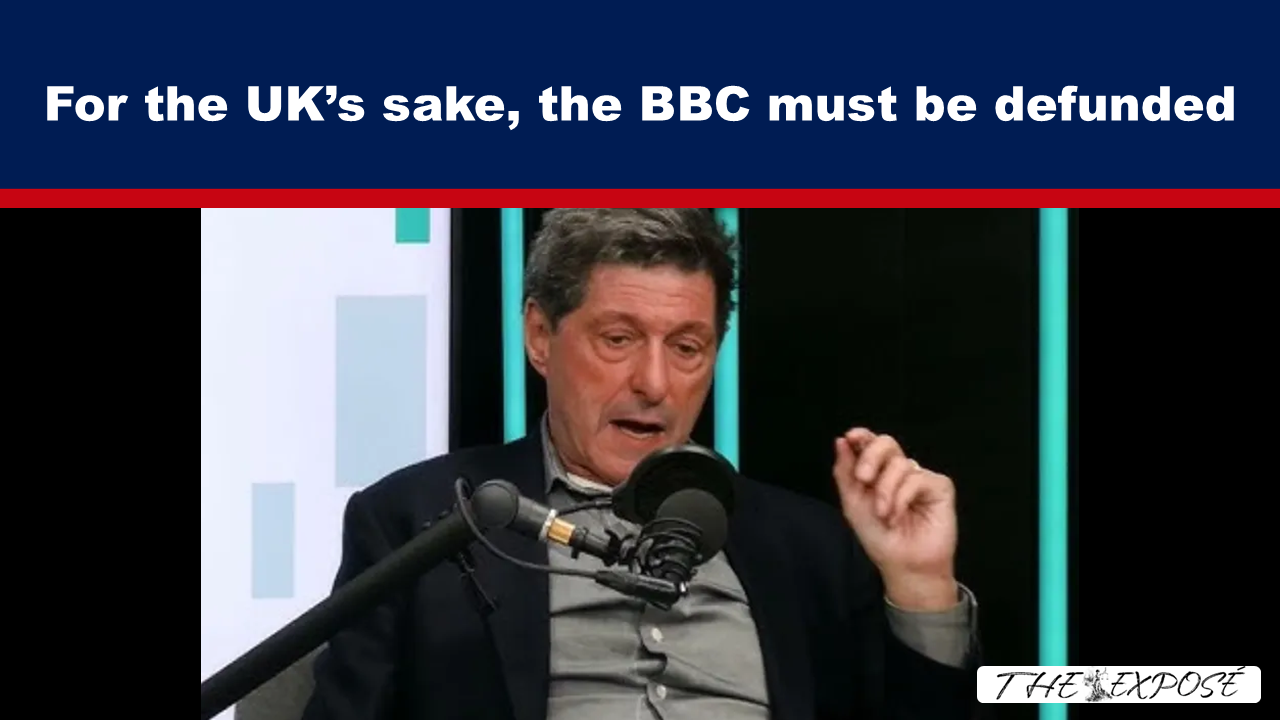
The broadcast aired on Everything Is Fake and Nobody Cares, a BBC Radio 4 series hosted by Jamie Bartlett, whose stated purpose is to ask why, in so much of modern life, fakery is no longer punished but rewarded. It is a reasonable question. The most direct answer the series has produced to date appears inside one of its own episodes.
In the episode in question, Bartlett devoted his broadcast to Dr. Aseem Malhotra and Covid-19 vaccine safety. As part of that segment, he aired a specific claim about a peer-reviewed paper I led, published in the journal Vaccine in September 2022. To evaluate Dr. Malhotra’s on-air statements, Bartlett brought in Dr. Vicky Male, a reproductive immunologist at Imperial College London. Dr. Male told listeners that the authors of the paper had been “specifically told to make it clear this paper should not be used” to support the kinds of claims Dr. Malhotra was making.
That statement is not true. No one told us that. The paper does not contain such an instruction. I am one of its authors; I have the peer review correspondence; I know what the journal asked of us and what it did not. Anyone could have checked this in five minutes by reading the paper, which runs eight pages and is open-access online. Jamie Bartlett did not check.
On the basis of an unchecked false claim about a scientific paper, Bartlett told his audience that Dr. Malhotra was spreading false information — on a podcast whose central premise is that modern life now rewards exactly this kind of thing.
Whether that reflected willful dishonesty or plain incompetence, I cannot say. The case that follows lays out what happened in enough detail for readers to decide for themselves. Both possibilities reflect poorly on a national broadcaster. Only one of them would be excusable.
I. What the Paper Says, and What Dr. Male Said It Says
The most consequential of Dr. Male’s on-air claims was the one I opened with: that the authors were “specifically told to make it clear this paper should not be used to make the kinds of claims Dr. Malhotra is making,” and that Dr. Malhotra’s statement “is not actually correct. The paper doesn’t show that that’s true.”
Told by whom? Dr. Male did not say. Scientific papers pass through three groups of people who could, in principle, issue such an instruction: peer-reviewers, journal editors, and — in some fields — regulators or sponsoring agencies. None of them told us any such thing. The peer review correspondence for our paper is not private. We deposited it publicly alongside our adjudication records and study data at a Zenodo archive, and the paper’s data-availability statement directs readers there. Anyone can read the reviewers’ comments. They contain substantive methodological questions and no such instruction. The editors communicated no such instruction before, during, or after review. There were no sponsoring agencies, because the paper was carried out with no grant funding at all. There was, in short, no one who told us any such thing, because no such exchange took place.
What does the paper actually say?
The closest sentence to the claim Dr. Male described — and this is the one critics occasionally misread — is a standard scope statement from the introduction: “Our study was not designed to evaluate the overall harm-benefit of vaccination programs so far. To put our safety results in context, we conducted a simple comparison of harms with benefits to illustrate the need for formal harm-benefit analyses of the vaccines that are stratified according to risk of serious COVID-19 outcomes.” That is a description of what the paper did and did not analyze. It is not a disavowal of the paper’s findings. Every careful research paper contains a sentence like it.
What the paper actually concluded, in its own words, is that the findings “raise concerns that mRNA vaccines are associated with more harm than initially estimated at the time of emergency authorization,” and that formal harm–benefit analyses stratified by risk of serious Covid-19 outcomes are needed.
Section 3.4 of the paper, titled “Harm-benefit considerations,” quantifies that ratio directly. In the Pfizer trial, the excess risk of serious AESIs was 10.1 per 10,000 vaccinated, against a Covid-19 hospitalization reduction of 2.3 per 10,000 — a harm-to-benefit ratio of roughly 4.4 to 1. In the Moderna trial, the excess risk was 15.1 per 10,000 against a hospitalization reduction of 6.4 per 10,000 — a ratio of roughly 2.4 to 1.
Dr. Malhotra’s on-air statement — that a trial participant was 2 to 4 times more likely to suffer serious harm from the vaccine than to be hospitalized with Covid — was, if anything, a conservative rendering of what the paper reports. The Pfizer ratio sits just above the top of the range he stated; the Moderna ratio sits near the bottom. Both numbers appear in the paper’s own harm–benefit section. Dr. Male’s statement that the paper “doesn’t show that that’s true” is directly contradicted by the paper itself.
II. The Four Methodology Objections
Dr. Male made four additional methodological criticisms of the paper. Each is answerable on the record.
Timing and Data Access
Dr. Male noted that the reanalysis was done “a couple of years after the fact,” and that the authors did not have access to all of the data.
On the chronology: my co-authors and I began this work in July 2021 — roughly seven months after Pfizer’s phase III results appeared in the New England Journal of Medicine, and six months after Moderna’s. What took time was what always takes time in this kind of work: assembling the serious adverse event tables from the sponsors’ published results and regulatory documents, double-blinded adjudication of each event type against the Brighton Collaboration’s pre-specified priority list of Adverse Events of Special Interest, statistical analysis, peer review, and publication. The preprint appeared in June 2022; the peer-reviewed article in September.
On data access, Dr. Male is correct, and we have said so plainly from the start. We did not have individual participant data. That limitation is acknowledged in the paper. Without participant-level data we could not run the stratified subgroup analyses — by age, by comorbidity, by prior infection — that would most inform clinical decisions. On the day of publication, my co-authors and I published an open letter to the CEOs of Pfizer and Moderna in The BMJ calling on them to release the individual participant data so a more definitive analysis could be done — by us, or by anyone else.
Four years later, they still have not.
Working only with the public data, we found that in the Pfizer trial there were more serious adverse events in the vaccinated group than in the placebo group — a finding that had not been reported previously. The correct response to “We don’t have the participant-level data” is not to dismiss what the public data show. It is to release the participant-level data.
One implication of this critique is worth naming. Critics who insist the absence of participant-level data is fatal to our reanalysis have been remarkably untroubled that the same data remain withheld by the sponsors themselves. Pfizer and Moderna have administered a novel medical intervention to billions of people worldwide. The raw safety data from the trials that licensed those products are still not public — four years on. If the argument is that no one should draw conclusions from the public SAE tables because the full data would be more informative, the implication is that no one, including regulators and the public, should be confident in the current harm–benefit picture until those data are released. That is not a position most critics of our paper appear willing to hold.
The “Wide Definition” Objection
Dr. Male’s second objection was that the reanalysis used “a very wide definition of side effects, including things that might not have been caused by the vaccine.” This contains a misunderstanding of how randomized trials generate knowledge.
In a randomized trial of a novel intervention, no one — not the investigators, sponsors, or regulators — can determine whether a given individual’s adverse event was caused by the vaccine. That is not a weakness of the paper; it is a fact about how randomization works. The whole point is that the only systematic difference between the two groups is the intervention. If fewer serious adverse events occur in the vaccine arm, the inference is that the vaccine likely reduced them. If more occur in the vaccine arm, the inference is that the vaccine likely caused them. You do not need to adjudicate individual causation. The trial does.
The paper in fact ran two analyses. The first used the widest definition of harm — every serious adverse event reported in the trial, from any cause. This has a known weakness: because most serious adverse events in a large trial are random, a real vaccine-related signal can be drowned in background noise.
Despite that, in the Pfizer trial serious adverse events were significantly higher in the vaccine group — 127 events versus 93, a 36 percent relative increase and an absolute risk difference of 18.0 per 10,000 vaccinated (95% CI 1.2 to 34.9). Pfizer’s own pivotal NEJM paper stated that “The incidence of serious adverse events was low and was similar in the vaccine and placebo groups.” That statement is not accurate. We wrote to the NEJM to note the error. No correction has been issued.
The second analysis was narrower, not wider. We examined only serious adverse events falling on the Brighton Collaboration’s priority AESI list — a list endorsed by the World Health Organization in May 2020, before the mRNA vaccines were authorized, specifically to pre-specify which adverse events should be monitored in Covid-19 vaccine trials.
The rationale is the opposite of what Dr. Male described: by restricting the analysis to pre-specified events of biological plausibility, we reduce the random background noise that can hide a real signal. Two independent, blinded clinician reviewers adjudicated every one of the 325 distinct SAE types that appeared across the two trials against that pre-specified list.
They agreed on classification 86 percent of the time, and disagreements were resolved by consensus or by a third reviewer. The combined excess risk of serious AESIs was 12.5 per 10,000 vaccinated (95% CI 2.1 to 22.9). That the signal appeared in pre-specified events — not in scattered random diagnoses — makes chance alone a less plausible explanation, not a more plausible one.
Counting Events, Counting People
Dr. Male’s third objection was that the paper counted events rather than participants, using diarrhea and vomiting in the same patient as her illustration.
On the methodology: event-level and participant-level counts answer slightly different questions, and both are worth knowing. A participant-level count would treat a heart attack followed by a stroke as identical to a single heart attack. An event-level count captures that distinction. Neither metric is inherently correct and neither is inherently wrong. Pfizer and Moderna have not released the participant-level data that would let us publish both, so we published what the public data allowed. Where participant-level data was visible in Pfizer’s published tables, the direction is the same: more individual participants had at least one SAE in the vaccine arm than in the placebo arm, and among those who did, vaccine-arm participants were roughly twice as likely as placebo-arm participants to experience more than one — 24 versus 13.
What I want to address more directly is the diarrhea example. Dr. Male used it straightforwardly, and I do not fault her for that. But the handful of other critics who have discussed our paper on YouTube and on mainstream podcasts have landed on the same example almost without exception — and several have discussed it in a jovial, smiling register, as if the word alone is meant to be funny. Across 325 distinct SAE types in the analysis, virtually every critic reaching a general audience has chosen the same one.
I speak as an emergency physician. A case of diarrhea severe enough to meet the regulatory threshold of a serious adverse event is not “the runs.” The regulatory definition requires hospitalization, life-threatening illness, persistent or significant disability, or death. The serious-diarrhea patients I have personally cared for have been elderly, immunocompromised, acutely dehydrated, hypotensive, in acute kidney injury, or septic from C. difficile.
Diarrheal illnesses are estimated to kill about 6,000 Americans each year in CDC mortality data — more than the roughly 4,500 Americans who die annually of HIV/AIDS. No serious person in medicine jokes about HIV. The mortality numbers for serious diarrhea are larger. Physicians on podcasts presenting themselves as responsible scientific communicators should be able to see the problem with their own tone.
With 325 distinct SAE types to choose from — coagulation disorders, cardiac injury, myocarditis, encephalitis, acute respiratory distress syndrome, acute kidney injury, thrombosis, and dozens of others — the decision to keep returning to the one with a punchline-friendly name is a rhetorical move, not a scientific one. If the argument is that our methodology swept in events that should not have counted, the argument should be made with the 30 to 50 SAE types across the two trials where reasonable clinicians could disagree on the adjudication, not with the one that generates an involuntary half-smile from a lay audience.
We took that concern seriously enough to run the exercise ourselves. In response to an earlier critique from the FDA, we performed a sensitivity analysis that excluded every SAE whose inclusion had required a subjective clinical judgment — chest pain and the other calls where reasonable clinicians might have adjudicated differently. The findings were consistent with the original analysis. The excess remained. The subjective judgments, in other words, were not what was generating the signal. That sensitivity analysis is publicly posted on our Zenodo archive, alongside the rest of the study data.
One related point, because critics of our paper commonly argue that a Covid-19 hospitalization is obviously more serious than a case of serious diarrhea, and therefore the harm–benefit comparison is itself unfair. As an ER physician who has treated hundreds of hospitalized Covid-19 patients, I can say this does not match what actually happens in a hospital. Most patients admitted with a positive Covid test during most periods of the pandemic were not critically ill; many did not need supplemental oxygen at all and would have recovered at home.
The UK data confirm this. In the UK Health Security Agency’s 2023 appendix to the Joint Committee on Vaccination and Immunisation — the document underpinning the UK’s official NNV calculations for the autumn 2023 booster — UKHSA defined a “severe” Covid-19 hospitalisation as one requiring at least a 2-day stay with documented use of oxygen, ventilation, or ICU admission.
Across the population rates reported in that document, the ratio of all Covid-19 hospitalisations to severe Covid-19 hospitalisations is roughly 10 to 1. Approximately 90 percent of Covid-19 hospitalisations in the UK surveillance data did not require oxygen, ventilation, or ICU admission. When critics invoke the mental image of a Covid hospitalization to make our harm–benefit comparison look absurd, they are invoking the severe 10 percent and quietly generalizing it to the other 90.
Time Runs Both Ways
Dr. Male’s fourth objection was that side effects typically occur in the first days or weeks after vaccination, whereas protection against Covid-19 lasts months. Compared in that way, she argued, the paper underestimates the vaccine’s benefit.
She is partly right, and we said so in the paper. The vaccines did reduce symptomatic Covid-19 for longer than the roughly two-month window the trials analyzed, and a longer blinded follow-up would likely have shown larger reductions in Covid-19 hospitalizations, improving the ratio on the benefit side.
The problem is that the concern is applied asymmetrically. Dr. Male extends the benefit side beyond the trial window while implicitly assuming the harm side does not. That assumption is not justified. Spike protein has been detected in circulation in some individuals for months following vaccination — not the short-lived pharmacokinetic profile initially described to regulators and the public. Autoimmune disease and certain neurological disorders often begin insidiously around a triggering event but are not formally diagnosed until months or years later.
Physicians who treat long Covid and post-vaccine injury patients — who often overlap clinically — consistently report that many of their patients carry debilitating symptoms for long periods before receiving a formal diagnosis. Prolonged disability is, by regulatory definition, a serious adverse event. If a material fraction of vaccine-associated serious adverse events take months to declare themselves, the short trial window underestimated the harm side of the ledger, not just the benefit side.
Had the Pfizer and Moderna trials continued in their original blinded form for two years, with boosters administered at realistic intervals and both Covid-19 hospitalizations and serious adverse events tracked throughout, the long-run harm–benefit ratio would be empirically knowable. It is not. The trials were unblinded early, placebo recipients were offered the vaccine, and the scientific question was effectively surrendered. I agree with Dr. Male that a longer analysis would be informative. I would welcome the data.
A Model Is Not a Trial
One further on-air claim deserves direct response. To counter our trial-based findings, Dr. Male cited a modeling study estimating that the vaccines saved millions of lives. What the audience was not told is that this figure does not come from clinical trial data. It comes from a mathematical model.
Such models rely on efficacy inputs drawn from post-authorization observational studies, which are notoriously vulnerable to the “healthy user effect.” Individuals who proactively seek vaccination are, on average, healthier and have better baseline mortality than those who do not. Because observational studies lack randomization, they routinely overestimate benefits. The problem compounds at the modeling stage. The standard class of vaccine-impact models contains no term for vaccine-caused harm; it treats vaccine mortality as zero by construction.
You cannot use a zero-harm mathematical model, fed by healthy-user-inflated observational inputs, to refute an excess harm signal found in the sponsor’s own randomized, placebo-controlled trials. To present such a model to a lay audience as proof that a randomized trial’s harm–benefit analysis is incorrect is methodologically incoherent.
III. The Journalist Who Needed a Doctor
Dr. Male is a respected scientist. Her research on natural killer cells in pregnancy and the uterine immune environment is substantial, and her published work in reproductive immunology speaks for itself. In the BBC segment, she did not claim expertise in clinical trial methodology or evidence-based medicine, and for all I know she was offering informal responses to a journalist’s questions — something any academic would do if a BBC reporter called. I do not fault her for the errors in what she said about our paper. If a journalist asked me to interpret a molecular immunology study on NK cell signaling pathways in the decidua, I would get things wrong too, and I would deserve the same grace I am extending here.
My issue is with the journalist.
The BBC is the broadcaster UK audiences consistently rank among their most trusted sources for news. It is not a fringe outlet, and a failure of basic journalistic practice there is not a fringe problem. This is the same institution whose Director-General and Head of News resigned in late 2025 after the corporation misleadingly edited a speech by Donald Trump — a failure its own reporter acknowledges, on tape, inside this very episode.
Jamie Bartlett told his audience, more than once, that much of what Dr. Malhotra said sounded reasonable, but that he himself was not a doctor and could not evaluate the clinical evidence being cited. He said he needed to find an expert who could help him sort through it. That framing — I am the humble generalist, I need a specialist to guide me — is a legitimate journalistic move when the specialist actually has relevant expertise.
Dr. Male is an immunologist who studies NK cells in pregnancy. She is not an epidemiologist, a biostatistician, a pharmacologist, or a clinical trialist. She does not hold a medical degree and does not treat patients. She has no published record in the interpretation of randomized controlled trials, harm-benefit analysis, or vaccine safety signal detection. Dr. Malhotra, whatever one thinks of his public positions, is a consultant cardiologist who treats patients and is the author of a widely cited BMJ editorial on evidence-based medicine. He has spent over a decade writing and lecturing on the interpretation of clinical trial evidence for public audiences — which is, in fact, exactly the skill set Bartlett said he was looking for.
Bartlett knew whom he had found. He chose to present Dr. Male to his audience as the expert who could adjudicate Dr. Malhotra’s claims about a clinical trial reanalysis. That is not a neutral editorial decision.
What followed was worse. By the end of the segment, the same reporter who had opened by confessing he was unqualified to evaluate the evidence had graduated to confidently declaring that Dr. Malhotra’s claims were not true, that he was unsure why Dr. Malhotra held such views, and that the audience should regard them with deep suspicion.
The journey from “I’m not a doctor and I can’t evaluate this” to “I can now tell you this is false” was accomplished entirely by outsourcing the evaluation to someone who lacked the relevant expertise to perform it — and then treating that person’s answers as settled fact.
Dr. Male’s most consequential claim on the segment was the one at the top of this piece: that the authors were “specifically told” not to use the paper the way Dr. Malhotra was using it. You do not need a medical degree or a PhD in epidemiology to check whether a published paper contains a specific sentence. You need to be able to read. The paper is eight pages long, open-access, and was the centerpiece of Bartlett’s own segment.
A reporter who built an entire broadcast around a peer-reviewed study, and who took the time to record cheap shots about how Dr. Malhotra was “bombarding” him with data and telling stories that are “just more exciting,” could not be bothered to read the paper himself and verify whether Dr. Male’s most important claim about it was true. It was not. The host of a podcast about why fakery is no longer punished had, in his own broadcast, produced a specimen of exactly that phenomenon. On the basis of that unchecked claim, he told his audience that Dr. Malhotra was spreading false information.
One more failure of basic journalism is worth naming. During the segment, Dr. Male stated that she does not receive pharmaceutical industry funding. Bartlett accepted this at face value and used it to frame Dr. Malhotra’s concerns about financial conflicts as conspiratorial thinking. Two minutes of searching would have complicated the picture. Dr. Male’s publicly declared research funders include the Wellcome Trust and the UK Medical Research Council.
The Wellcome Trust was founded from the estate of Sir Henry Wellcome, the pharmaceutical magnate who built the company that became GlaxoSmithKline; from 1936 to 1995 the Trust was the sole or majority owner of that pharmaceutical company, and its current £37.6 billion endowment derives from that origin. The UK Medical Research Council describes “alignment with industry” on its own website as central to its strategy, with formal partnerships with AstraZeneca, GSK, Janssen, Lilly, Pfizer, Takeda, and UCB, and more than £100 million in industry contributions to MRC-funded research since 2010.
It is entirely possible that Dr. Male has never examined the provenance of her grant funding, and I do not fault her for that — most researchers do not. But the journalist who spent time on air suggesting that Dr. Malhotra was peddling conspiracy theories about pharmaceutical influence could have determined, with a single Google search, that the expert he had chosen to adjudicate that very question receives her salary support from organizations founded by, or formally partnered with, the pharmaceutical industry. He did not perform the most basic job of a journalist — to fact-check his source. Instead, he had a recording of a denial, used it as a sound bite, and moved on to the next cheap shot.
I cannot determine from the evidence available to me whether Jamie Bartlett knew any of this and broadcast his claim anyway, or whether he simply failed to do the work. The case for either reading is in what he aired.
IV. The Filter
There is a second, uglier layer to the claim that the authors “were told” anything. After our paper was published, Vaccine published two Commentaries critical of our findings — one in 2023, another in 2024. In both cases, the journal declined to share those critiques with me or my co-authors in advance, and declined to invite us to respond — a courtesy that is standard scholarly practice, and that one of the editors had promised in writing. In January 2025, we submitted a short response letter on our own initiative. The editor-in-chief rejected it without peer review.
A scientific journal willing to publish criticism of a paper it had peer-reviewed and accepted, and then unwilling to publish the authors’ response to that criticism, is the opposite of how scholarly exchange works. None of my co-authors had ever encountered it before, and we have looked.
The same pattern reaches beyond the journal. Our paper was labeled “misinformation” on social platforms after publication — a label that, to my knowledge, has never been applied to any peer-reviewed study reporting favorable vaccine outcomes, however methodologically thin.
Dr. Male, through her commentary on the BBC, does not appear to realize that any of this is happening. That is itself part of the problem she is describing — an expert confident in the consensus because she cannot see the filter that produced it.
Conclusion
The paper I led still stands. Its findings have not been refuted; they have been disputed, and the dispute has been handled by a scientific journal in a manner that none of us had ever encountered before. Our finding is straightforward: in the pivotal phase III trials of the mRNA Covid-19 vaccines, serious adverse events of special interest occurred more often in the vaccinated group than in the placebo group, at a rate that exceeded the reduction in Covid-19 hospitalizations within the trial window. That finding has implications for how the vaccines should be used going forward, particularly in populations at lower baseline risk of serious Covid-19.
The evidence would be settled quickly if Pfizer, Moderna, and the FDA released the individual participant data. Until then, the public is entitled to a more honest discussion than the one broadcast on the BBC. Dr. Male is welcome to disagree with my conclusions. She is not entitled to tell listeners that the paper says something it does not, and neither the BBC nor Jamie Bartlett is entitled to build a narrative of false information on the back of a claim they did not bother to verify.
The paper is in the public record. The journal that published it is in the public record. The journal’s subsequent refusal to publish our response is, now, also in the public record. Readers are intelligent adults. They can weigh the evidence themselves — which is, after all, the only reason peer-reviewed science gets written down in the first place.
What the BBC broadcast illustrates — whether one reporter’s willful dishonesty, one reporter’s incompetence, or both — fits a pattern that has been in place for nearly four years: mainstream coverage of Covid-19 vaccine safety outsourced to experts who were not asked to read the evidence, and the evidence that remains labeled “misinformation.” The public has been entitled to a more careful discussion from the start. Readers are welcome to decide for themselves whether that is what they have been given.
Jamie Bartlett’s podcast is called Everything is Fake and Nobody Cares. He is half right.
-

Dr. Joseph Fraiman is an emergency medicine physician in New Orleans, Louisiana. Dr. Fraiman earned his medical degree from Weill Cornell Medical College in New York, NY and completed his training at Louisiana State University, where he served as Chief Resident as well as Chairman of both the Cardiac Arrest Committee and the Pulmonary Embolism Committee.

Recent Top Stories
Sorry, we couldn't find any posts. Please try a different search.