Zudio, Trends: Budget fast fashion is taking small-town India by storm

 Getty Images
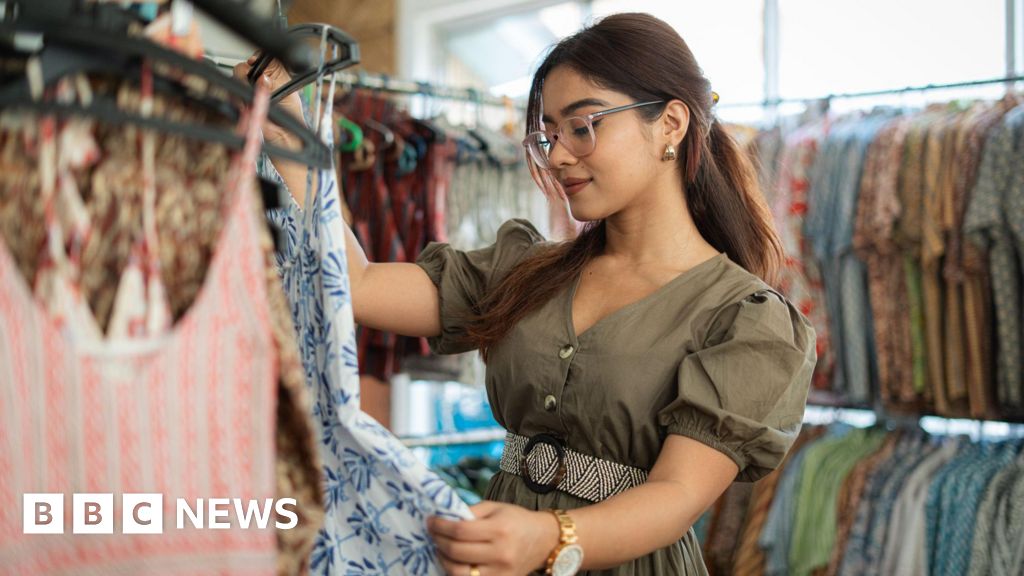
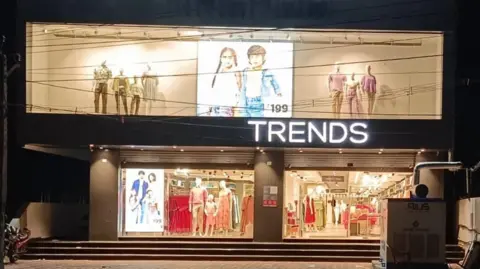
At a gleaming three-storey outlet of Reliance Trends in the town of Sangli in western India, Alka browses through a collection of Indian ethnic-wear kurtas in an array of vibrant colours.
A geriatric care worker in her late 50s, she is looking for a design in a particular shade of baby pink with a dull gold paisley motif.
“I saw someone wearing it at my workplace and I loved it so much, I immediately wanted to buy one for my daughter,” Alka told the BBC.
Across its three floors, the outlet has racks displaying all kinds of trendy apparel, from funky printed t-shirts and weathered jeans to formal office wear for men and women and in-house labels selling Indian or fusion mix-and-match clothes.
On display are also make-up kits, sneakers, handbags and costume jewellery.
Shopping here in the air-conditioned comfort of the store, with trial rooms, attendants and scratch cards offering discounts on her next purchase, is a refreshingly new experience for Alka.
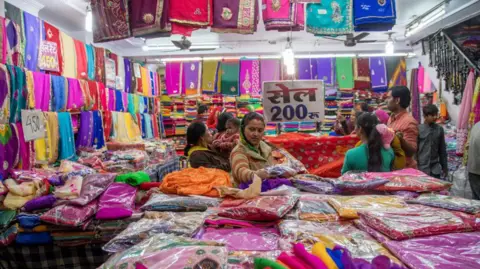
Like most Indians, she has only ever hunted for white label bargains in street-side bazaars all her life.
However, budget brands like Trends – run by Isha Ambani, heiress to the Reliance Industries retail empire founded by Asia’s richest man, Mukesh Ambani – and Tata’s Zudio are now offering goods at the same price point as the bazaar, but with a vastly improved shopping experience.
In these outlets, most merchandise costs between $4 (£2.90) and $15. “Plus, the designs are contemporary and there’s a growing desire among people to wear branded clothes,” Pankaj Kumar, a retail analyst at Mumbai-based Kotak Securities, told the BBC.
 Reliance Retail
This explosion in the number of value-conscious yet aspirational consumers, especially in smaller towns, is driving extraordinary bottomline growth in the country’s organised fast-fashion industry, led by brands such as Max, Vishaal Mega Mart, Trends and Zudio.
Quarterly numbers for Trends are not publicly available, but Zudio’s growth has wildly outpaced global high-street titans like Zara and H&M, as well as the Tata Group’s own mid-to-premium range fashion brand Westside, in the past few years.
Consider these figures: in 2018, Zudio had merely seven stores across the country and clocked $12m in revenue. Westside was a much bigger brand, with 125 stores bringing in around $220m.
Today, the tables have completely turned.
Zudio’s seven stores have expanded to 765, with revenues crossing $1bn by the middle of 2025 – making it the only Indian clothing brand to hold that distinction.
Westside on the other hand has doubled its store count, with revenue growing three-fold – but the pace of growth is nowhere near comparable.
“It’s a classic bottom-of-the-pyramid strategy – go big by going mass,” says Kotak Securities, about Zudio’s success, adding that pricing has been a key factor, given that “even affordable fashion is a luxury in India’s tier-2 and tier-3 towns”.
But what’s driving this spending at a time when India’s job market has been weak, wages haven’t really grown rapidly and overall private consumption, which makes up 60% of GDP, has remained patchy?
“It’s very clearly a wallet-shift,” says Kushal Bhatnagar of Bengaluru-based Redseer Strategy Consultants.
“Consumers are not buying much more than they were; but they’ve shifted their purchases from mom-and-pop stores to branded outlets.”
This shift is the result of a major push by budget brands to rapidly penetrate zip-codes and go into the deepest pockets of India.
And the likes of Zudio and Max have brought about the “trendification” of affordable fashion for the first time, appealing to Gen-Z and young millennial buyers, by trawling the latest fads in Paris and Milan.
An early partnership between Trent – Zudio’s parent brand – and Zara helped it apply the Spanish fast fashion giant’s playbook to its growth strategy, says Bhatnagar.
Just like Zara, Zudio manages incredibly quick inventory turnaround of just 15 days versus the 45-60 days taken by its rivals.
“In the world of fashion, the speed of inventory is everything,” says Kumar of Kotak Securities. The quicker new styles hit the shelves, the more frequent are the store visits.
 Universal Images Group via Getty Images
This growth has, however, come at a cost to local mom-and-pop stores on the high street.
They are facing competition not just from budget brands but also from e-commerce websites like Meesho, which aggregates sellers on its digital platform and ships cheap goods across India. It has been growing its bottomline at 35-40% year-on-year.
“When GDP-per-capita begins to go up for a country, branded goods and online shopping naturally becomes a more prominent part of retail,” says Bhatnagar.
But the real challenge now, he says, is to get a “consumption uplift”, so that along with a shift in wallet-share there’s also a growth in the overall market size. India’s apparel market is currently estimated to be between $70bn to $100bn.
“We underspend on apparel. Our spend per-capita is much lower than China, US or even Indonesia. In a good year this market should typically grow at 12-15%. We’ve been at sub-10% growth in the past few years.”
Despite the tepid growth in market size, the rise of fast-fashion is accompanied by growing worries about the sector’s ecological impact.
The textile industry is the third-largest contributor to dry municipal solid waste in India – after plastics, and paper and cardboard – according to a recent report. And only a quarter of it is recycled.
“While some brands are embedding sustainability into their supply chains, true large-scale change remains distant,” according to Deloitte, which estimates less than 1% of used clothing is recycled into new garments and recycled fibres globally.
For now though, style and savings appear to have trumped concerns about sustainability, with many small-town Indians only just getting on to the fast-fashion bandwagon.
Recent Top Stories
Sorry, we couldn't find any posts. Please try a different search.