Why is My Energy Bill Even Higher?

Ofgem recently announced the price cap for the first quarter of 2026 and, despite gas prices falling, the overall price cap has gone up. The Budget has made some small changes to reduce energy bills, but the change to Renewables Obligations is simply moving the cost around not tackling the root cause. I am giving a talk later this week on why our energy bills are so high, so it is time to update the figures on the real causes of high energy bills.
Energy Prices in Context
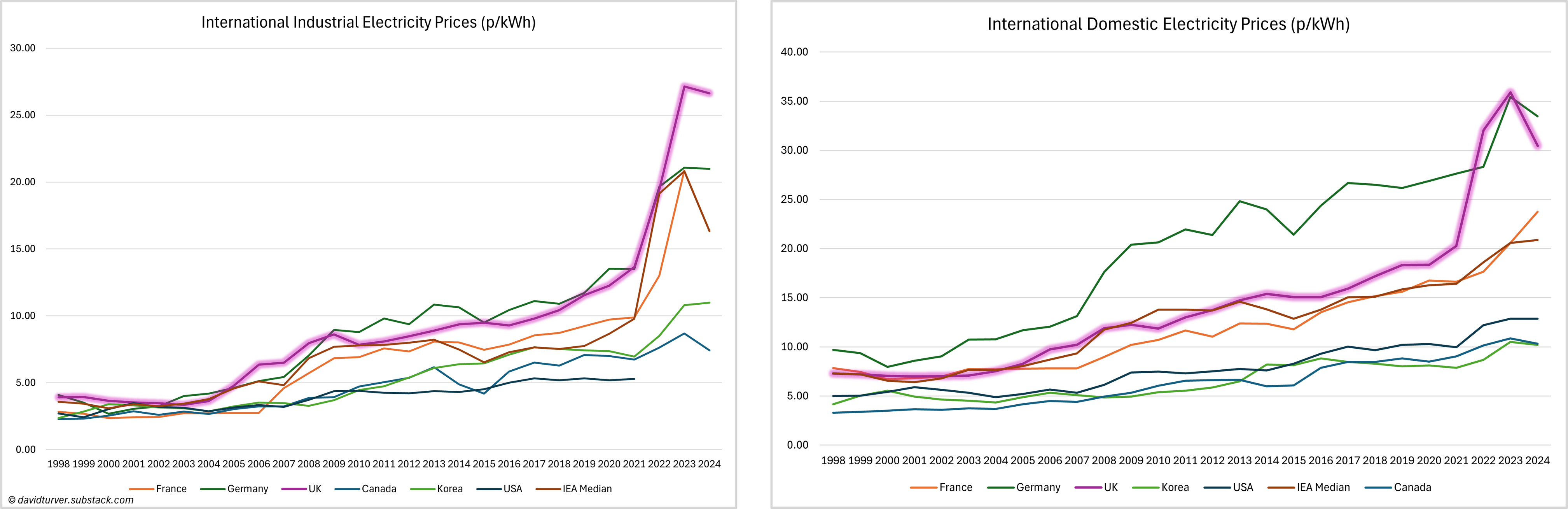
The latest data from the IEA show the UK had the highest industrial electricity prices in the world in 2024 and the second highest domestic electricity prices, see Figure A.
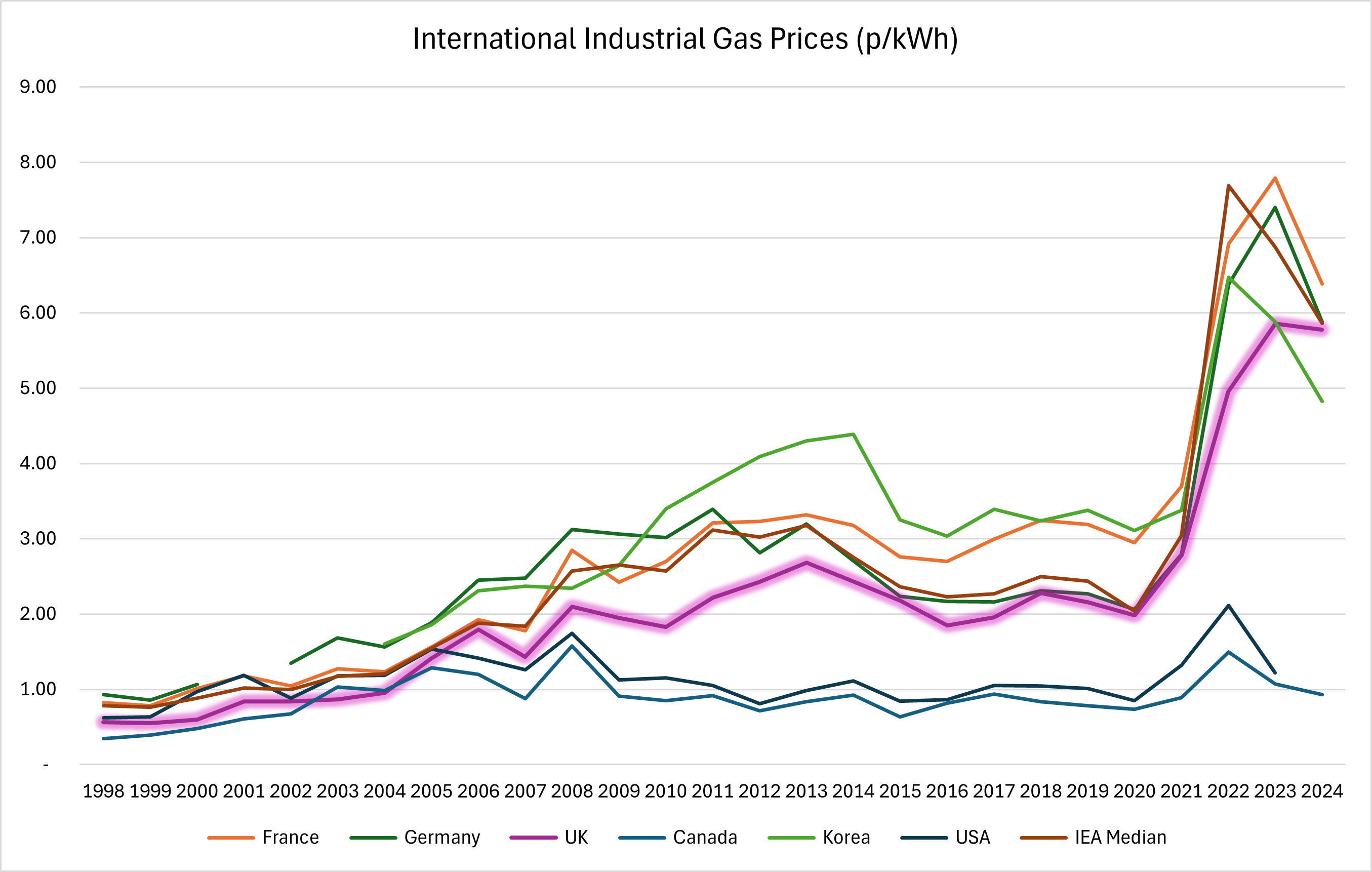
UK gas prices are competitive with continental Europe, so contrary to popular belief, it cannot be gas driving our high electricity prices. Although we should note that gas prices in the UK and EU are much higher than key competitors like the USA and Canada (see Figure B).
More recent data for the first half of 2025 for EU countries plus the UK show a similar story. High energy prices represent an existential threat to the economy, so it is vital that we properly understand the causes of high prices so we can formulate the right policy responses.
Role of Gas
It is true that the cost of gas sets the wholesale electricity price most of the time. However, this is not the whole story. According to DUKES (Table 5.6A), in 2024 we used 178.8 TWh of gas to produce electricity. According to TradingView, the average price of gas in 2024 was 89.67p per therm. Working through the arithmetic, this gas would have cost us about £5.5 billion. Remember that number when we start looking at the cost of renewables subsidies.
Carbon Taxes
The price of gas-fired electricity is inflated by the addition of carbon taxes in the form of the Carbon Price Support Mechanism (CPS) and the Emissions Trading Scheme (ETS) – the latter is not strictly a Carbon Tax but nevertheless is an extra cost. As shown in Figure C, Ember now produces an interesting chart breaking down the fuel costs and carbon costs of gas-fired electricity.
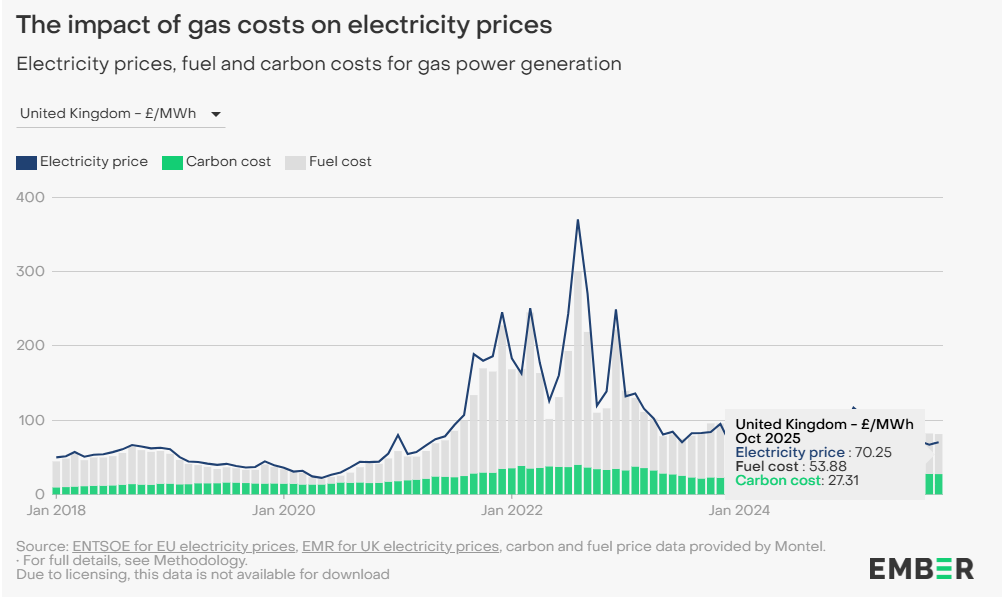
In October 2025, it estimates fuel costs of £53.88 per MWh and carbon costs of £27.31 per MWh or 33.6% of the total. It is worth noting that carbon costs have risen 37.7% from £19.84 per MWh in January of this year. This is because the Prime Minister has signed us up to the EU Emissions Trading Scheme, where carbon costs were much higher than the UK. This has the effect of pushing up our costs of electricity.
Removing these carbon costs would immediately reduce the wholesale price of electricity and bring down bills. A welcome side-effect is that the revenue for renewables generators funded by Renewables Obligation Certificates (ROCs) would also be cut as they receive the wholesale price plus their certificates on top. Moreover, wind and solar farms operating on a merchant basis would also see a reduction in revenue, leading to an even bigger reduction in bills.
According to DESNZ statistics, the UK power sector emitted about 37.5 MtCO2e in 2024. The CPS cost £18 per tonne and the average carbon cost in the ETS was about £38 per tonne, so the total added to our bills from these costs was about £2.1 billion. Emissions are falling but ETS costs are rising, so it is difficult to say quite how this cost would move in the future. For the average electricity bill of 2,700 kWh, the annual saving would be about £70.
Renewables Subsidies Driving High Electricity Prices
We are often told that renewables are cheap and if we could only get rid of all that pesky gas then our electricity bills will fall. In fact, Ed Miliband incorrectly blamed the recent rise in the Ofgem price cap on fossil fuel markets and was on the receiving end of a community note as a result. However, the flaw in the ‘cheap renewables’ argument is that advocates only compare marginal costs of generation, not the full costs. So, while it is true that the wind and the sun are free, wind turbines, solar panels and the equipment required to connect them to the grid are not. By looking at the actual cost of subsidies we can see the actual cost of renewables, shown in Figure D.
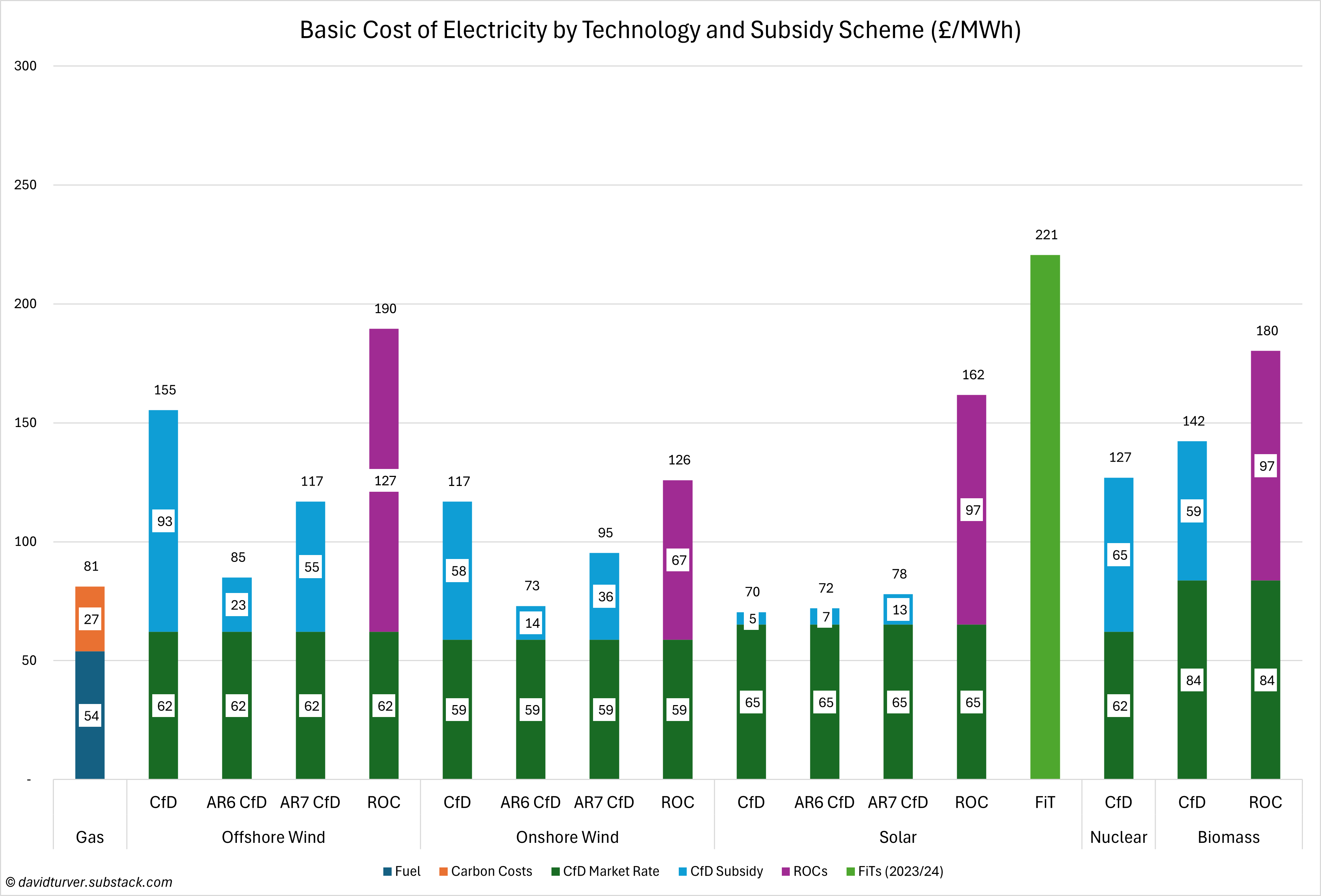
Starting with gas, using the Ember data, the cost of gas-fired electricity has been about £81 per MWh in October this year made up of roughly £54 per MWh fuel costs and £27 per MWh carbon costs.
Moving now to offshore wind that is subsidised by both CfDs and Renewable Obligation Certificates (ROCs). The weighted average strike price for CfD-funded Offshore Wind from April to October 2025 has been about £155 per MWh, with £93 per MWh or 60% of revenue coming from subsidies and the balance of £62 coming from the market. The strike price has been increased by the inflation indexing at the beginning of April and the Neart na Gaoithe (NNG) wind farm recently activating its CfD at a current price of £162.82 per MWh. The basic cost of CfD-funded offshore wind is almost double gas-fired electricity. ROC-funded offshore wind is even more expensive. These windfarms receive the market price for their output (assumed to be the same as for CfD-funded generators) plus an average of 1.9 ROCs per MWh of output. Ofgem has set the buyout price for these certificates at £67.06 per MWh for 2025-26. This puts the current cost of ROC-funded offshore wind at £190 per MWh, with £127 per MWh or 67% of revenue coming from subsidies.
A similar story can be seen for onshore wind with the basic cost being more expensive than gas. Several new solar farms have come on stream recently so the basic cost of CfD-funded solar is lower than gas including carbon costs, but more expensive than the raw cost of gas-fired electricity. However, ROC and Feed-in-Tariff funded solar is much more expensive.
New offshore wind was awarded contracts at £85 per MWh at 2025 prices in AR6, but the main project, Hornsea 4 has been cancelled as uneconomic. There were many projects awarded contracts at cheap prices in AR4, about £49 per MWh at 2025 prices. On the face of it, this basic cost is lower than even the raw price of gas-fired electricity, but these projects have either been cancelled or partially rebid at higher prices.
New offshore contracts are on offer in AR7 at £117 per MWh, index-linked for 20 years, again the basic cost is much more expensive than the fully-loaded cost of gas-fired electricity. The prices on offer have also risen for onshore wind and solar compared to AR6 contract awards.
Renewables Subsidies
Let us have a look at the total cost of all these subsidies. Renewables are subsidised by three subsidy schemes: Renewable Obligations Certificates (ROCs), Contracts for Difference (CfDs) and Feed-in-Tariffs (FiTs).
ROC-funded generators are awarded certificates for each unit of electricity generated in addition to the market price they receive for their output. Accordingly, electricity from these generators will always be more expensive than market rates, often set by gas. Even though this scheme is closed to new participants, the OBR (March 2025 detailed forecast tables: receipts) shows us the RO scheme cost £7.8 billion in 2024-25 and the cost is forecast to rise to £8.5 billion in 2026-27.
Feed-in-Tariffs (FiT) are paid mostly to small solar installations. FiT generators are paid a fixed amount to generate electricity plus a smaller amount for the power they export (or are deemed to export) to the grid. Again, this scheme is closed to new entrants, however analysis of Ofgem’s latest report into the FiT scheme shows it cost nearly £1.9 billion in 2023-24, or around £221 per MWh which is nearly three times higher than market rates today (October 13th 2025) of about £82 per MWh. We might expect the cost of the FiT scheme to continue to rise in line with inflation.
Finally we have the Contract for Difference (CfD) scheme used for the now annual renewables auctions. Here, generators receive a fixed amount for the power they generate. They receive the market value for their power and are then paid a top-up to the strike price of their contract. If market prices are above the strike price, they must pay back the difference. Analysis of data published by the Low Carbon Contract Company shows the CfD scheme cost a record £2.4 billion in subsidies during calendar year 2024. The cost of this scheme is likely to rise, considering the high prices being offered on new 20-year index-linked contracts in the current Allocation Round 7 (AR7) auction of new capacity.
All prices are much higher than the current price of gas-fired electricity unencumbered by carbon costs.
The total cost of these subsidy schemes amounts to over £12 billion per year or more than twice the amount spent on gas for electricity, see Figure E.
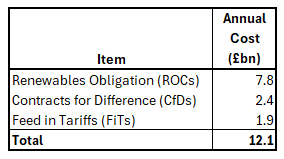
In the latest Ofgem price cap, ROCs add over £89 to our electricity bills, CfDs £33 and FiTs over £19, for a total of over £141 for a typical household using 2,700kWh of electricity per year. This amounts to about 16% of the ex-VAT total electricity bill of £902.
Extra Costs of Renewables
However, subsidies do not represent the full cost of renewables. First, because wind and solar are intermittent their output can fluctuate significantly so that sometimes they produce less than expected. At other times can produce more than demand or more than the grid can handle and we pay wind farms to curtail their output. The grid needs to be always balanced so we also pay gas generators to fire up to compensate. NESO produce Monthly Balancing Services Summary reports and the data for 2024-25 shows the cost of this service was £2.7 billion. In addition, we pay for backup through the capacity market and the OBR shows this cost us £1.3bn in 2024-25. Grid balancing adds about £48 to the typical electricity bill and the Capacity Market adds about £24.
If we attribute these costs to intermittent renewables (allowing an inflation adjusted £750m for the cost of balancing before renewables) we can see the full cost of renewables, see Figure F.
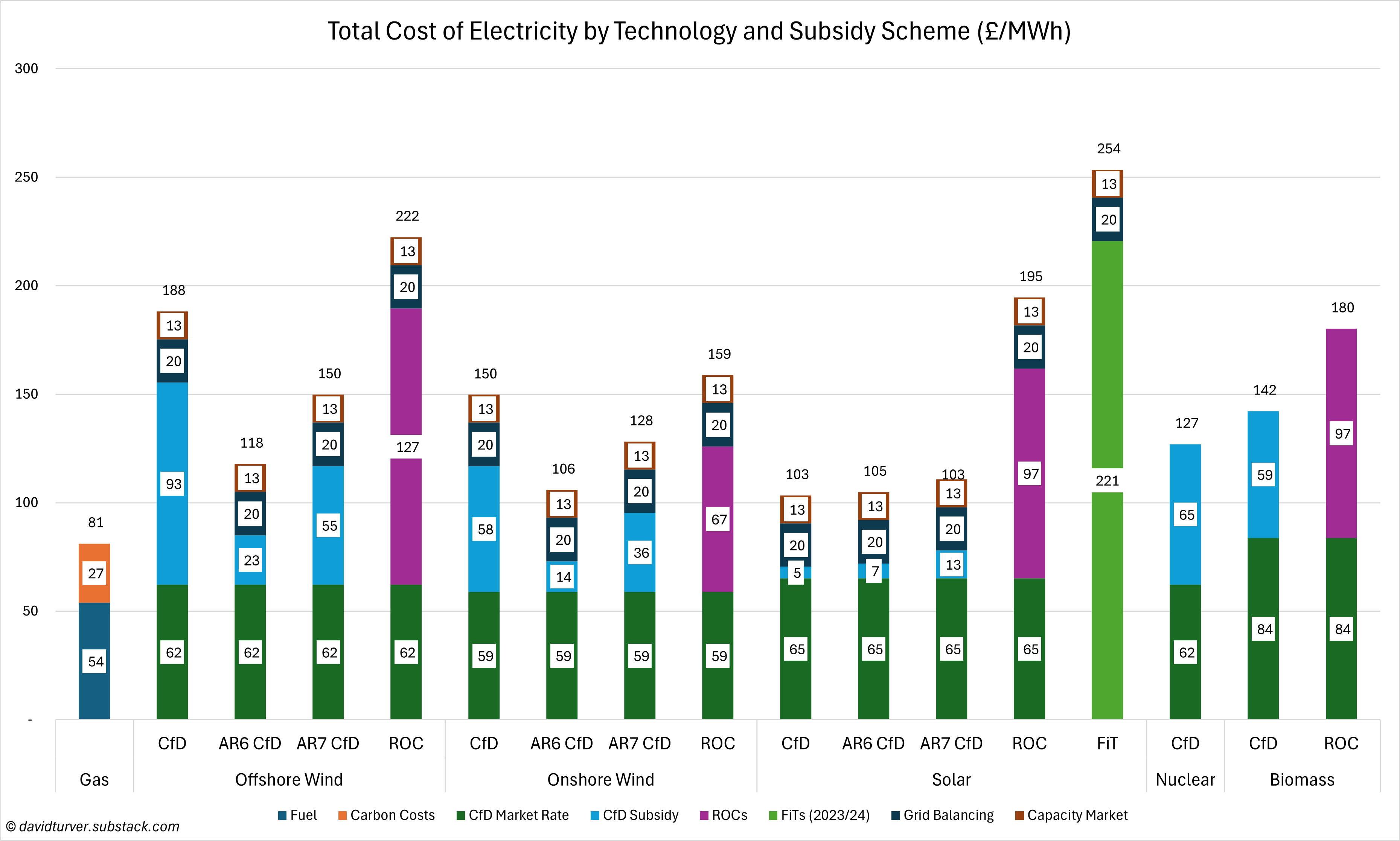
The cost of grid balancing adds about £20 to the cost of intermittent renewables and backup from the capacity market about £13, together adding £33 per MWh. The full cost of active CfDs for offshore wind rises to £188 per MWh, onshore wind £150 per MWh and solar £103 per MWh, all much more expensive than gas, even with a carbon tax added. The full cost of new capacity in AR6 and AR7 is also much higher than gas power.
These extra costs are only going to get worse. NESO forecasts balancing costs to rise to £6.4-£8.3 billion by 2030 and OBR forecasts Capacity Market costs to rise to £4.4 billion per year in 2030-31. We can therefore expect these extra costs of renewables to rise to £10-12 billion by 2030, again roughly twice the current cost of gas used for electricity.
In addition, because renewables are geographically dispersed, they need extra spending on transmission lines to connect them to the grid. Ofgem has recently approved an initial £8.9 billion of spending on the high-voltage electricity network. They claim this is the first step of an £80 billion programme to boost the electricity network capacity. They estimate this will add a further £74 to electricity bills.
Other Policy Costs
All these costs of renewables make electricity extremely expensive, particularly for the poorest households, so the Government has introduced schemes like the Warm Homes Discount (WHD) and the Energy Company Obligation (ECO) to try to help. WHD provides a £150 discount for the poorest households and ECO obliges energy companies to install insulation measures to some homes. The cost of these schemes is paid for by everyone else and together these add about £47 to electricity bills.
If electricity prices were lower, these schemes would be largely unnecessary and the cost of supporting the poorest would fall dramatically.
Latest Price Cap January to March 2026
Gas prices have fallen from £31.37 per MWh last time to £28.33 per MWh in the latest price cap. As expected, this has led to a reduction in gas bills, although the £38 reduction in fuel costs is partly offset by a £3 increase in policy costs driven by an expansion in the WHD. After some other minor charges, the net change in gas bills is a £35 reduction (ex-VAT)
However, despite the reduction in gas prices, the fuel costs of electricity have gone up because of the increase in carbon costs. Overall electricity bills are up £38 (ex-VAT) since last time driven by the expansion of WHD, carbon costs and core operating costs of suppliers. We should also mention the cost of Sizewell C through the Nuclear Regulated Asset Base (nRAB) scheme has been added to policy costs, adding £13 (ex-VAT) to the typical electricity bill.
Despite gas prices falling, combined gas and electricity bills are £65 higher (ex-VAT) than the April-June 2024 period just before Labour came to power, promising to cut our bills by £300.
How to Reduce Bills
The high cost of energy means we face a version of the Trolley Problem. This is where you face a dilemma of whether to divert a runaway trolley bus to kill one person instead of five. In our version of the problem we must sacrifice either society or the Green Blob, see Figure G.
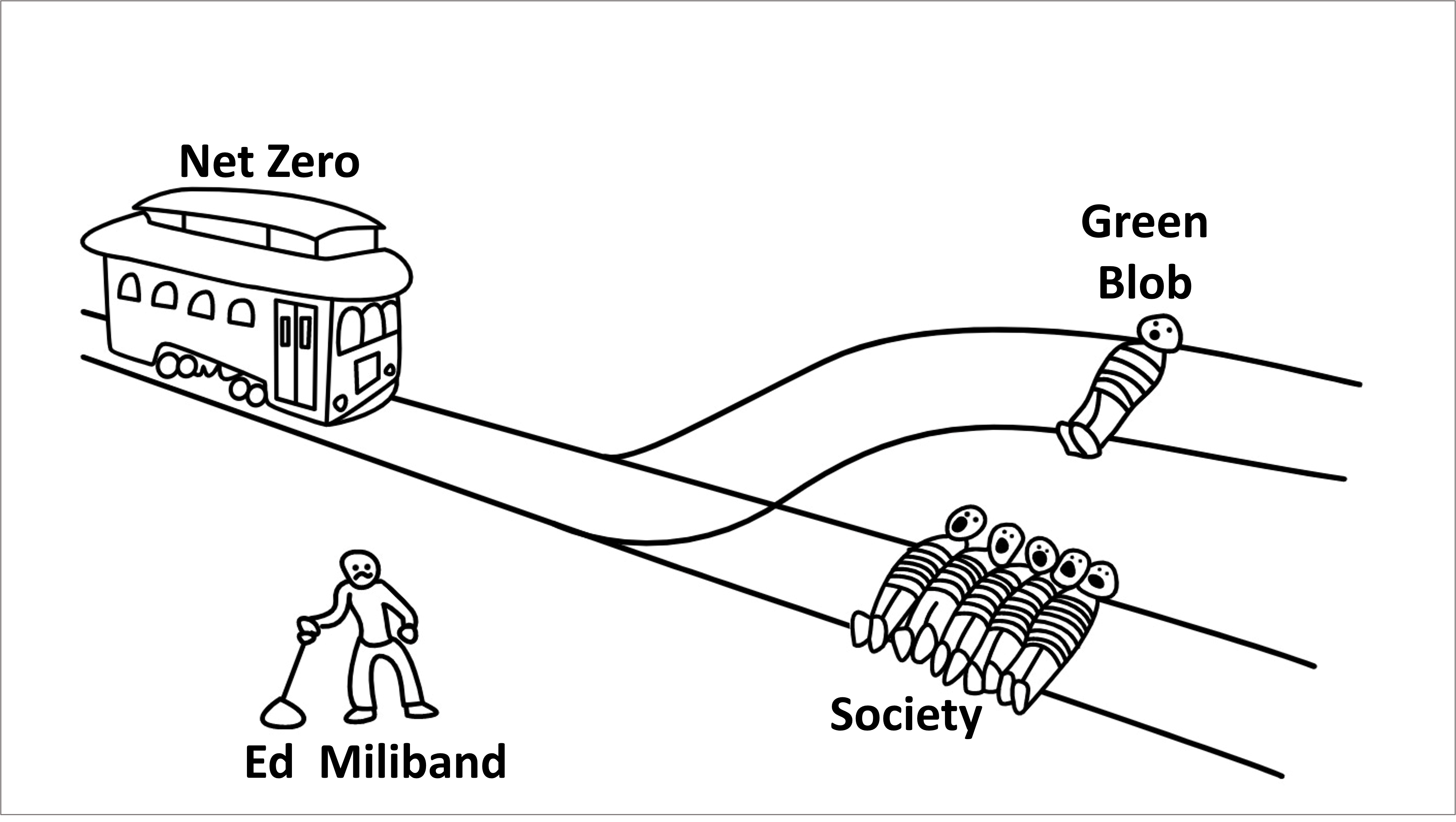
If we continue down the current Net Zero path, our economy and wider society faces an existential threat from high energy prices. We must face the unpalatable truth that moving onto the path to prosperity will require measures that will be painful for some, most notably what can be loosely termed the Green Blob.
The Reform Party has committed to end Net Zero and the Tories have recently pledged to repeal the Climate Change Act, disband the Climate Change Committee, eliminate carbon costs and end ROCs early. These new Tory policies reflect some of the ideas discussed in earlier articles. Reform has committed to striking down any contracts agreed in the current Allocation Round 7 (AR7) auction of new renewables capacity.
In the Budget, Labour has abolished the Energy Company Obligation, cutting about £60 from energy bills. It will also temporarily move about 75% of the cost of the Renewables Obligation from bills and into general taxation
If the Government has an epiphany about energy costs, it could also consider cutting VAT on energy bills, delivering an immediate cut of 5%. Other measures could be considered including cutting curtailment charges and ending the spending on grid expansion.
Taken together, these measures would reduce energy bills, meaning the WHD could also be cut, reducing bills further.
On the supply side, the Energy Profits Levy on oil and gas producers should be cut and the ban on offshore and onshore drilling should also be lifted. Increasing supply ought to reduce prices and of course we might also earn export revenues. In the medium term we need to build more gas-fired generators and massively expand out nuclear fleet after streamlining nuclear regulations.
Conclusions
We face an existential crisis from high energy prices. The Net Zero project should be abandoned and be replaced by a project with the sole aim of delivering cheap and abundant energy. There are many measures that could be taken in the short term to cut bills. Fixing the supply side will take longer and work on that should start now.
It is encouraging that opposition parties have started to challenge the Net Zero orthodoxy. The Green Blob should be left in no doubt that the trolley bus has been diverted and it is coming for it. Time to get out of the way.
David Turver writes the Eigen Values Substack page, where this article first appeared.
Recent Top Stories
Sorry, we couldn't find any posts. Please try a different search.