What covid era nurses still won’t speak about – The Expose
What covid era nurses still won’t speak about
During the covid “pandemic” lockdowns, the healthcare systems in the UK and the US were marked by systemic abuse, including blanket Do Not Resuscitate orders and protocols that hastened death.
Nurses who have spoken out have reported “gross negligence and complete medical mismanagement,” but the majority remain silent due to institutional pressures and fear of retaliation and career ruin.
The silence of nurses serves to protect powerful interests and prevents true accountability and closure for grieving families.
Let’s not lose touch…Your Government and Big Tech are actively trying to censor the information reported by The Exposé to serve their own needs. Subscribe to our emails now to make sure you receive the latest uncensored news in your inbox…
The Silence of the Nurses: What They Saw and What They Still Won’t Speak About
By Jacqui Deevoy, 3 March 2026
The dark side of healthcare systems in the UK and US during the faux pandemic lockdowns continues to haunt those willing to confront the uncomfortable truths that emerged.
As a journalist who has spent the last six years delving into eyewitness accounts, official inquiries, whistle-blower testimonies and suppressed reports, I am more convinced than ever that what unfolded in many hospitals was not simply overwhelmed systems or honest errors, but patterns of systemic abuse: blanket Do Not Resuscitate (“DNR”) orders imposed without consent, protocols that hastened death through over-sedation or misuse of ventilators, pressures around organ donation in the chaos of high mortality and isolated but chilling allegations of deliberate harm behind locked doors of hospitals, care homes and hospices.
In the UK, the NHS faced intense scrutiny over DNR practices. Reports from the Care Quality Commission (“CQC”) revealed that hundreds of Do Not Attempt Resuscitation (“DNAR”) decisions – over 500 in one review – were made without proper discussion with patients or families, raising serious human rights concerns. Vulnerable groups, including those with learning disabilities, were disproportionately affected, with some orders seemingly applied blanket-style during the early waves. Amnesty International documented how older people in care homes were effectively abandoned, with untested hospital discharges into facilities and inappropriate DNAR forms imposed without due process. Families described elderly relatives placed on end-of-life pathways with minimal justification, isolated from loved ones due to visitor bans and subjected to midazolam and morphine protocols that critics (such as myself) argue accelerated decline rather than alleviated suffering.
[Further reading: “Midazolam” on The Exposé]
Similar patterns emerged in the US, where nurses reported excessive ventilator use despite emerging evidence of harm, financial incentives tied to covid diagnoses and treatments, and isolation policies that prevented family advocacy. Allegations surfaced of patients deteriorating rapidly under remdesivir protocols or other standardised interventions that deviated from individualised care.
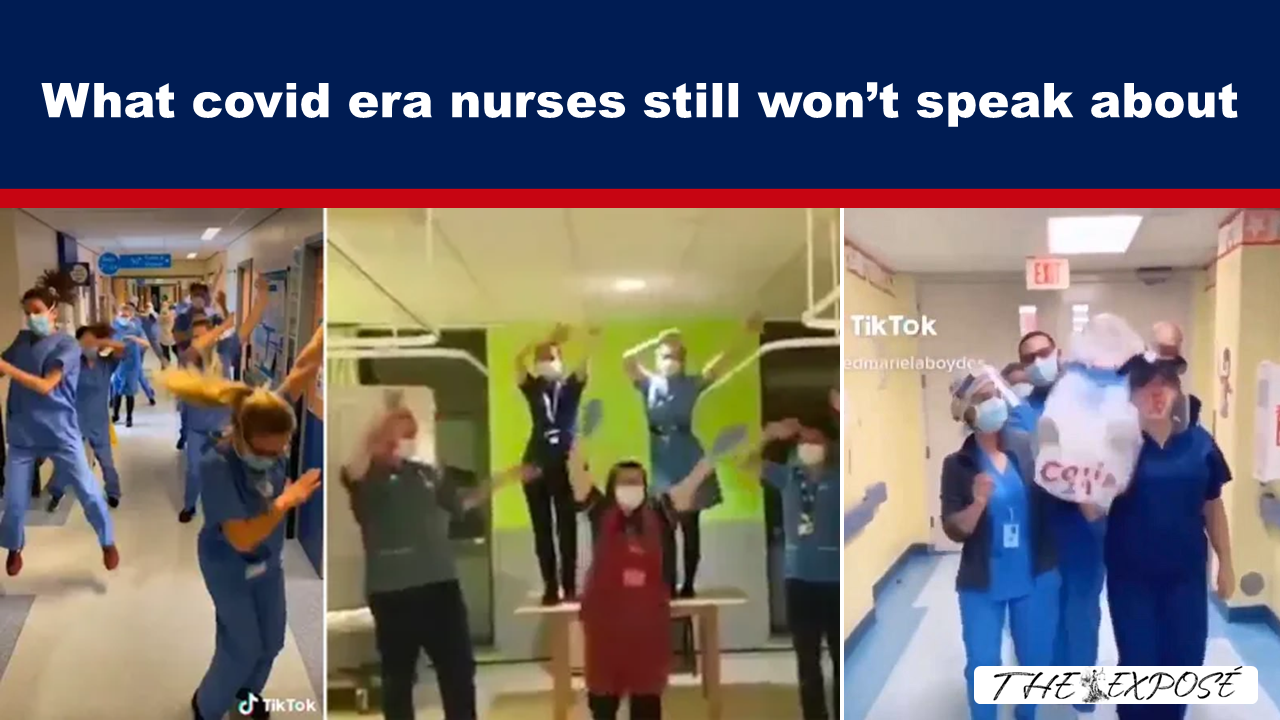
Adding to the surreal atmosphere were the widespread dance routines performed by hospital staff globally and uploaded to platforms like TikTok. While official narratives painted hospitals as war zones overwhelmed by death and exhaustion, videos showed nurses in full personal protective equipment (“PPE”) choreographing upbeat dances in hallways – often to popular tracks, complete with twerking, pelvic thrusts and celebratory energy. These clips, which went viral on social media in 2020, were lauded by the occasional mainstream corporate news story as morale-boosters and symbols of resilience. Yet to many observers, including myself, they appeared jarringly incongruous amid claims of overflowing ICUs and heroic sacrifice. How could staff have the time, energy or inclination for elaborate performances if conditions were truly apocalyptic?
[Related: TikTok’s ‘Dancing Nurses’ During the Covid-19 Pandemic: A Content Analysis, PubMed, 1 December 2022]
Over the years, I have made repeated efforts to contact nurses who might explain these routines or provide context about the hospital environment during that period. I used professional networks, anonymous tip-offs, social media outreach and direct messages – seeking even one insider willing to discuss whether the dances were spontaneous fun, mandated morale exercises, distractions from graver realities or something else entirely. The response has been unanimous and deafening: silence. Not a single nurse has come forward to speak with me about the professionally choreographed, executed and filmed performances, despite assurances of anonymity and protection. This wall of reluctance persists even now, in 2026, long after the acute phase has passed.
A small number of brave exceptions have broken through. Nicole Sirotek, a critical care nurse who worked in New York hospitals like Elmhurst in 2020, gave emotional public testimony describing what she called “gross negligence and complete medical mismanagement.” She claimed patients – particularly from minority communities – were not dying from a virus but from harmful protocols, including improper intubation, medication errors and treatments she believed were lethal. Sirotek founded American Frontline Nurses and spoke at events hosted by Sen. Ron Johnson, highlighting ventilator misuse and remdesivir concerns.
In the UK, Carly Stewart, a former care home nurse, became a prominent whistle-blower after attending anti-lockdown protests in her uniform and publicly questioning the pandemic narrative. She claimed no evidence of widespread illness or deaths in her facility and faced professional consequences, including dismissal and scrutiny from the Nursing and Midwifery Council (“NMC”), which ultimately struck her off the register for misconduct related to spreading alleged misinformation.
Kirsty Miller, another NHS whistle-blower, shared accounts of her final shifts in Scotland, detailing concerns over patient care, protocols and the atmosphere on hospital wards. Now a health and wellness advocate no longer registered, she has spoken openly about choosing truth over silence despite the personal cost.
These testimonies echo themes in the book ‘What the Nurses Saw: An Investigation Into Systemic Medical Murders That Took Place in Hospitals During the Covid Panic and the Nurses Who Fought Back’ by Ken McCarthy (published in 2023). The book compiles accounts from nurses who witnessed troubling practices – over-sedation, withheld treatments and protocols they viewed as contributing to unnecessary deaths – while highlighting those who resisted to protect patients. It frames these as part of a broader medical system corruption, with documentation including videos and events cited on the associated site, whatthenursessaw.com.
The overwhelming majority of nurses, however, remain silent. Those who have spoken out often faced retaliation: license investigations, job loss, public vilification or being labelled as fringe voices in a narrative that demands conformity. Regulatory bodies like the NMC in the UK and state boards in the US wield significant power to discipline professionals who deviate from official guidance. Many likely signed non-disclosure agreements (“NDAs”), fearing career ruin, or worried about being dismissed as conspiracy theorists in an era still sensitive to pandemic discourse. Institutional pressures – tied to funding, liability, pharmaceutical influence or governmental directives – seemed to have created an environment where dissent was career suicide.
It is now abundantly clear that nurses have not been truly free or able to speak out en masse. This enforced silence serves powerful interests: protecting reputations, shielding protocols from scrutiny and maintaining public trust in institutions that may have prioritised compliance over individualised care. Without more insiders coming forward, grieving families are left without closure and the full scope of what happened behind those locked doors remains obscured.
The dance videos, once hailed as uplifting, now linger as eerie artefacts – symbols of a time when performance and optics may have overshadowed patient welfare and when asking hard questions became the ultimate taboo. True accountability demands breaking this silence. Until then, the horrors of that era will remain only partially told, a wound on the collective conscience that refuses to heal.
If you’re a nurse and the guilt of what you’ve witnessed or done is now weighing heavily, please consider speaking out. You’ll not only help millions to come to terms with what they’ve been through, but you’ll also sleep better at night.
About the Author
Jacqui Deevoy is a British freelance journalist and producer. She’s worked for national newspapers and magazines for over three decades. Over the last few years, she’s lost faith in the corporate media and is now “doing her own thing,” focusing mainly on controversial stories that the corporate media refuse to publish. She is authoress of the book, ‘Murdered By The State: Involuntary Euthanasia in Plain Sight’ and publishes articles on a Substack page which you can subscribe to and follow HERE.
Featured image: Covid era “Dancing Nurses” and “Dancing Nurses” carrying what appears to be a bagged corpse labelled covid-19. Source: Metro and Daily Mail
The Expose Urgently Needs Your Help…
Can you please help to keep the lights on with The Expose’s honest, reliable, powerful and truthful journalism?
Your Government & Big Tech organisations
try to silence & shut down The Expose.
So we need your help to ensure
we can continue to bring you the
facts the mainstream refuses to.
The government does not fund us
to publish lies and propaganda on their
behalf like the Mainstream Media.
Instead, we rely solely on your support. So
please support us in our efforts to bring
you honest, reliable, investigative journalism
today. It’s secure, quick and easy.
Please choose your preferred method below to show your support.

While previously it was a hobby culminating in writing articles for Wikipedia (until things made a drastic and undeniable turn in 2020) and a few books for private consumption, since March 2020 I have become a full-time researcher and writer in reaction to the global takeover that came into full view with the introduction of covid-19. For most of my life, I have tried to raise awareness that a small group of people planned to take over the world for their own benefit. There was no way I was going to sit back quietly and simply let them do it once they made their final move.
Recent Top Stories
Sorry, we couldn't find any posts. Please try a different search.