War in Ukraine spills into Hungarian election
Nick ThorpeBudapest correspondent

 Reuters
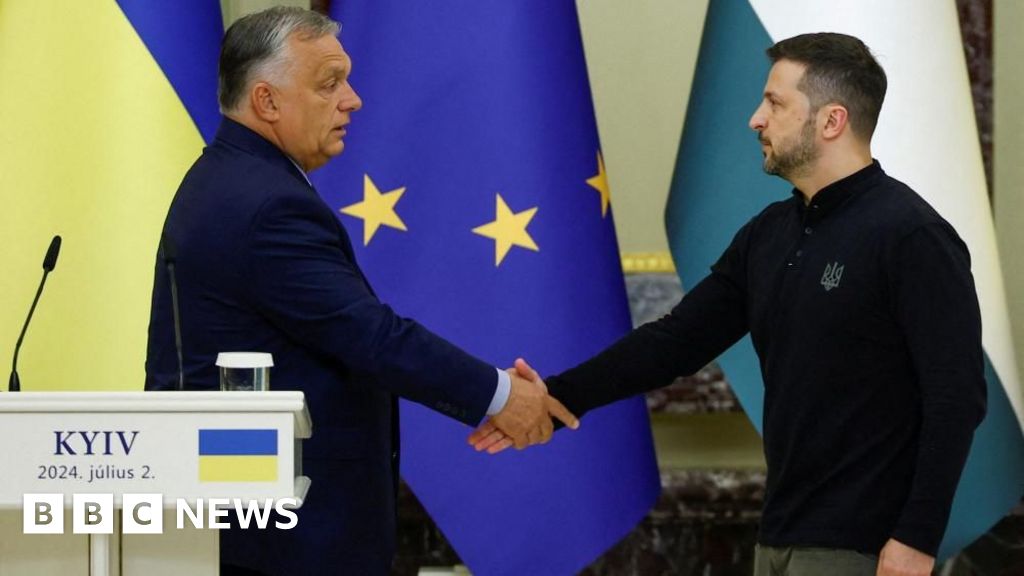
War-torn Ukraine “will stop at nothing” to prevent Prime Minister Viktor Orbán and his Fidesz party winning the upcoming Hungarian elections, the Hungarian government claims. Physical violence against the prime minister and his family, and attacks or sabotage of key energy installations, are being prepared, ministers allege.
The Ukrainian government, in turn, accuses its Hungarian counterpart of whipping up a hate campaign against it to frighten Hungarians into voting Fidesz back into office.
A third party is in the middle: Russia.
The Financial Times reported on Wednesday morning that the Social Design Agency, a Kremlin-linked media consultancy firm, was preparing a mass disinformation campaign in Hungary, to bolster Orbán and discredit the opposition Tisza Party and its leader, Peter Magyar.
With just 30 days to go until the parliamentary election in Hungary, some analysts believe the anti-Ukraine hysteria proves that Orbán is panicking in the face of probable defeat.
His Fidesz party trails to Tisza by 39% to 50% in the latest poll.
Others say Orbán knows his electorate well – and that if they can be convinced that the country is in mortal danger, he could win a remarkable fifth consecutive victory on 12 April.
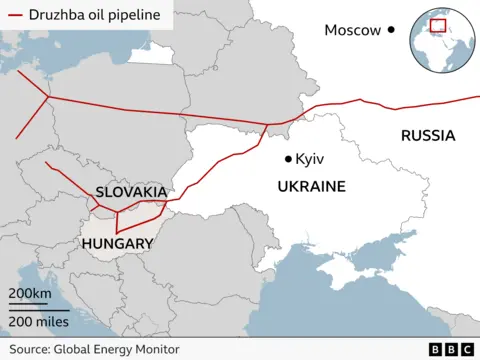
At the core of the dispute is the disruption of the Druzhba (Friendship) pipeline on which Hungarian and Hungarian-run Slovak refineries depend.
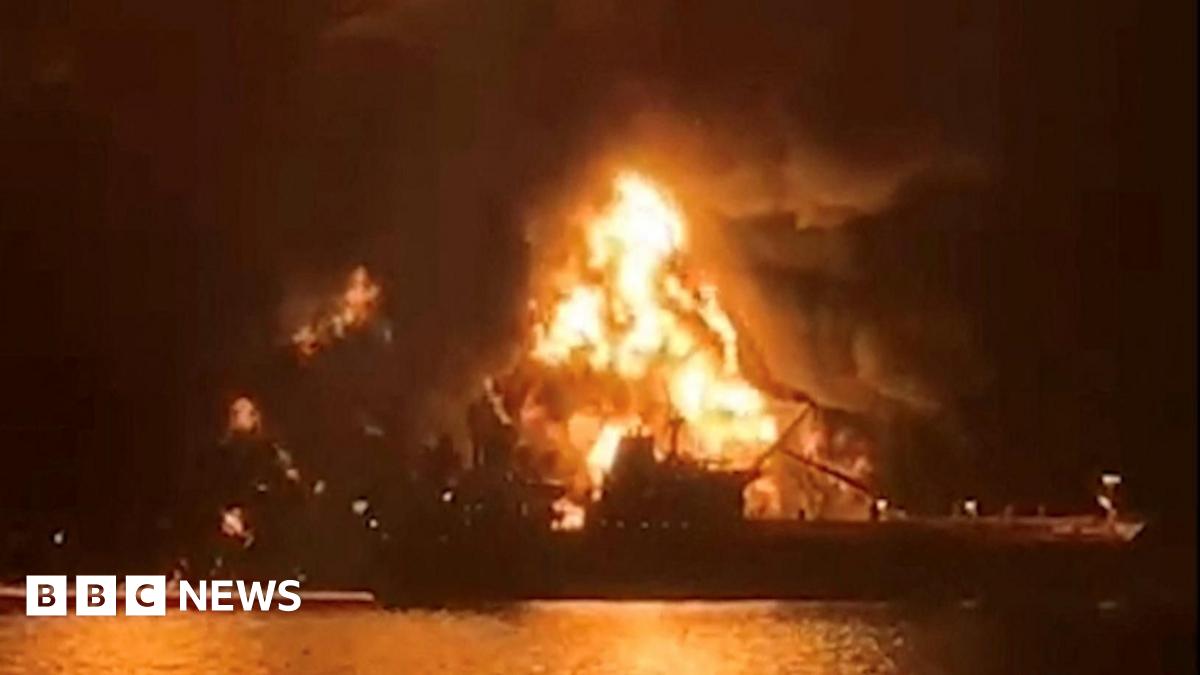
Oil deliveries through the pipeline stopped on 27 January, after a Russian drone strike caused a fire at the Brody oil hub in western Ukraine.
No oil has arrived in Hungary since then.
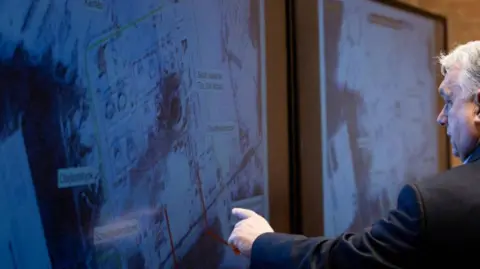
Last week, Orbán produced satellite images which, according to him, show that the pipeline is intact. He and his ministers accuse Ukraine of delaying repairs, in order to harm Orban’s re-election chances, by causing a fuel shortage in Hungary.
“The Orbán government is not telling the full truth,” András Rácz a security analyst, at the German Council on Foreign Relations, told the BBC, regarding Hungarian government claims that no technical obstacles remain to restarting the flow of Russian oil to Hungary.
In the 27 January Russian attack, Rácz said, an oil tank containing 75 million litres of crude oil at Brody was damaged, and to save the oil and prevent an environmental disaster, it was pumped into the pipeline for storage.
The presence of that oil, and other technical damage resulting from the first and a subsequent Russian attack, prevent the restoration of supply.
Ukraine says it could take six weeks to repair.
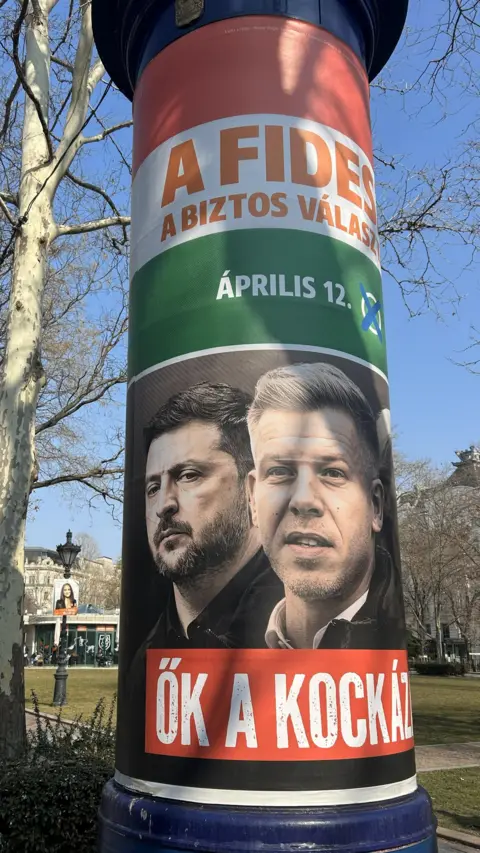
The Ukraine hysteria in Hungary takes many forms.
Giant billboards and city lights posters cover the country. Some show Ukrainian President Volodymyr Zelensky begging for money from EU chiefs.
Others juxtapose Zelensky and Peter Magyar. His Tisza is accused of planning to get Hungary involved in the Ukraine war, by joining what is dubbed “the pro-war lobby” in Brussels – something Magyar vehemently denies.
“We are the real party of peace,” Magyar tells crowds at his daily rallies across the country.
Orbán and his ministers tour the country, too, addressing what they bill as “anti-war” assemblies of Fidesz supporters.
The most shocking video – an artificial intelligence production by Fidesz – shows a little girl asking her weeping mother when her dad will come home. This cuts to a firing squad where her blindfolded father is about to be executed. This will happen to Hungarians, the video suggests, if they vote for Tisza.
Facebook has rejected readers’ complaints that the advert violates its rules on both political and violence grounds.
In a highly unusual move in peacetime, the army has been deployed to patrol key energy installations – “to reassure’ the public” in the Fidesz narrative or “to frighten” them in the Tisza one.
In the eastern city of Debrecen, Defence Minister Kristof Szalay-Bobrovniczky warned that the city could be a target for “hybrid operations” such as sabotage.
The dominant pro-government media act as an echo-chamber for the government message.
“Many people contact us, asking why, if the danger of attack is real, the government does not provide information about air-raid shelters,” Tamas Polgar Toth, a journalist at the independent Debreciner news portal told the BBC. The Fidesz mayor of Debrecen, Laszlo Papp, later told the portal that this was being considered.
On 21 February, Orbán vetoed the delivery of the EU loan, until the oil flow through the Druzhba pipeline was restored. Ukraine has resorted to a €1.5bn loan from the International Monetary Fund to tide it over until the dispute is settled.
But on 4 March, Zelensky appeared to exacerbate the stand-off.
“We hope that no-one in the European Union will block the €90bn (£78bn) [of EU aid, currently vetoed by Hungary]. Otherwise we will give that person’s address to our armed forces so they can call on him and speak to him in their own language,” Zelensky said. He did not name Orbán.
The Hungarian prime minister was not pleased.
“They want to get rid of us, with threats if possible, because if nice words don’t work, then with threats and blackmail,” Orbán told state radio on 6 March.
 Hungarian government
A day earlier two vehicles of the Ukrainian state savings Oschadbank were seized crossing Hungary.
The TEK anti-terror troops used in the operation were depicted on the front cover of the independent HVG weekly on Wednesday as Viktor Orbán’s “private army” moving gold bars around the symbol of the Tisza party.
Pro-government media allege that one of the lawyers at the company representing the Ukrainian bank as it tries to get back its money and vehicles is an ardent Tisza supporter.
A decree issued by the government on Monday ordered prosecutors to investigate “whether Hungarian criminal organisations, terrorist organisations or political organisations present in Hungary may have benefited from the transported assets”.
On Wednesday, several members of a so-called fact-finding mission set up by the Hungarian government entered Ukraine by car. Their aim was to report on the Druzhba.
“Our job is to assess the status of the pipeline and create conditions for its restart,” Deputy Energy Minister Gábor Czepek said in a Facebook post.
But Ukraine said the group were being treated as tourists.
“This group of individuals holds no official status, nor do they have any scheduled official meetings; therefore, it is fundamentally incorrect to refer to them as a delegation,” a statement from Ukraine’s foreign ministry said.
Recent Top Stories
Sorry, we couldn't find any posts. Please try a different search.