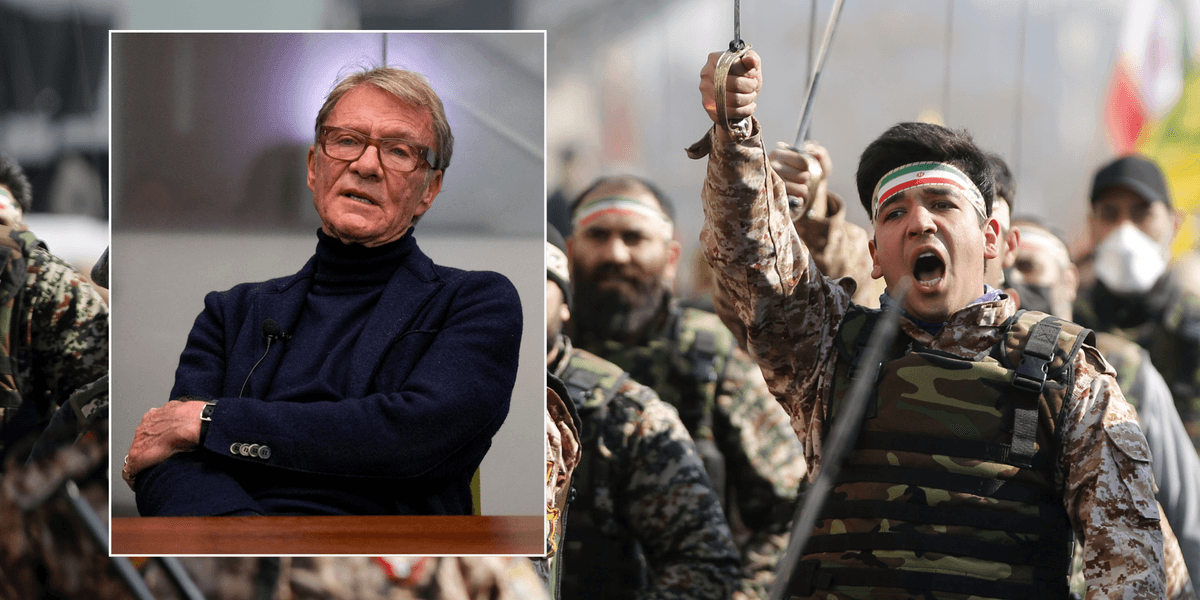
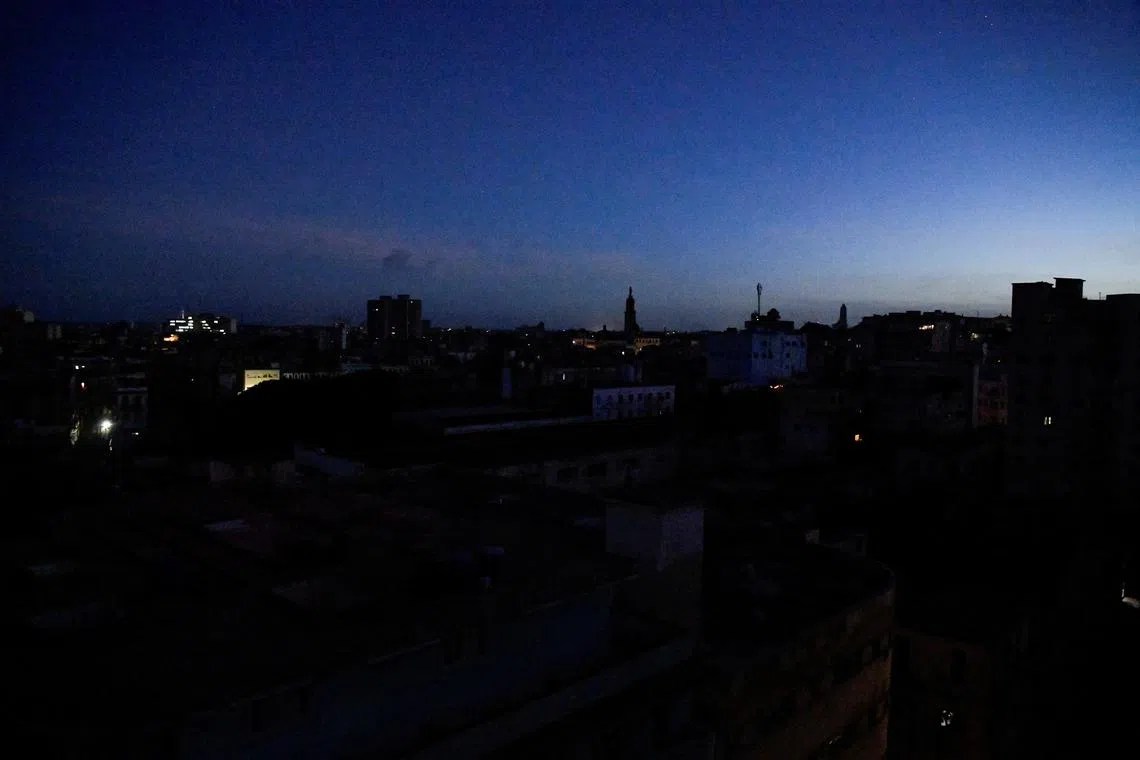
US unleashes powerful bombs on Iran’s missile sites as Tehran vows retaliation for security chief’s death
In pictures: Beirut awakes to damage from overnight Israeli strikespublished at 05:40 GMT
These pictures from Beirut, Lebanon’s capital city, show the extent of the damage after Israeli strikes overnight.
The health ministry says at least six people were killed and 24 others injured – that number was given before another volley of missiles which came after Israel issued an evacuation warning.
For context: Lebanon was pulled into this conflict a few weeks ago when Hezbollah, a Lebanese Shia Muslim political and military group, launched rockets and drones into Israel in retaliation for the assassination of Iran’s supreme leader and repeated Israeli strikes.
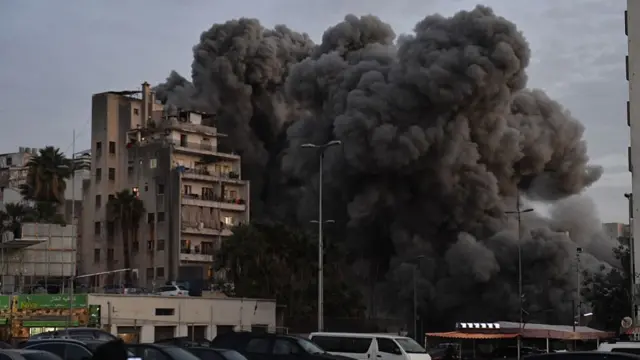 Image source, Reuters
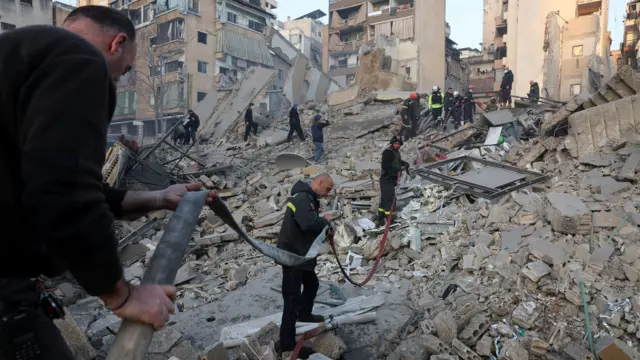 Image source, Reuters
Emergency personnel work at the site of the collapsed building in Bachoura
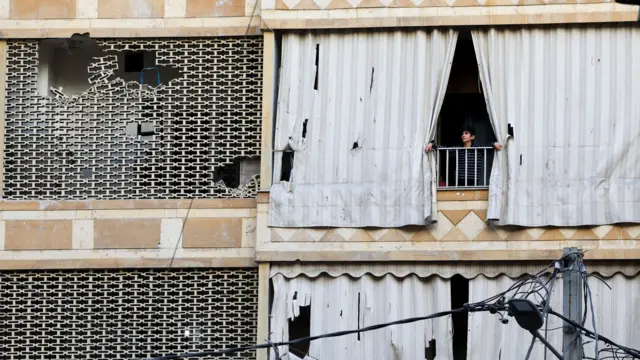 Image source, Reuters
A person looks out of a balcony in the aftermath of an Israeli strike in Bierut’s Zuqaq al-Blat district
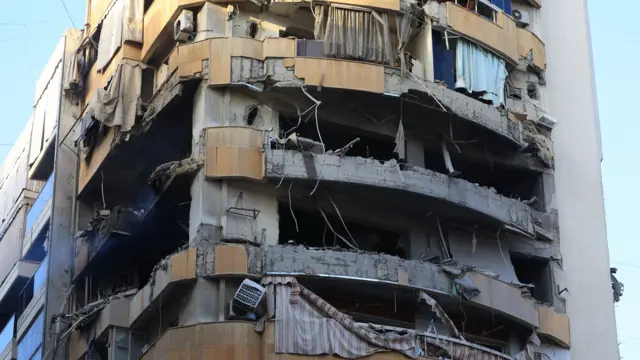 Image source, Reuters
A bombed out building in the Zuqaq al-Blat district in central Beirut
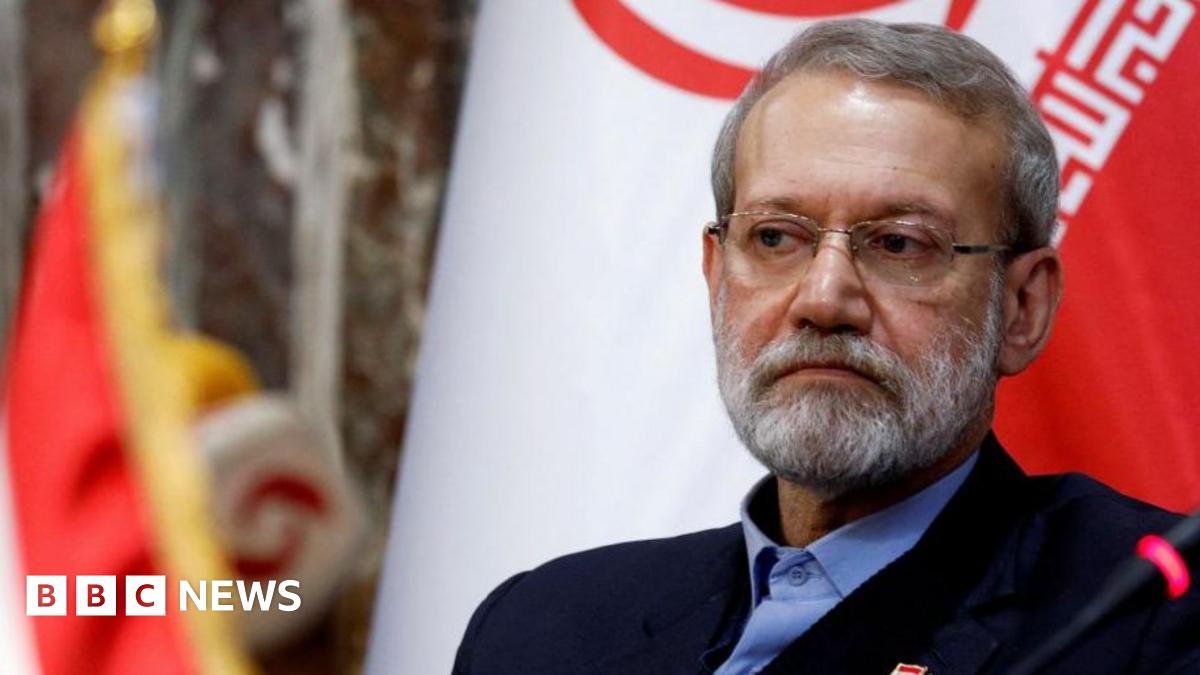
Death of Ali Larijani deepens crisis at heart of Iran’s leadershippublished at 05:32 GMT
Amir Azimi
Editor, BBC Persian
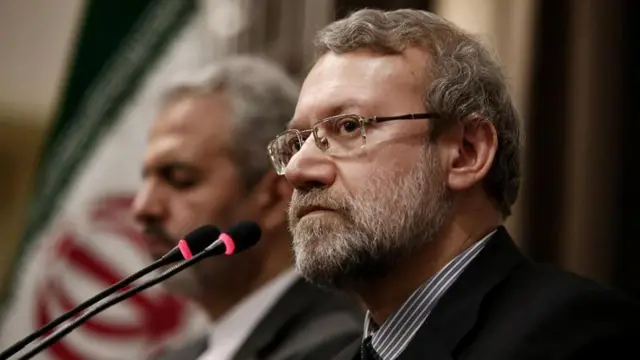 Image source, Anadolu via Getty Images
Larijani was viewed as one of Iran’s most influential political figures
The Israeli air strike which killed Iran’s security chief, Ali Larijani, has removed one of the Islamic Republic’s most experienced and influential policy makers at a critical moment.
Larijani was not a military commander, but he was a central figure in shaping Iran’s strategic decisions.
As secretary of the Supreme National Security Council, he sat at the heart of decision-making on war, diplomacy, and national security.
His voice carried weight across the system, particularly in managing Iran’s confrontation with the United States and Israel.
His death comes amid a broader campaign in which several senior Iranian officials and commanders have been killed within a matter of weeks. This pattern suggests a sustained effort to weaken Iran’s leadership structure during wartime.
Despite his hardline stance against the West, Larijani was often described inside Iran as a pragmatist. He combined ideological loyalty with a technocratic approach, favouring calculated strategy over rhetoric.
You can read more about the impact of his death here.
In pictures: Aftermath of deadly Iranian strikes on Tel Avivpublished at 05:12 GMT
Pictures have emerged from Tel Aviv, in Israel, where a man and a woman in their 70s were killed by an Iranian missile strike overnight.
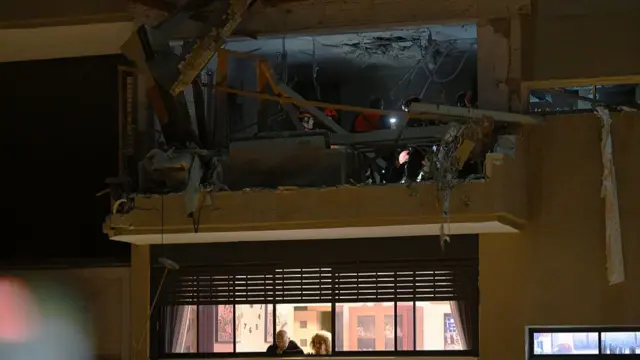 Image source, Alexi J Rosenfeld via Getty Images
Emergency workers respond to a missile attack in the Tel Aviv suburb of Ramat Gan
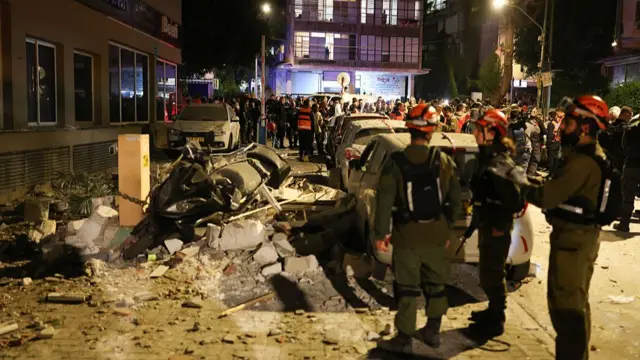 Image source, Ilia Yefimovich via Getty Images
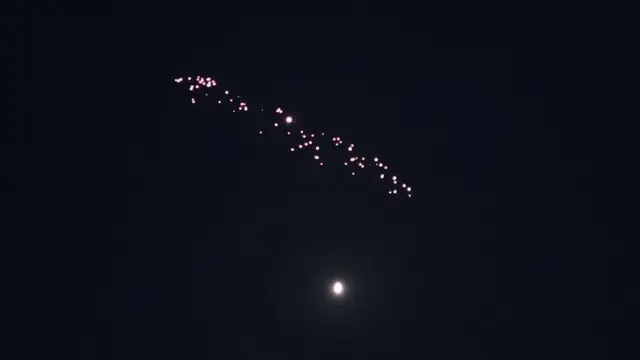 Image source, Anadolu via Getty Images
Missiles launched from Iran streak across the sky over Tel Aviv
‘No one dares to go outside’: Unrelenting dread for Iranianspublished at 04:54 GMT
Watch: Iranians show daily life under air strikes and regime crackdown
For many Iranians, there is a fear of all sides: American and Israeli bombing of their cities as well as repression from supporters of the regime.
But more than two weeks of war has also left many hopeful that this moment could lead to the end of the current regime, which has a history of heavy-handed suppression of dissent, even as people despise the foreign bombs that have sent plumes of toxic smoke into the air.
The BBC has obtained footage and interviews from the Iranian capital Tehran which evoke a city of strained nerves, of constant waiting for the next air strike and relentless fear of the state security apparatus.
Baran – not her real name – is a businesswoman in her thirties. She is now too scared to go to work. “With the start of the drone attacks, no one dares to go outside. If I open my door and step out, it is like gambling with my life.”
US hits Iranian missile sites near Strait of Hormuzpublished at 04:43 GMT
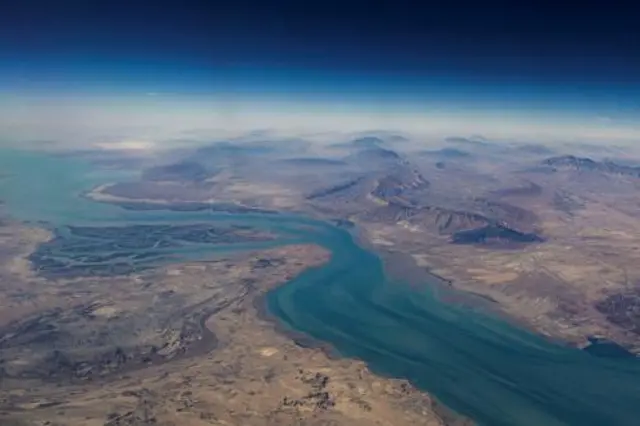 Image source, Reuters
The Strait of Hormuz is the world’s busiest oil shipping channel
The US military says it has struck Iranian missile sites along the Strait of Hormuz with powerful bombs that are capable of penetrating bunkers.
In a post on X, the US Central Command said US forces had “successfully employed multiple 5,000-pound deep penetrator munitions on hardened Iranian missile sites” along Iran’s coastline of the strait.
“The Iranian anti-ship cruise missiles in these sites posed a risk to international shipping in the strait,” the US military says.
Iran’s effective closure of the waterway – through which roughly 20% of the world’s oil shipments move – has sharply disrupted maritime traffic and contributed to rising global oil prices.
The huge bombs, called “bunker busters” – which reportedly cost an estimated $288,000 each – are less powerful than the 30,000-pound (13,600kg) bombs the US used last year when it attacked three underground nuclear sites in Iran.
Unlike conventional bombs, bunker busters are not designed to explode in the air, on the ground or surface of a target. They are encased in heavy, hardened steel and are made to penetrate deep into the ground before detonating.
Blasts heard in Beirut after Israel issues evacuation warningpublished at 04:33 GMT
Breaking
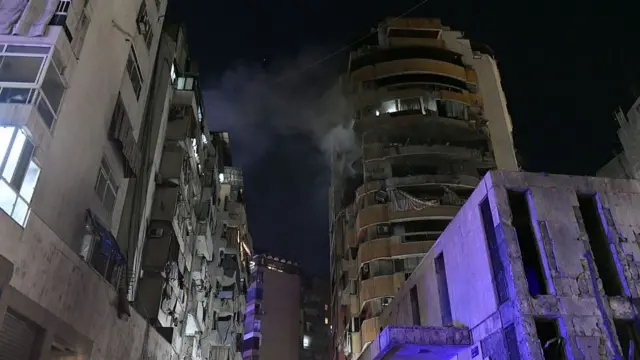 Image source, Anadolu via Getty Images
Damage after Israeli air strikes in the Balata Street and El Basta areas of central Beirut
We’re hearing more reports of an Israeli airstrike in another central suburb in Lebanon’s capital of Beirut.
A witness told Reuters news agency that they heard loud explosions in the city’s Bachoura neighbourhood after the Israeli military issued a statement urging the evacuation of a building there.
For context: Lebanon was pulled into this conflict a few weeks ago when Hezbollah, a Lebanese Shia Muslim political and military group, launched rockets and drones into Israel in retaliation for the assassination of Iran’s supreme leader and repeated Israeli strikes.
Fresh attacks on US embassy in Iraqpublished at 04:14 GMT
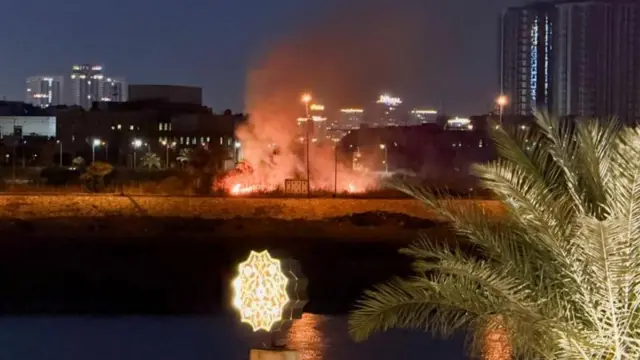 Image source, Reuters
There have also been reports of newattacks on the US embassy compound in the Iraqi capital of Baghdad overnight.
AFP and Reuters news agencies havereported explosions in the early hours of Wednesday local time.
The agencies cited security sourcesand AFP journalists in the city heard explosions near the embassy, which is inthe highly fortified Green Zone area, home to many diplomatic missions andinternational organisations.
The US outpost has beenattacked several times since the start of the war.
Lebanon says six killed as Israel strikes Beirutpublished at 03:45 GMT
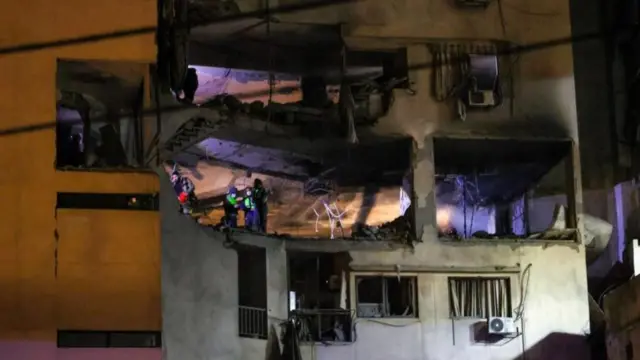 Image source, EPA
Meanwhile, Israel has been carrying out strikes on Hezbollah targets in Lebanon’s capital Beirut, where the health ministry says atleast six people were killed and 24 others injured.
It added that the figuresare preliminary and the victims’ identities “will be determined after DNAtesting”, a statement said.
Local media previously reported one strike hit an apartment building in the central Zuqaq al-Blatneighbourhood, which is close to the government headquarters and severalembassies.
A second strike also hitthe central Basta district, with witnesses hearing several explosions,according to AFP.
Lebanon was drawn into the Middle East war on March 2 when Iran-backed militant group Hezbollah launched rockets towards Israel in response to US-Israeli strikes that killed Iranian supreme leader Ayatollah Ali Khamenei.
Iran’s army chief threatens ‘decisive’ retaliation for killing of Larijanipublished at 03:41 GMT
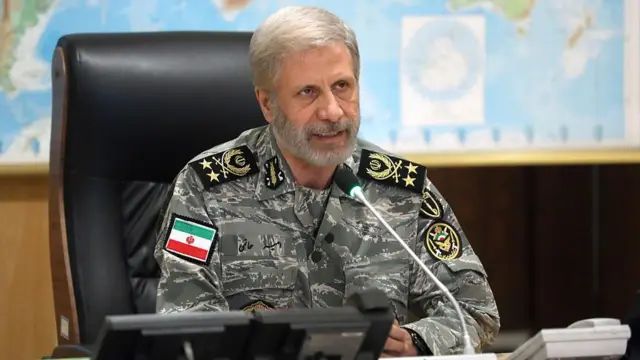 Image source, Andalou via Getty Images
Iranian army chief Amir Hatami has threatened to launch a”decisive” retaliation for the killing of security chief Ali Larijaniin an Israeli air strike.
“At the appropriate time and place, a decisive,deterrent, and regretful response will be given to the criminal America and thebloodthirsty Zionist regime,” Hatami says in a statement.
He adds that Larijani’s and the deaths of other “martyrswill be avenged”.
Iran’s Revolutionary Guards, which is separate from thearmy, says it has already launched missiles at central Israel “inrevenge” for Larijani’s death, AFP news agency reports.
Israel’s emergency services have been responding to missiles strikes on Tel Aviv overnight.
Iran vows revenge as missiles leave two dead in Israelpublished at 03:37 GMT
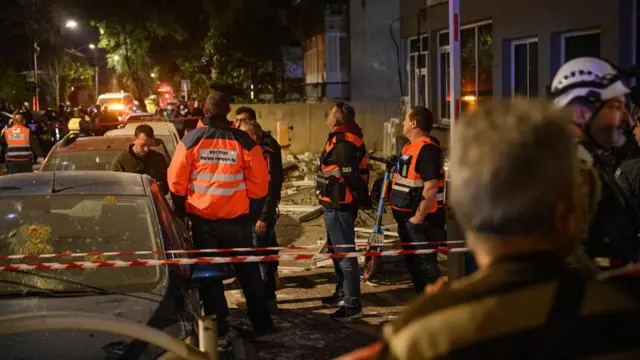 Image source, Getty Images
Emergency workers respond to a missile attack in the Tel Aviv suburb of Ramat Gan, Israel
Thanks for joining our continuinglive coverage of the US-Israel war with Iran.
Retaliatory strikes by Iran and its allied militia groups have continued throughout the night, here are the latest developments:
- Iranstate media confirms the killing of Ali Larijani, the influential secretaryof Iran’s Supreme National Security Council, in an air strike. Larijani is themost senior official to be killed since Supreme Leader Ali Khamenei
- Iran’sarmy chief vows revenge for the killing of Larijani bythreatening a “decisive, deterrent, and regretful response”. Iran’sRevolutionary Guards, which is separate from the army, says it has alreadylaunched missiles at central Israel “in revenge” for Larijani’sdeath, AFP reports.
- InIsrael, a man and a woman in their 70s are dead following an Iranianmissile strike in Tel Aviv
- Israelimilitary continues striking Hezbollah targets across Lebanon. Lebanon’s HealthMinistry says at least six people have been killed and 24others injured in two Israeli strikes on central Beirut, AFP reports
- AUN agency says a projectile hit an Iranian nuclear power plant, but that therewas no damage.
- TheUS military says it has struck Iranian missile sites near the Strait of Hormuz
- AndDonald Trump has lashed out at Nato and other allies, and claimed the US “no longer need or desire” theirhelp in the Iran war after previously asking them for support
Stay with us as we bring you more updates.
Recent Top Stories
Sorry, we couldn't find any posts. Please try a different search.