The Digital Leviathan

Some books explain events, and others explain the world in which events become possible. Jacob Siegel’s The Information State: Politics in the Age of Total Control (Henry Holt, March 2026) belongs firmly to the second category. A former US Army infantry and intelligence officer who served in both Iraq and Afghanistan, Siegel is not a theorist who stumbled upon power. He watched it operate, up close, against living populations.
That experience planted the seed for his landmark 2023 essay in Tablet magazine, “A Guide to Understanding the Hoax of the Century,” which was immediately recognized by some of the sharpest minds of our moment — N.S. Lyons, Matthew Crawford, Matt Taibbi, Walter Kirn, among others — as something rare: a genuinely illuminating text. The book that has grown from it is not merely an expansion. It is the definitive account of how liberal democracy, understood as government by consent, was quietly displaced by what Siegel calls the information state.
What is the information state? It is a regime that governs not through legislature or courts or votes, but through the invisible digital architecture that now mediates nearly every dimension of public life. Siegel’s definition is evolutive: “a state organized on the principle that it exists to protect the sovereign rights of individuals” is replaced by “a digital leviathan that wields power through opaque algorithms and the manipulation of digital swarms.”
The Foucauldian resonance is deliberate and precise. This is governmentality in the strict sense, a rationality of rule that targets conduct rather than territory, that operates through security mechanisms and the management of populations rather than through the old instruments of force and law, blurring the distinction between the two. Its goal, Siegel insists, was never simply to censor, never merely to oppress. It was to rule. The kind of brazen censorship we observed during the Biden era and that is so tempting to our warring rulers again is not a bug; it is a feature of the new normal.
What gives Siegel’s thesis its particular force is the paradox at its center. The great ills the information state claims to remedy — disinformation above all — are self-referential products of the surveillance-and-attention-based internet upon which the state now depends for its very operation. The machine generates the pathology it then offers to cure. As Siegel puts it with characteristic precision, the politicians loudest in condemning platforms like Facebook or Twitter do not take the obvious step of seeking to make them less powerful.
Their aim is not to reform or rebuild the repressive infrastructure of the internet, only to make it serve their own interests. Anyone who has read Jacques Ellul will recognize the pattern immediately. In an endless vicious circle, “Technique” keeps expanding to solve the problems created by its own prior expansion. What had appeared in the 1990s as the emancipatory promise of limitless digital communication had quietly become, by 2016, the medium through which a new class of rulers managed the informational environment of their subjects.
The book’s historical architecture is ambitious, and it is here that Siegel distinguishes himself most sharply from mere polemicists without ever sounding conspiratorial. He traces the genealogy of the information State across five acts, beginning far earlier than most observers imagine. The technocratic seed was planted by Francis Bacon’s Promethean dream of extending human dominion over nature, a vision that married scientific empiricism to political will, and that dismissed classical contemplation as, in Bacon’s own phrase, “the boyhood of knowledge.”
From Bacon, the thread runs to Jean-Baptiste Colbert, Louis XIV’s most trusted minister and weapon against the Nobility of the sword, who married humanist dreams of universal libraries to the accounting practices of Europe’s merchant houses and pioneered, in the process, what scholar Jacob Solls describes as containing “the germs of modern totalitarian government growing into webs of informants and file-systems.” The information state did not begin in Silicon Valley, or even in Washington D.C. It began in Versailles.
But its decisive American flowering came during the Progressive Era, and Siegel is particularly strong on this. Faced with the genuine upheavals of industrial modernity, which brought mass poverty, mass immigration, social unrest of a scale that seemed to exceed any traditional response, American progressives drew a fateful conclusion: ordinary citizens could no longer be trusted to govern a complex society. Sovereignty would have to migrate to experts.
This is the moment Christopher Lasch identified as the birth of the professional-managerial class, the new elite that displaced the captains of industry by claiming the authority of rationality itself. Walter Lippmann said the quiet part aloud: the public was too “selfish, ignorant, timid, stubborn, or foolish” to govern. Public opinion was raw material, to be shaped by a disinterested vanguard. Woodrow Wilson’s Committee on Public Information (the Creel Committee, created just one week after America entered the First World War) was the first official US state propaganda organ, designed to manufacture consent for a deeply divisive war.
Lippmann’s contemporary and Freud’s nephew Edward Bernays, who was the founder of public relations, would build an entire career on the same premise. Every subsequent battle in the formation of the information state has been, at its core, a victory of that technocratic strain over the democratic one.
The second act is shorter but foundational: the birth of cybernetics during World War II. The digital computer as we know it was a child of that conflict, as Siegel reminds us that the second one ever built in America was constructed specifically to test the hydrogen bomb. Norbert Wiener’s work on antiaircraft fire-control systems led him to a flash of insight: the fundamental element driving his radar-gun relay machine was not electricity but communication.
Out of that insight grew cybernetics, the science of self-regulating feedback systems, which dissolved the boundary between the human and the mechanical, converting man and animal alike into mere components within unified systems of control. The dream was intoxicating: translate the physical world into data, and control reality itself. Around the same time, Claude Shannon was redefining information itself, stripping it of any reference to meaning and reducing it to a pure measure of signal and surprise. “The semantic aspects of communication,” Shannon wrote, “are irrelevant to the engineering problem.” These were not merely technical advances. They were a new metaphysics, and one that, as Shannon repeatedly warned, to little avail, would prove impossible to contain within its original engineering context.
The book becomes most riveting, and most original, when Siegel draws on his own formation as an intelligence officer. As everybody knows, the internet was a military technology from its inception. What is far less commonly understood is that it was tied specifically to a new form of warfare inaugurated in Vietnam: the population-centric counterinsurgency. J.C.R. Licklider, the man who effectively invented the internet, arrived at ARPA in 1962 carrying what one internal report described as an “almost messianic view” of computers and a second assignment heading the Behavioral Sciences program, out of which grew ARPA’s far-reaching surveillance and social engineering initiatives.
Contrary to the popular mythology of Vietnam as an intense battle between ragtag US soldiers and Viet Cong insurgents, Vietnam was the first technocratic war. The key players in the Vietnam War were Kennedy-appointed systems analysts, processed through proto-algorithms, rationalized from above rather than left to the chaos of battlefield commanders. A primitive ancestor of our internet, ARPANET grew directly from this drive to collect, centralize, and interpret information about civilian populations. Unlike previous wars focused on dominating enemy military forces, counterinsurgency concerned itself above all with the civilian population, seen as holding the key to victory. Mass surveillance was not invented in the post-9/11 panic. It was prototyped in the Mekong Delta.
From Vietnam, Siegel traces the strange cultural interlude of the 1970s and 1980s, when technocratic thinking triumphed precisely by becoming invisible, retreating from political discourse into the medium through which political discourse now took place. This is the Foucauldian image par excellence of power that conceals itself by becoming the environment rather than the object of thought.
Wrapped in the mythology of the garage, the hacker, the libertarian rebel, Silicon Valley was born in this period. Apple presented itself as radically anti-state, while its foundations rested entirely on massive military-industrial investment, as roughly three-quarters of total funding for computer development in the industry’s first two decades came from the Pentagon. The ideology was real. But so was the deception.
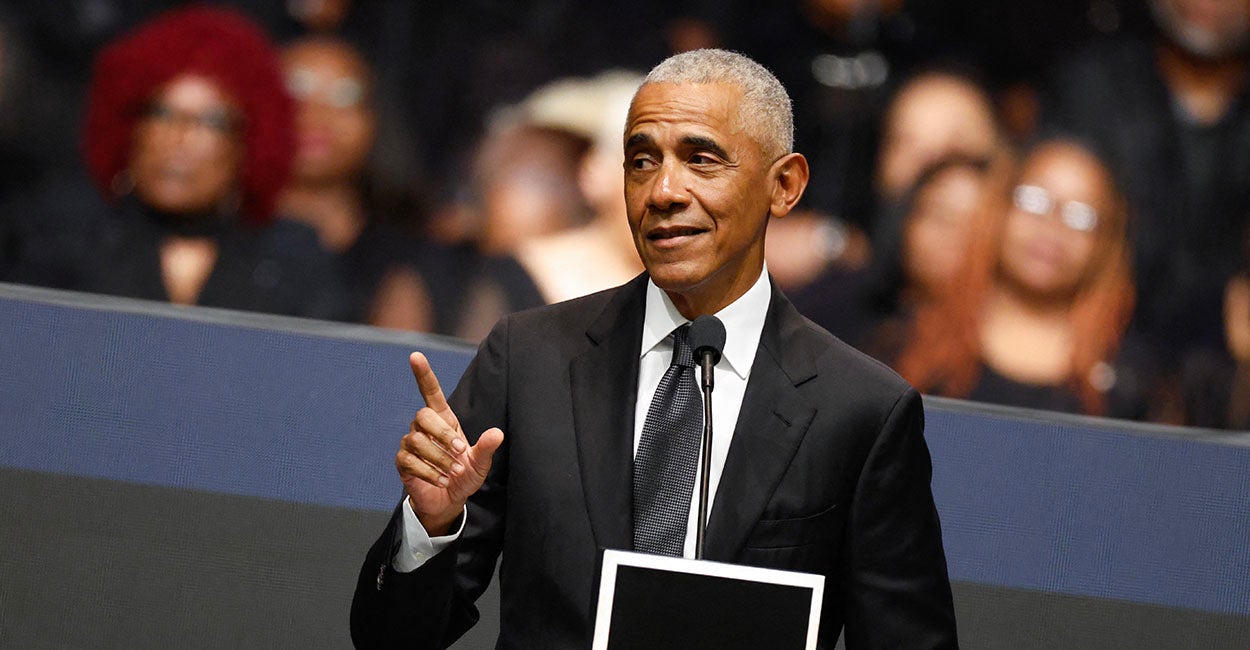
After 9/11, conveniently framed as a failure of the intelligence community to collect and process enough data, the civilian and military infrastructures merged openly. But the most consequential development did not happen under George W. Bush. It happened under Barack Obama, whom Siegel labels “the Silicon President.”
Obama visited Google before he was even elected. What he and Google shared, as the constitutional scholar Adam White observed, was a view of “information as being at once ruthlessly value-free and yet, when properly grasped, a powerful force for ideological and social reform.” Out of that shared informational ideology, Obama built an alliance between his party and the tech industry that fundamentally changed what the internet was.
Originally conceived of itself as a digital Switzerland — neutral, objective, above the fray — Google gradually became a legislator of the social order. Its initial motto, “Don’t be evil,” gave way, in 2015, to the more assertive “Do the right thing.” The shift was not incidental. It marked the full convergence of progressive governance and Silicon Valley infrastructure into a single system of informational control.
Nominally defunded under public pressure, the Bush era’s Total Information Awareness (“TIA”) metastasized under Obama into the architecture we now inhabit. By 2016, the tools of counterterrorism had been turned inward, against domestic populations, under the cover of “disinformation,” that elastic, infinitely accommodating concept that could expand to encompass any dissent requiring suppression.
The Harvard Shorenstein Center’s taxonomy of “mis-, dis-, and malinformation” became the operating system of power. Particularly chilling is Siegel’s account of “malinformation,” i.e. the official designation for factual statements that authorities find objectionable. Truth now had a clinical diagnosis. The Latin prefixes and pseudoscientific postures were poor concealment of what were, at base, political judgments of a small clique of experts empowered to diagnose any views they disagreed with as symptoms of a disorder.
Hamilton 68, the Steele dossier, the 2017 Intelligence Community Assessment on “Assessing Russian Activities and Intentions in Recent US Elections,” — all provided the pretext for permanent domestic censorship machinery. Siegel’s account of Hamilton 68 is exemplary: Twitter executives knew the “Russian influence dashboard” was spreading false claims, had the internal emails to prove it, and said nothing.
One executive, Emily Horne, who had come directly from the State Department’s counterterrorism communications apparatus, advised colleagues that “we have to be careful in how much we push back on ASD publicly” — the Alliance for Securing Democracy, Hamilton 68’s sponsor, being precisely the kind of institution that held the keys to professional futures in that world. This is not conspiracy. It is how the system operated normally. The counter-disinformation complex was not held together by coordination at the top but by the organic circulation of personnel, funding, and social incentives through its nodes: academic institutions, private contractors, government agencies, and platform trust-and-safety teams all breathing the same air, sharing the same assumptions, and reinforcing each other’s judgments.
The final act, the Revolt, is the most painful to read, because it is the most recent. As we all remember from the Biden era, censorship became routine governance. Covid policy, the Hunter Biden laptop, Ukraine, Afghanistan, entire domains of reality were managed out of public view, with the FBI, intelligence agencies, academic institutions, and Silicon Valley platforms operating in seamless, if sometimes informal, coordination.
Led by former CIA “intern” Renée DiResta, the Election Integrity Partnership (“EIP”) monitored nearly a billion tweets and classified tens of millions of posts as “misinformation incidents” during the 2020 election cycle alone. And yet the system ultimately lost control of the narrative anyway. Mass censorship bred mass paranoia. It radicalized the very subjects it sought to pacify. Drawing on Václav Havel’s analysis of terminal stage totalitarian regimes sustained by collective lies, Siegel shows how the information state’s demand for conformity hollowed out trust in every institution that enforced it. Trust collapsed to historic lows not despite the system’s sophistication but because of it. The Twitter files, consecutive to Elon Musk’s acquisition of the platform, the 2024 election, all exposed that the emperor had no clothes.
The book ends rather abruptly with the chapter about the Biden debacle. There is no conclusion. Siegel does not venture into answering what we are supposed to do now. He charts the structure of the information state so that we might at least see clearly what we are facing. And he warns, in closing, of a coming second information state driven by artificial intelligence: a system potentially even less accountable than the first, governed by processes that are opaque not merely by design but by nature.
This is one of the most important books published in this century, and it deserves to be read as such. And yet, for readers like me of Bertrand de Jouvenel and the Italian elite school (Mosca, Pareto, Michels), who are once again reminded by the new chapter of the Forever War that started a few weeks ago, that popular sovereignty was never really a thing, one reservation surfaces. Siegel’s narrative implicitly mourns the liberal-democratic order that the information state supposedly displaced, treating consent of the governed as a genuine historical achievement that was then betrayed.
But was it ever more than a legitimizing fiction? Per what Neema Parvini coined as Mosca’s law, the organized minority has always ruled over the disorganized majority as Donald Trump’s Iranian adventure reminds us soberly. The fact that American rulers were often, particularly in the postwar decades, convincingly paying lip service to the myth of popular sovereignty should not obscure the underlying reality. Power to the people was never really more than a slogan, though the myth of it was, for a time, a useful constraint on those who held power.
Lewis Mumford saw the same managerial logic operating since the pyramids. Paul Kingsnorth sees it operating still, uprooting us from place and culture and the sacred, replacing them with the idols of screen and data and frictionless self-expression. From this angle, the information state is not the corruption of liberal democracy but its logical technological fulfillment. It is only the latest, most efficient iteration of a megamachine that long predates the digital age, and that has always, in every incarnation, described itself as progress.
These are quibbles, which do not minimize the quality of Siegel’s argument. What he has achieved is something rarer than argument. It is a genuine act of seeing, sustained across several hundred pages, that changes the way the recent past looks.
The disinformation panic of 2016 was not an overreaction to a novel threat. It was the coming-out party of a new political order, one that had been under construction, in one form or another, since Bacon dreamed of extending human dominion over the universe, since Colbert built his archives for Louis XIV, since Lippmann decided the public was too foolish to govern itself. The information state did not replace a golden age of consent. It perfected a managerial logic that was centuries in the making.
If you read one account of the 2016–2024 era, make it this one, but don’t expect a happy ending. It will change how you see the world you are living in, and how you understand the forces that are quietly, relentlessly, shaping it. You will not like them more, but at least you will see through them while they wash over you again and again.
-

Renaud Beauchard is a french journalist with Tocsin, one of the largest independent media in France. He has a weekly show and is based in DC.

Recent Top Stories
Sorry, we couldn't find any posts. Please try a different search.