Iran: Teenager among first to be executed over anti-government protests

 Mizan News Agency
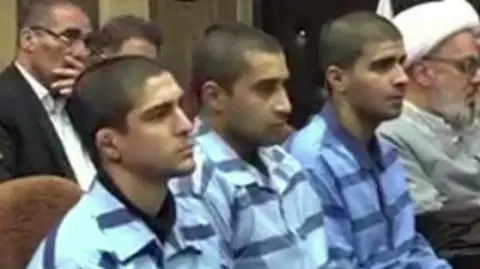
Iran has executed three men accused of killing police officers during anti-government protests in January, state media say, the first hangings to be carried out in relation to the demonstrations.
Among the men was teenager Saleh Mohammadi, a member of Iran’s national wrestling team, sources have told CBS, the BBC’s US partner.
The executions took place on Thursday morning local time in the northern Qom province after the Supreme Court upheld their death sentences, Iran’s Tasnim news agency reported.
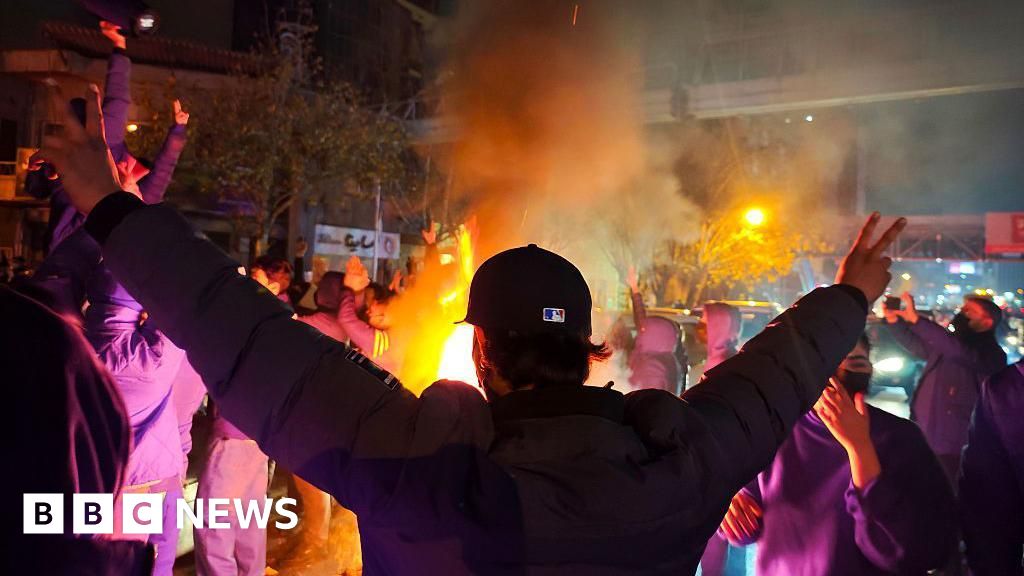
The nationwide protests, which began in December and escalated in January, were met with a violent crackdown by the Iranian authorities. Rights groups say thousands of people were killed.
Tasnim, a semi-official news agency associated with Iran’s Revolutionary Guard Corps (IRGC), reported that Mohammadi, Mehdi Ghasemi, and Saeed Davoudi were found guilty of killing two police officers in separate attacks in Qom.
Tasnim said they were also convicted of “moharebeh” – waging war against God- one of the charges Iran uses to issue death sentences for protesters and opponents of the Islamic Republic.
According to rights groups, the three men had confessed under torture and were executed without a fair trial.
Their deaths came a day after Iran executed a dual Iranian-Swedish national. Kouroush Keyvani was hanged after being found guilty of spying for Israel, Iran’s judiciary news agency Mizan Online said.
Keyvani was reportedly arrested during Iran’s 12-day war with Israel last June.
“It is clear to us that the legal process that led to the execution of the Swedish citizen has not been legally secure,” Sweden’s foreign minister said in a statement.
The protests, which reportedly spread to 180 cities and towns in all 31 provinces, were sparked by anger over the collapse of the Iranian currency and soaring cost of living.
They quickly widened into demands for political change and became one of the most serious challenges to the clerical establishment since the 1979 Islamic revolution.
While a near total shutdown of the internet and communication services made it difficult to find out what was happening in the country, protesters told the BBC the lethal crackdown by security forces was unlike anything they had witnessed before.
According to the US-based Human Rights Activists News Agency (Hrana), at least 7,000 people were killed in the January crackdown, including 6,488 protesters and 236 children.
US President Donald Trump said in January that “strong action” would be taken against Iran if protesters were executed. Iranian Foreign Minister Abbas Araghchi said afterwards that there was “no plan” to hang people.
One protester, Erfan Soltani, who had been arrested on 8 January and whose family had been told would be executed within days, according to the Norway-based Kurdish human rights group Hengaw, was later reportedly released on bail.
Iran’s judiciary denied he had been sentenced to death, saying he faced security-related charges carrying prison terms only.
Since then, the US and Israel have launched wide-ranging strikes on Iran, killing the country’s supreme leader. Iran has responded by launching attacks on Israel and US-allied states in the Gulf.
Recent Top Stories
Sorry, we couldn't find any posts. Please try a different search.