Iran latest: Demonstrations erupt as rights groups say at least 48 protesters killed

Video appears to show injured protesters in Fardis, Karajpublished at 18:38 GMT
Farzad Seifikaran
Senior Journalist Reporter, BBC Persian Forensic
Based on reports and information received by BBC Persian from various cities, the level of violence during nationwide protests last night was very high.
As a result, a large number of protesters were injured and killed after being shot by security forces.Two videos have been received by the BBC which are said to be related to last night’s protests in Fardis, Karaj.
Both videos were filmed by the same person.The voice of the person filming can be heard saying:
“Today is 18 Dey, Fardis. Look what they did to people. At 9pm they killed people with live ammunition.”
Our checks show that the video has not previously been published online and relates to events from last night in Iran.
However, at this stage, we are not able to verify all of its details.In the two videos, around eight to ten people can be seen lying on the ground with severe bleeding.The footage appears to have been filmed in an enclosed area resembling a parking lot, with several vehicles visible, including cars similar to Peugeot and Tiba models.
It is not clear whether these individuals were injured at the same location or were taken there after being wounded.We are continuing efforts to gather more information about this incident.
However, videos showing protests and gunfire in Fardis, Karaj, circulated last night and we have been able to verify them. Two of the videos were filmed on Shohada Boulevard in Fardis and show a large crowd.
Iran’s security bodies toughen warnings of ‘no leniency’published at 18:13 GMT
 Soroush Negahdari
BBC Monitoring
Iranian security and judicial authorities have issued a series of coordinated warnings, hardening their rhetoric and echoing an earlier message of “no leniency” by Iran’s top security body, the Supreme National Security Council (SNSC).
Iran’s National Security Council – responsible for domestic security and not to be confused with the SNSC – said “decisive and necessary legal action will be taken” against protesters, which it described as “armed vandals” and “disruptors peace and security”.
In a brief statement, it warned against “any form of attack on military, law-enforcement, or governmental facilities”. The intelligence arm of Iran’s Islamic Revolution Guard Corps (IRGC) similarly warned that it will not tolerate what it described as “terrorist acts”, asserting that it would continue its operations “until the complete defeat of the enemy’s plan”.
The IRGC intelligence arm said the continuation of unrest is “unacceptable”, adding that “the blood of those who lost their lives in recent terrorist incidents lies with those who planned them”.
Iran’s Law Enforcement Command similarly referred to a “firm decision” by the security forces to “show no leniency”. It alleged presence of “terrorist groups and armed individuals” in some areas and warned about “staged killings” – a term used by state media to deny responsibility for deaths during unrest.
One of the strongest warnings came from Tehran’s prosecutor, Ali Salehi, who said the judiciary would charge armed protesters with death sentences.
He asserted that those damaging public property or clashing with security forces, if carrying any cold or hot weapons, would face charges of “Moharebeh” (waging war against God) – an offence punishable by death and used in previous rounds of protests to issue death penalties for some alleged armed protesters.
Iranian government confirms that it shut off nation’s internetpublished at 17:58 GMT
The Iranian government has confirmed it enacted an internet blackout following widespread anti-government protests broke out across the country.
The government’s ministry of communication says the decision was made by the “security authorities” due to the “prevailing conditions in the country”.
At least 48 protesters killed, human rights groups saypublished at 17:43 GMT
The US-based Human Rights Activist News Agency (HRANA) is reporting that at least 48 protesters and 14 security personnel have been killed since the demonstrations began on 28 December.
Separately, Norway-based NGO Iran Human Rights has counted at least 51 protesters killed, including nine children.
Most international news organisations, including the BBC, are barred from reporting inside Iran, which means that social media is needed to verify casualties. However, the internet has been almost completely shut down since Thursday night.
BBC Persian has so far confirmed the deaths and identities of 22 people. Iranian authorities have so far confirmed the deaths of six security personnel.
Internet blackout means ‘rhetoric of regime’ filtering throughpublished at 17:29 GMT
Rachel Hagan
World Service reporter
Speaking to the World Service’s Outside Source, BBC Persian anchor Parizad Nobakht describes an almost total information blackout inside Iran.
“The internet is down, mobile phones are down, and we’re hearing that even normal phone lines are down,” she says, making it “extremely hard” to verify what is happening on the ground.
As a result, she says, much of what is filtering through is “just the rhetoric of the regime”.
Some footage is still emerging, she explains, likely because a small number of people retain access to Starlink satellite internet.
But the challenges go far beyond technical restrictions.
“It’s extremely complicated,” Nobakht says, explaining that many journalists abroad have families who have been directly targeted by the Iranian authorities.
“Many of us have family members who’ve been interrogated at least once. Many people’s family members have been arrested.”
Khamenei remains active on X as most Iranians unable to use internetpublished at 17:17 GMT
 Ghoncheh Habibiazad
Senior reporter, BBC Persian
Major social media platforms, including Telegram, X, Facebook andInstagram, are officially blocked in Iran, though many users access them viavirtual private networks (VPNs).
Despite the internet outage, the official account of SupremeLeader Ayatollah Ali Khamenei in English on X has been active today, repostinghis speech in which he accused US President Donald Trump of having “Iranianblood” on his “hands”.
Back in November, a new location feature on X revealed that manyIranian officials and media figures were accessing the banned platform withoutproxy servers or VPNs.
This reignited discussions over the existence of a “tieredinternet” in the country.
Officials, a wide range of journalists and someacademics appear to have been granted access to the so-called “white”, orunrestricted, internet.
Government’s spokeswoman Fatemeh Mohajerani laterconfirmed this unrestricted internet access in December.
Statements may indicate security forces could crack down on protesterspublished at 17:03 GMT
Kasra Naji
BBC Persian
Meanwhile, the Revolutionary Guard has issued a statement saying it will not tolerate the continuation of the current situation in the country.
Earlier, the Supreme Leader said his government would not back down from dealing with what he calls mischief-makers bent on causing destruction in the country.
These statements may indicate that the security forces, stretched thin across the country, are planning to crack down on protesters.
Iranian state television has been warning parents about the dangers of allowing their children to join the protests, saying terrorists may target them.
Last night, Tehran and many towns and cities across the country were the scene of huge protests – posing the biggest challenge to the regime since its inception in the wake of the 1979 revolution.
ATMs and debit cards not working due to internet blackoutpublished at 16:52 GMT
Kasra Naji
BBC Persian
The cutting off of the internet in Iran has led to a near-total blackout of news about the unrest sweeping across the country.
Only a few videos have been posted today from Zahedan in the east of the country, showing protesters facing off against security forces, with the sound of gunfire in the background. Another from Mashhad, the second biggest city in Iran shows a burnt out government building.
One person who has been able to send a message to the BBC says he is in Shiraz, in southern Iran, where he reports a run on supermarkets by residents trying to stock up on food and other essentials, expecting worse days to come.
The shutdown of the internet has meant that ATMs are not working, and there is no way to access cash to pay for purchases in shops where debit cards cannot be used due to the lack of internet.
Iran passes 24-hour mark without internetpublished at 16:41 GMT
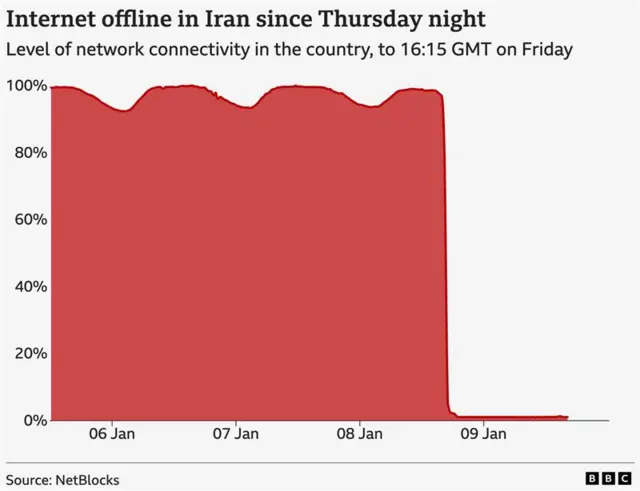
Internet tracking agency NetBlocks says it has now been 24 hours since Iran implemented a nationwide internet shutdown.
It says its data shows that internet connectivity across the nation has flat-lined at just 1% of usual levels.
Watch: BBC Verify tracks protests across Iranpublished at 16:27 GMT
Protests in Iran have entered their 13th day. Throughout the growing unrest, BBC Verify and BBC Persian have been working together to verify content coming out of the country.
More than 100 videos of anti-government demonstrations in more than 50 towns and cities have been analysed by the BBC.
As a reminder, the BBC and other international news organisations are barred from reporting inside Iran, so social media is relied upon to verify what is happening on the ground.
BBC Verify tracks protests across Iran
‘I’ve been cut off from family in Iran since internet blackout’published at 16:14 GMT
 Reha Kansara
News Reporter
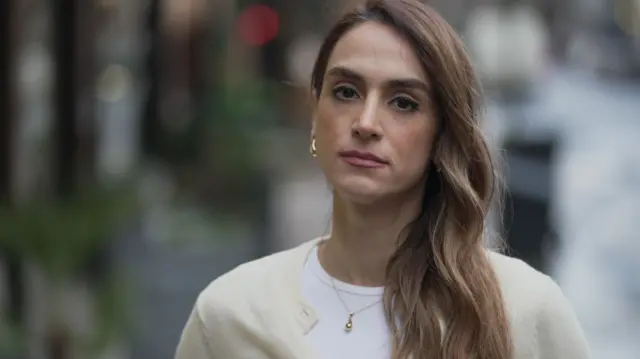
I’ve just met with Mahsa Alimardani at an Iranian restaurant in central London.
She tells me it’s been a “constant blackout” since she last spoke with her family in Iran yesterday evening.
“The messages on WhatsApp still just have one check mark. They haven’t delivered yet.”
Mahsa, who works for the human rights NGO Witness, says that when she last spoke to her family she tried to make sure they had enough medicine and food – as it was unclear if and how circumstances would intensify.
“It’s very anxiety inducing, not having access to information, not knowing if your loved ones participated [in the protests] or if they’re okay,” she says.
“But for those of us who are outside of Iran, we are physically safe and privileged but our hearts are in Iran.”
Pahlavi not seeking to restore monarchy, says supporterpublished at 16:02 GMT
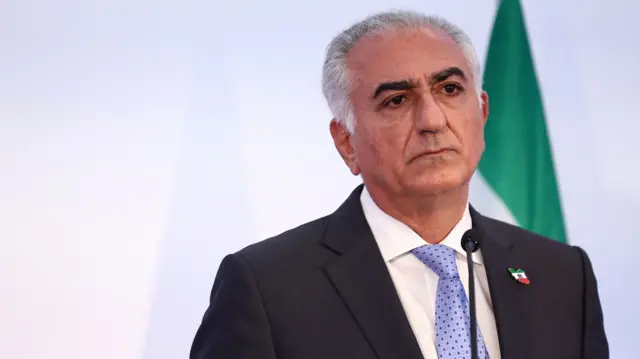 Image source, Reuters
A supporter of Reza Pahlavi and a spokesman for an organisation that has worked on his return to Iran has told the BBC that people in Iran have been clearly “rallying” around the son of the deposed shah.
Cameron Khansarinia, vice president of the US-based National Union for Democracy in Iran, tells BBC World Service’s Newshour that protesters are “re-raising the lion and sun flag. They are chanting his name, they are putting up his picture… it takes a lot more courage to go into the street facing live gunfire and chant the name of Pahlavi.”
He adds that Pahlavi is not looking to restore the monarchy, but enable free elections to allow the people of Iran to “decide whether they want to return to constitutional monarchy or they want a republic”.
Reza Pahlavi asks Trump to be ‘prepared to intervene’published at 15:50 GMT
Reza Pahlavi, the exiled son of Iran’s late former shah, has called on US President Donald Trump to “be prepared to intervene to help the people of Iran”.
“Mr. President, this is an urgent and immediate call for your attention, support, and action,” Pahlavi wrote in a post on X. “The people will be on the streets again in an hour. I am asking you to help.”
As we have been reporting, Pahlavi, who resides in the Washington DC area, has encouraged Iranians to protest. Although it’s impossible to accurately measure his support among protesters, there have been increasing chants amongst demonstrators calling for his return.
“I have called the people to the streets to fight for their freedom and to overwhelm the security forces with sheer numbers,” Pahlavi says in his post calling for Trump’s attention.
Trump on Thursday vowed to hit Iran “very hard” if protesters are killed.
Why are protests erupting now?published at 15:37 GMT
Ghoncheh Habibiazad
Senior reporter, BBC Persian
These protests began less than two weeks ago with shopkeepers – famously known in Iran as the backbone of support for the Islamic Republic – in Tehran angry about the collapsing currency, before spreading to students and street demonstrations in several cities in the country.
Based on the videos, these are the biggest protests we have seen since 2022, and the anger is not just related to economic issues. Protesters have been chanting slogans against the whole clerical leadership and the supreme leader himself.
Iran has experienced lots of issues; a combination of economic crisis, political repression and social unrest, as well as international tension because of its nuclear and ballistic missile programme.
Iran’s leadership has been cracking down on protests for years. The security forces are prepared to act, and the authorities can move quickly to close banks, schools and public institutions, while tightly controlling the state media narrative.
Officials increasingly point the finger at foreign enemies, especially the US and Israel, as they try to contain the unrest.
With the internet outage, the main narrative coming out of Iran right now is from state media and officials.
Iran’s top security body vows ‘no leniency’ amid escalating protestspublished at 15:26 GMT
Soroush Negahdari
BBC Monitoring
Iran’s top security body has warned that the Iranian Judiciary and security forces will show “no leniency towards saboteurs”, following a sharp escalation on 8 January in nationwide protests initially sparked by the collapse of the country’s currency.
In a statement issued after demonstrations grew in size and geographic reach, the Supreme National Security Council (SNSC) said security and law-enforcement forces had been deployed to “neutralise the destabilisation plans of the Zionist regime [Israel] and its godfather, the United States”.
The statement, which echoed a narrative earlier promoted by Iranian state TV, was reported by the Telegram channel of Iran’s state broadcaster on 9 January – as news websites remain inaccessible due to an internet blackout since the night before.
While acknowledging that the unrest initially began as protests against economic instability, the statement accused foreign enemies of steering the demonstrations towards violence and insecurity.
It also strongly condemned attacks on religious symbols and symbols of the Islamic Republic, like the burning of flags and statues of the late IRGC Quds Force Commander Qasem Soleimani.
Pictures from last night’s protests emergepublished at 15:13 GMT
Despite the internet outage, some people in Iran are staying connected through the satellite service Starlink.
In the last few hours the BBC received images from someone who was at a protest last night. Cars that were overturned and set alight could be seen at Tehran’s Kaaj roundabout.
As a reminder, the BBC and most other international news organisations are barred from reporting inside Iran, so social media is relied upon to verify what is happening on the ground.
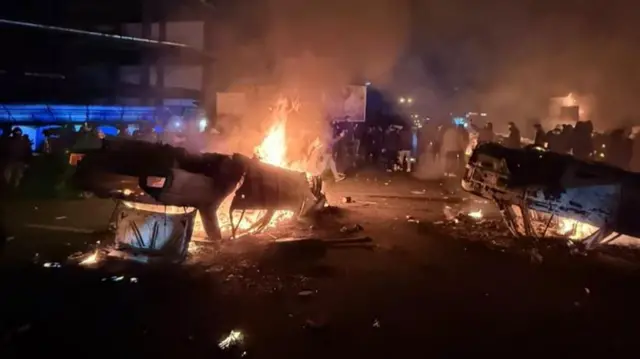 Image source, Handout
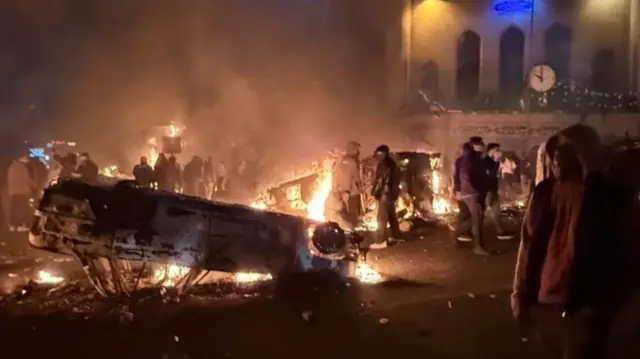 Image source, Handout
The exiled former crown prince at the centre of Iranian protest chants – who is Reza Pahlavi?published at 15:03 GMT
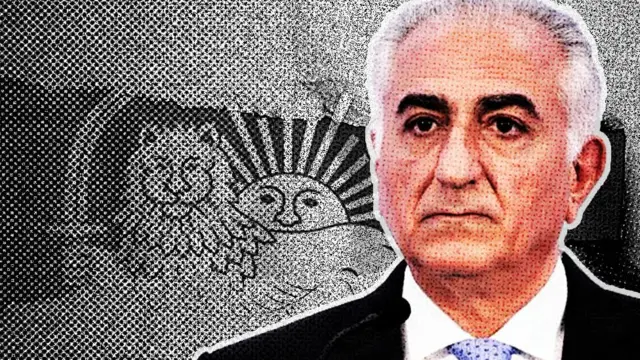 Image source, AFP
Reza Pahlavi is the son of Mohammad Reza Shah Pahlavi, Iran’s last shah before the 1979 Islamic Revolution
Many protesters in Iran have been calling for the return of Reza Pahlavi, the exiled son of Iran’s last shah – so who is he, and how much support does he have?
When the 1979 revolution swept away his father’s monarchy, Pahlavi and his family were left stateless, but, now 65, he is once again seeking a role in shaping his country’s future.
From his home in Washington DC, he himself has called on the people of Iran to take to the streets and previously stated he was prepared to help lead a transitional government if the Islamic Republic collapsed.
He has since outlined a 100-day plan for an interim administration, telling reporters: “This is not about restoring the past… it’s about securing a democratic future for all Iranians.”
Over the years in exile, Pahlavi has made multiple attempts to build opposition coalitions. However most have struggled with internal disagreements and limited outreach inside Iran.
Now, his supporters see him as the only opposition figure with name recognition and a long-standing commitment to peaceful change, while critics say he remains too dependent on foreign backing.
While Iran’s government portrays him as a threat and protesters chant in support of him, it is impossible to measure his true support without an open political space and credible polls.
What to know as Iran plunged into internet blackout following weeks of protestspublished at 14:50 GMT
 Jack Grey
Live reporter
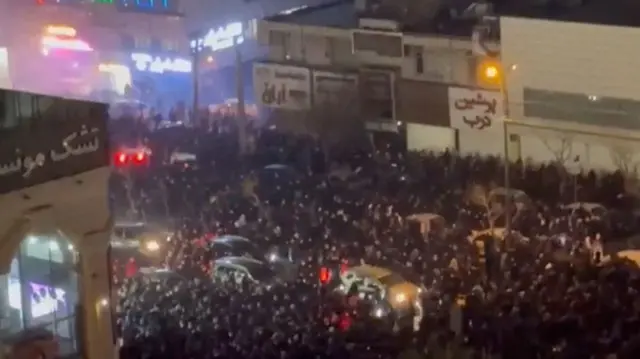 Image source, Reuters
Protestors took to the streets of Tehran on Thursday, ahead of the widespread internet blackout in the country
Anti-government protests in Iran have continued for the 13th consecutive day as a nationwide internet blackout continues to block communications for people around the country.
Here’s what to know today:
- Videos verified by the BBC show demonstrators gathering in the city of Zahedan, in south-east Iran – we’ve also identified 16 more towns that have seen new protests
- Iran’s Supreme Leader Ayatollah Ali Khamenei has lashed out at protesters, warning that his regime is committed to cracking down on “trouble-makers”
- His comments come as internet in the country is blocked – data shows the country has been mostly offline for at least 18 hours
- In the US, President Trump has vowed to “hit [Iran] very hard” if the regime starts killing protesters
- The UK has not explicitly aligned itself with Trump’s stance, but urged Iranian authorities to “exercise restraint”
- Emirati airline flydubai tells the BBC that it has cancelled flights due to the unrest
Our team of reporters and experts are monitoring for updates – we’ll bring you the latest here throughout the day.

Iran’s protests spread to 16 more townspublished at 14:39 GMT
By Christine Jeavans
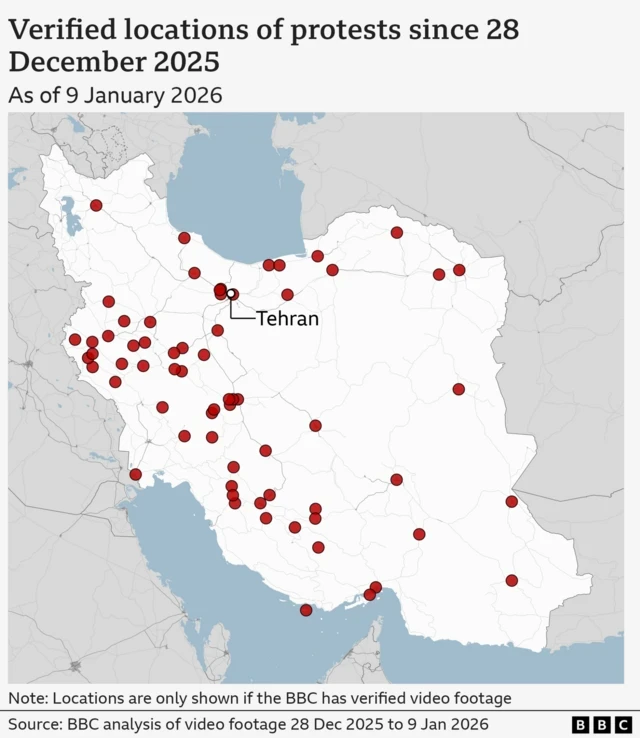
Here’s an updated map of verified locations in Iran that have seen one or more protests since 28 December 2025.
We’ve added 16 more towns and cities to the map since Tuesday, with the latest being Zahedan in the east, near the border with Pakistan.
This map shows locations where the BBC has verified video footage – there may be other protests that we have not yet been able to verify.

Many people in Iran feel they have little to losepublished at 14:26 GMT
Jiyar Gol
BBC Persian
These are certainly the most sustainable and wide-ranging unrest we have seen in many years and that makes it significant.
What we have seen in Tehran, and the footage we obtained from eyewitnesses before the regime cut off the internet, tell us that in many neighbourhoods people have poured into the streets chanting slogans against Iran’s supreme leader, targeting him directly and holding him responsible for the current conditions in the country.
Protests erupted last night shortly after exiled Reza Pahlavi, whose father was overthrown in the 1979 Islamic Revolution, called on Iranians to join the ongoing protests.
Two days earlier, seven Kurdish political parties in exile and six Kurdish women’s rights groups had called on people in Iran’s Kurdish regions, across four provinces, to stage a general strike. On Thursday, more than 50 cities and towns, large and small, across the Kurdish regions shut down their shops, and many people took to the streets later in the evening.
In the past, most mass protests were outside of the capital, Tehran, and this time around it is also in Tehran.
If people in Tehran come out in masses, it will encourage the rest of the country to do the same and this could be a turning point.
Iranian human rights groups say more than 40 people were killed during protests. BBC Persian has spoken to the family of 21 of them and confirmed their identities.
US-led sanctions have crippled Iran’s economy. The value of the Iranian currency – the rial – has sharply fallen against the US dollar and this has created an unsustainable situation for many people who are struggling to make ends meet.
Also, many people are unhappy about social restrictions and there’s deep anger at political unaccountability, including corruption.
There’s a combination of many different reasons why people are going to the streets and it feels like many of them have little to lose.
Recent Top Stories
Sorry, we couldn't find any posts. Please try a different search.