How Supermicro Insiders Allegedly Used Fake Servers and Forged Paperwork to Smuggle Nvidia’s Most Powerful AI Chips to China
The warehouse in Southeast Asia looked legitimate enough. Rows of servers sat in place, serial numbers visible, ready to be photographed and logged by a compliance auditor from Super Micro Computer Inc. The inspection, however, was a performance. The auditor was not actually conducting the review — he was, according to federal prosecutors, off-site enjoying entertainment paid for by the very company he was supposed to be scrutinizing.
The servers in that warehouse were props.
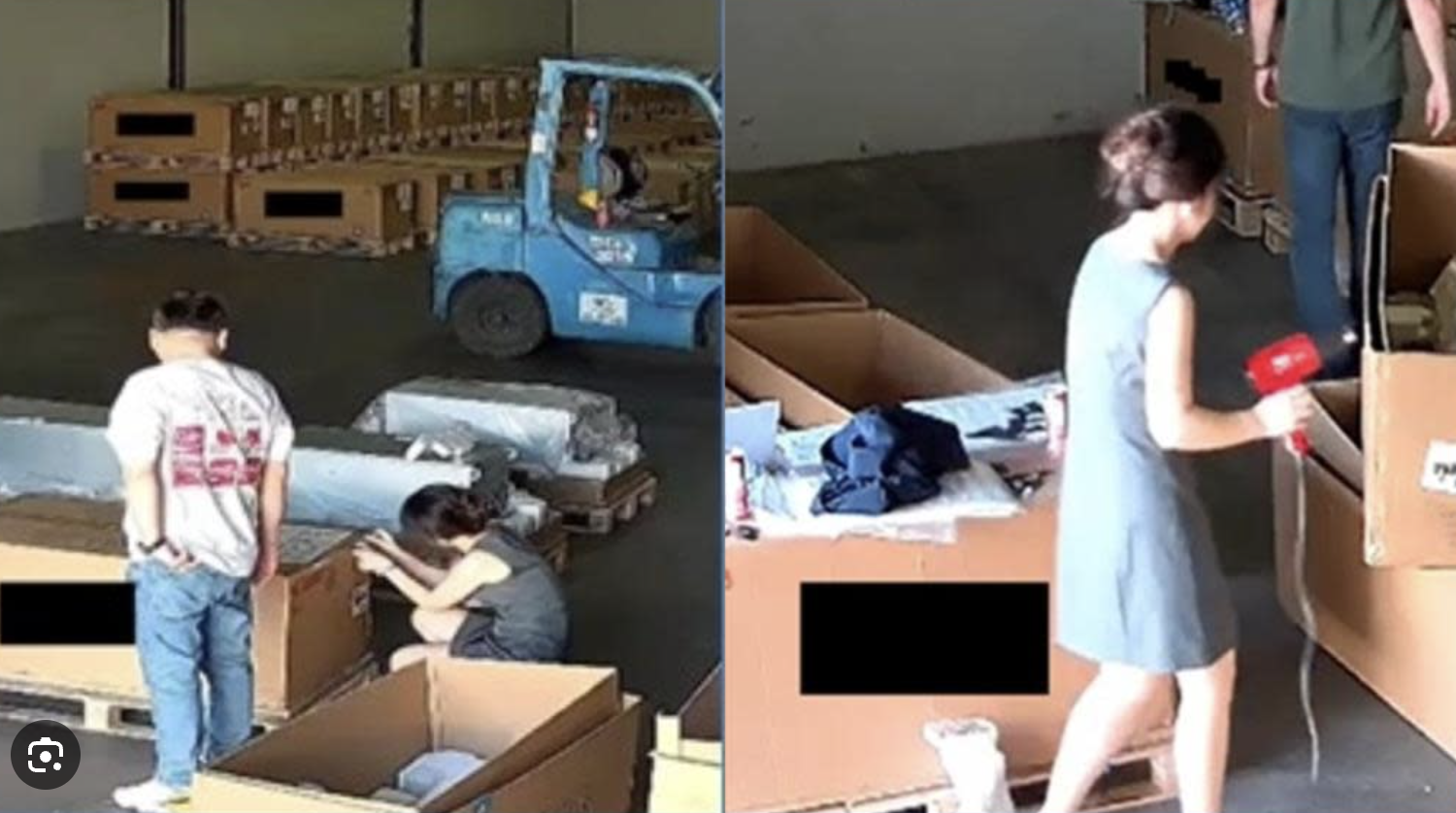
Prosecutors allege the trio staged thousands of dummy servers — replicas of the originals — for inspection at the Southeast Asian company, while the actual servers were unlawfully forwarded to China. And when federal officials scheduled their own government inspection months later, Sun and an unnamed third-party broker prepared dummy servers once again — as allegedly captured by security footage — the day before that inspection took place.
This is the story, as alleged in a sweeping federal indictment unsealed Thursday in Manhattan, of how three men tied to one of Silicon Valley’s most important AI infrastructure companies built a hidden pipeline to funnel Nvidia’s most powerful chips to China — and the extraordinary lengths they took to keep it invisible.
The Three Men at the Center
Yih-Shyan “Wally” Liaw, Ruei-Tsang “Steven” Chang, and Ting-Wei “Willy” Sun were charged Thursday by the U.S. Attorney for the Southern District of New York with conspiring to violate the Export Controls Reform Act, conspiring to smuggle goods from the United States, and conspiring to defraud the U.S. government.
Liaw, 71, co-founded Supermicro in 1993 and serves as a senior vice president of business development and a member of the company’s board of directors. Chang, 53, is a sales manager based out of the company’s Taiwan office. Sun, 44, is described in the indictment as a “third-party broker and ‘fixer'” who worked with the other two.
Liaw and Sun were arrested Thursday. Chang remains a fugitive.
Together, prosecutors allege, they constructed one of the most elaborate technology smuggling operations ever charged in an American court — a scheme that reached across three continents, generated billions in illicit revenue, and placed some of the world’s most strategically sensitive AI hardware into the hands of Chinese buyers. For a full breakdown of the stock market fallout, see our earlier report: Supermicro Stock Crashes 33% After Co-Founder Arrested in $2.5 Billion Nvidia Chip Smuggling Scheme.
Step One: Find the Buyers, Build the Pipeline
The alleged operation was not improvised. According to the indictment, it was methodically engineered from the top down.
Prosecutors claim Liaw took a direct hand in the alleged conspiracy during 2024 and 2025, working with Chang to find Chinese buyers who wanted the servers. Once buyers were identified, the scheme required a mechanism to move the hardware without triggering U.S. export control alarms — and that mechanism was a Southeast Asian pass-through company.
A Southeast Asian company created fake paperwork to appear as if it would be using the servers itself. A separate logistics firm then repackaged the servers to conceal them before forwarding them on to China.
The shell transaction created a clean paper trail: on the books, Supermicro was selling servers to a legitimate Southeast Asian buyer. What the paperwork did not reflect was the second leg of the journey.
To keep the clandestine scheme from raising red flags with Supermicro’s own compliance team, the defendants and the Southeast Asian company executives would fake documents and send false communications designed to show that the Southeast Asian company was the legitimate end buyer. This kind of transshipment abuse has become a growing concern for Washington — read more in our explainer: How China Uses Southeast Asia to Bypass U.S. Chip Bans.
Step Two: Strip the Boxes, Erase the Trail
Once the servers left Supermicro’s facilities, the operation shifted to concealment. The hardware needed to travel from Southeast Asia to China without any identifying markings that could connect it to a U.S. manufacturer subject to semiconductor export restrictions.
The Southeast Asian company, in tandem with Liaw and Chang, would hand the servers off to a shipping and logistics company, which would allegedly strip the identifying packaging, put the servers in unmarked boxes, and send them to their true destination: China.
The volume was staggering. The operation yielded around $2.5 billion in server sales since 2024, with servers sold for $510 million between late April 2025 and mid-May 2025 alone going through the Southeast Asian company and on to China.
At the center of every shipment were Nvidia’s most advanced processors. The men are charged with selling servers — without a license — to China that included Nvidia’s B200 and H200 graphics processing units, among the company’s most advanced AI chips. U.S. rules have required companies to seek licenses for AI chip sales to China since export controls were first tightened in October 2022.
Step Three: The Hair Dryer
As the operation scaled, so did the need to neutralize auditors — both corporate and federal.
Super Micro planned an audit of the Southeast Asian firm in 2025, which the defendants anticipated would focus on shipments of B200 servers. The response, according to prosecutors, was theatrical in its audacity.
The defendants coordinated to stage warehouses with dummy servers, photographs of which they sent to a Super Micro auditor who was supposed to be completing the inspection in August — but was instead off-site enjoying entertainment paid for by the very company he was auditing.
The dummy servers themselves required preparation. Surveillance camera footage allegedly captured workers using hair dryers to transfer serial number stickers from genuine servers onto the dummy server shells — the real GPU-packed servers having already been forwarded to China. The same hollowed-out decoys were then carefully repackaged to pass visual inspection.
When U.S. government officials later scheduled their own Commerce Department inspection, the operation adapted. The day before that government inspection, Sun and an unnamed third-party broker prepared the dummy servers once again — as captured by security footage. The inspection, prosecutors allege, was successfully deceived.
Step Four: Racing the White House Clock
The scheme faced its most serious structural threat not from auditors, but from Washington.
In January 2025, the Biden administration unveiled sweeping export controls on Nvidia’s global AI chip sales — an expansion of rules that covered China and around forty other countries. That meant that shipments of Nvidia-powered servers to Southeast Asia would now need Washington’s permission, starting in mid-May.
Rather than wind down, prosecutors say Liaw accelerated. “We need to speed these up before May 13!” Liaw allegedly wrote to the Company-1 executive, sending a link to a White House press release.
The text messages prosecutors recovered paint a portrait of a co-founder acutely aware of what he was doing. “Roughly how many you can take by January? Feb? March? April?” Liaw wrote in one message to an executive at the Southeast Asian company. “Just roughly forecast will be fine … Then we can propose to [Nvidia] with the way they can accept … This is the only way to have [Nvidia] to promise the B200 allocation so far as I know.”
The Sobbing Emojis
The indictment contains a detail that is at once mundane and deeply telling.
When a broker who had bought Nvidia-powered servers from the Southeast Asian company sent Liaw a text message containing a link to an announcement about Chinese nationals being arrested for smuggling AI chips into China, Liaw allegedly responded with sobbing emojis.
It was an unguarded moment — the kind that investigators look for and defense attorneys dread. Whether Liaw’s response reflected fear, dark humor, or something else entirely will likely become a point of significant contention in the legal proceedings ahead.
The Auditor Problem — and a “Friendly” Solution
Prosecutors allege the defendants did not simply neutralize auditors with staged hardware. They also allegedly worked to ensure that the auditors themselves were the right people for the job.
Chang worked on keeping auditors from inspecting parts of data centers where the Southeast Asian company was supposedly keeping the servers that had in fact gone to China, and he arranged for an auditor he called “friendly” to do the review.
The combined effect — staged servers, absent or compromised auditors, falsified shipping documents, and unmarked boxes — created what prosecutors describe as a multilayered deception specifically engineered to exploit the gaps between corporate compliance programs and federal oversight.
The Fallout: Arrest, Resignation, and a 33% Collapse
Shares of Super Micro Computer fell 33% to $20.53 at the close in New York on Friday — marking the biggest single-day decline since October 2018 — erasing more than $6 billion from the company’s market value. For a full investor breakdown of what the charges mean for SMCI stock going forward, see our markets desk coverage.
Super Micro said Liaw had resigned from the board, effective immediately. The company placed Liaw and Chang on administrative leave and stopped working with Sun. Super Micro also named DeAnna Luna as acting chief compliance officer.
In response to the indictment, the company said the alleged conduct “is a contravention of the Company’s policies and compliance controls,” and affirmed its commitment to U.S. export control law compliance.
Nvidia, which is not named as a defendant, distanced itself from the alleged scheme. “Unlawful diversion of controlled U.S. computers to China is a losing proposition across the board — Nvidia does not provide any service or support for such systems, and the enforcement mechanisms are rigorous and effective,” an Nvidia spokesperson said.
What the Case Means for the AI Industry
The Supermicro indictment arrives at a pivotal moment in the U.S.-China technology rivalry. Washington has spent three years constructing an elaborate architecture of export restrictions designed to prevent Beijing from acquiring the chips needed to develop advanced AI systems. The Supermicro case suggests those controls, however comprehensive on paper, have faced significant evasion in practice.
One report estimated that China was able to secure about $1 billion in advanced AI processors in the three months after President Donald Trump tightened export controls — a figure that the Supermicro operation, if proven, would dwarf many times over.
The FBI’s Assistant Director for Counterintelligence and Espionage said controlling the export of sensitive U.S. artificial intelligence technology is “essential to safeguarding our national security and defending the homeland.”
For the broader AI infrastructure sector, the arrest of a co-founder at a Fortune 500 company raises uncomfortable questions about how thoroughly export compliance is being enforced — and how many other pipelines may exist that federal investigators have not yet uncovered.
Each of the three defendants faces a maximum of 20 years in prison on the export control conspiracy charge, plus up to five additional years each on the smuggling and defraud counts — a combined exposure of up to 30 years.
Chang, the Taiwan-based sales manager, remains at large.
Timeline of the Alleged Scheme
2023–2024 — Liaw and Chang allegedly begin identifying Chinese buyers for Nvidia-powered servers; Southeast Asian pass-through company engaged as front buyer.
2024 — Operation grows, generating approximately $2.5 billion in server sales through the Southeast Asian intermediary over the course of the alleged scheme.
August 2025 — Supermicro schedules an audit of the Southeast Asian firm. Defendants stage dummy servers. The designated auditor is allegedly entertained off-site by the pass-through company while photographs of fake servers are submitted as evidence of compliance.
January 2025 — Biden administration announces sweeping new export controls effective May 13. Liaw allegedly texts the Southeast Asian executive urging acceleration of shipments before the deadline.
Late April–Mid May 2025 — $510 million in servers containing banned Nvidia chips transshipped to China in a three-week window.
December 2025 — U.S. Commerce Department schedules an on-site inspection. The day prior, Sun and a co-conspirator allegedly re-stage dummy servers, as captured on security footage.
March 19, 2026 — Indictment unsealed. Liaw and Sun arrested. Chang declared a fugitive. SMCI stock falls 33%.
Super Micro Computer (SMCI) closed Friday at $20.53, down 33%. The company said it is cooperating fully with the U.S. government’s investigation. All defendants are presumed innocent until proven guilty.
Recent Top Stories
Sorry, we couldn't find any posts. Please try a different search.