How Finnish supermarkets are central to the country’s defence
Jorn MadslienBusiness reporter, Helsinki

 S Group
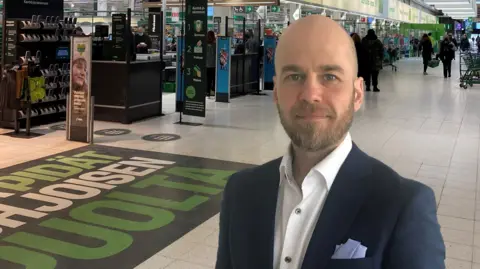
If Finland was ever to face Russian aggression, Janne Ahtoniemi would know exactly what to do.
He’d leap into action, but perhaps not in the way one might expect.
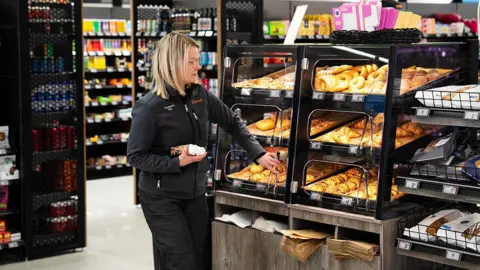
You might guess that Ahtoniemi is a soldier in the Finnish army, but his preparedness is instead related to his work at nationwide supermarket business S Group.
And in the event of Finland being invaded or attacked in some other way, such as a substantial countrywide cyber breach, S Group has a detailed plan for how it would help the national cause. It would need to ensure that the nation of some 5.6 million people maintained sufficient food supplies.
Other major businesses across the country also deemed as critical, such defence firms, transport companies, and cyber security companies, have their own detailed contingency plans to follow in the event of crisis, both as a result of conflict with other countries, and challenges such as natural disasters.
“Finland’s strong security of supply is based on decades of consistent preparedness and training,” says Ahtoniemi, who is head of risk management at S Group. “Companies understand this perspective and their own role in it.
“That is why people and companies are ready to invest in security of supply.”
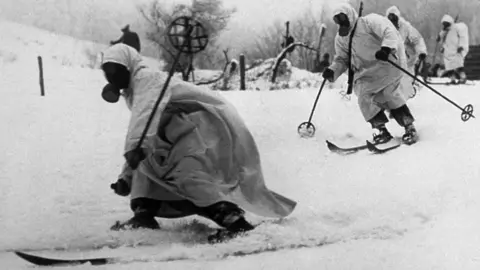
The four Nordic nations – Finland, Sweden, Norway and Denmark – have for decades all followed a “total defence” strategy. This means that plans are in place for the military and civilian sectors to work closely together.
Since Russia’s invasion of Ukraine in 2022, Finland has taken a lead and greatly strengthened this concept, and the level of business involvement. Finland now calls it “comprehensive security”.
Given that the country shares a 1,340km (830 mile) border with Russia, this move is not surprising.
 AFP via Getty Images
The Finnish government outlined the new policy last year in a document called The Security Strategy for Society, which it describes as “the most important document guiding comprehensive security in Finland”.
Critical businesses join “preparedness committees” with representatives of local authorities and central government, and take part in national training exercises.
Preparations and planning continues not just for the event of conventional warfare, but also a nationwide cyber attack, or disruptions to food and water supplies, or an attack on the financial system.
Ahtoniemi says that “participating in the exercises is a big-time investment for organisations”. His business also cooperates with the National Emergency Supply Organisation.
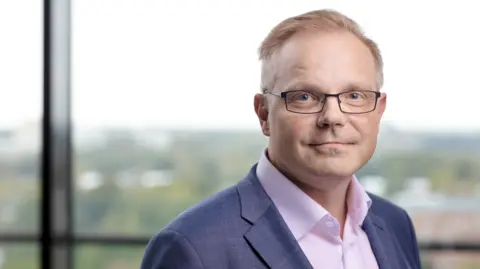
Rival supermarket group Kesko is equally involved. “We want to do our part to ensure Finnish society is able to function every day, regardless of the circumstances,” says Kesko executive Jyrki Tomminen.
“Companies develop preparedness for different types of disruption scenarios, using collaborative contingency plans and exercises.”
 Kesko
Kesko
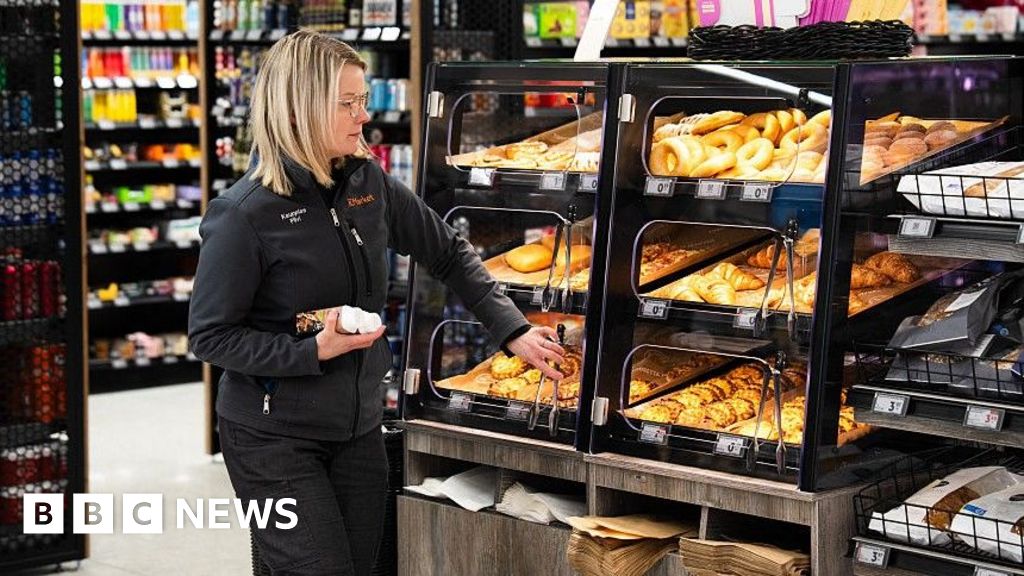
Both companies and other food firms, are legally obliged to maintain strategic reserves of critical items, such as flour, sugar and cooking oils. These are held in dedicated warehouses or underground bunkers that have back-up electricity generators.
Every adult in Finland is also expected to do his or her bit when it comes to national defence, says Tom Woolmore, an expert on security in Northern European nations. “It’s not theoretical, it’s very much put into practice.”
Prof Frank Martella, is a case in point. He teaches philosophy at Aalto University in Helsinki, but is a navy reservist who can be called upon in the event of a national emergency.
As security is no longer all about military might, it would not be a given that he would return to the navy. Instead, he reasons that he might be assigned other tasks, based on the skills and experience he has gained since his national service two decades ago.
“When something happens I will be told what to do,” he says over a cup of coffee in a café in Helsinki.
 Getty Images
Dr Jennifer De Paola, a psychologist at Helsinki University, says that Finnish companies and members of the public are happy to do their bit because of two main things. Firstly, they trust the government, and secondly, because Finns cherish feeling safe.
As part of her research, she asked dozens of 10 to 12-year-olds in the country to draw happy and unhappy people, then asked them to explain.
“I was sure I’d find a very strong association between happiness and having fun, but instead I discovered that Finnish children associate happiness with feeling safe, and unhappiness with feeling unsafe.”
She says that this safety-focus lives on into adulthood, which means that Finns value trustworthiness more than most.
“We really trust our institutions much more than in other countries. That includes our governments, ministries and politicians. There is a low level of corruption in Finland.”
In addition, Finland’s high level of societal equality is important, adds Martella. “The more equal the society, the more people trust each other,” he says.
Such values are central to Finland’s resilience, says Woolmore.
While trust levels are seemingly high, Finns can also keep a secret when required. S Group’s Ahtoniemi declines to give any details of the company’s plans in the event of war, explaining that this is “confidential information”.
It is a similar picture at Kesko, where a spokesperson says that “in line with our standard practice, we do not elaborate further on our contingency planning”.
Read more global business stories
Recent Top Stories
Sorry, we couldn't find any posts. Please try a different search.