He Marched and Clashed for the Far-Left, Then a Single Phrase Shook His Convictions
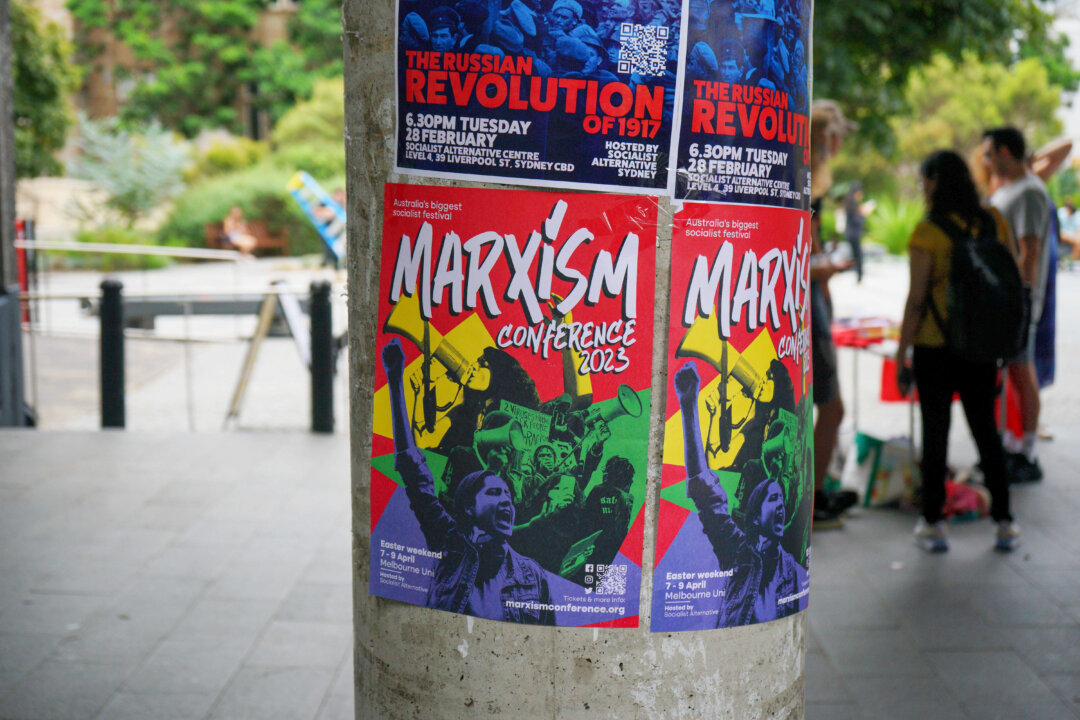
For about 12 months he marched under the red banners of socialism—a blur of meetings, megaphones, and violent police clashes—but once the fervour ended, what remained was an unexpected turn towards the deep wells of tradition.
‘Nobody Cared’
“Did you see what happened to Cam?” English recalls yelling to his fellow comrades—a single voice amid the turmoil of clashes with police during a visit by UK conservative leader, now-Reform leader, Nigel Farage in Melbourne in September 2018.
Just seven weeks earlier, the group blocked the busy Hume Highway in Somerton in the city’s far north to protest Canadian commentator Lauren Southern’s visit.
“[The Socialist Alternative] always made a point of not openly advocating for violent conflict, but everything that they encouraged people to do in terms of resistance, ended up being violent,” English said.
Members number at over 100 but it is active in coordinating other far-left groups, and joining (or hijacking) existing movements like climate change, Black Lives Matter, pro-Palestine, and more recently, immigration counter-rallies.


They differ from the Victorian Socialists or the Socialist Alliance with their near-puritanical focus on disruptive protest and ideology—shunning any political aspirations.
Amid the chaos of the Farage protest, English recalls one protestor walking up to the police line and emptying a water bottle onto them. Police responded by grabbing him and dragging him away.
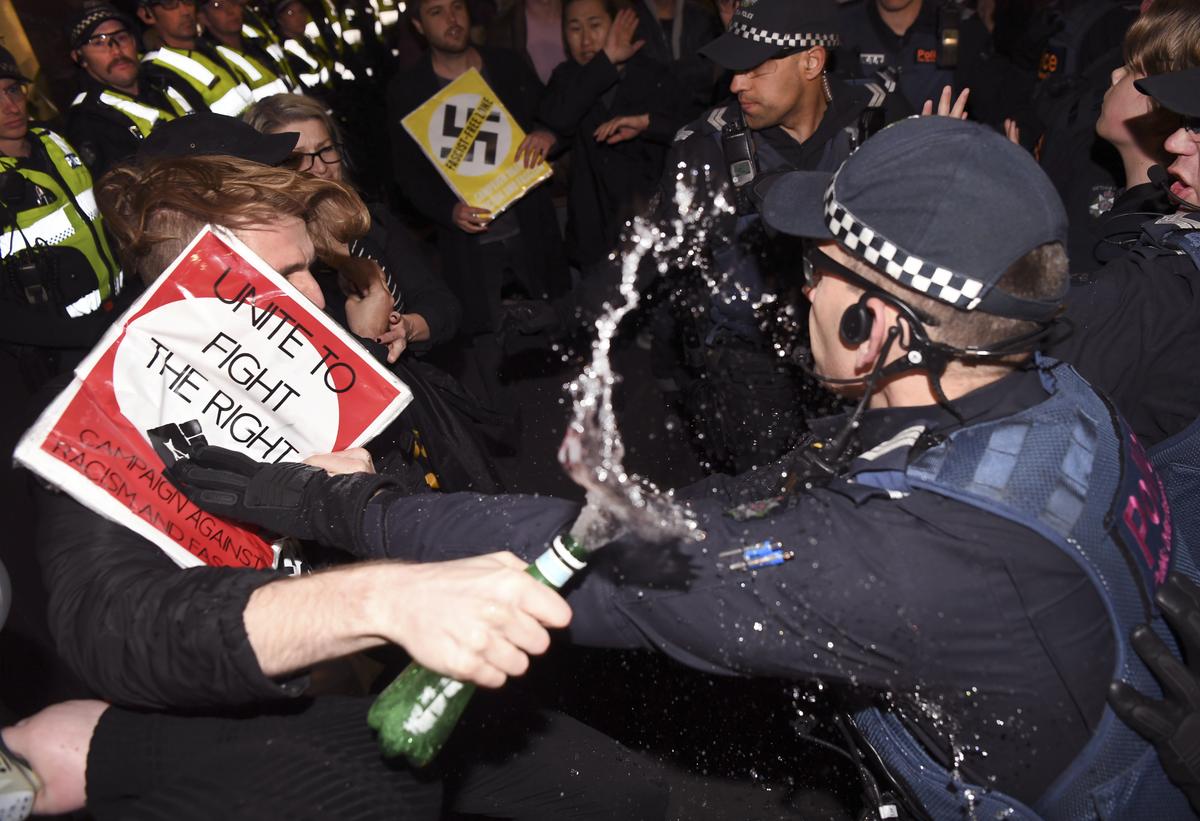
English frantically yelled to his comrades if they’d seen what happened to “Cam.”
“Nobody cared,” English recalls. “Nobody actually cared that he might have been hurt or something might have happened to him, and no one knew where he’d gone.”
“And that was the first shock to my system that something wasn’t quite right, and that none of the people that I spoke to at this rally cared that something might have happened to him,” the now-health worker recalled.
“They actually don’t care about who you are as an individual. They care about who you are as a number,” he added.
At another protest, English remembered seeing a normally “softly spoken and friendly” person become engulfed with “blind rage.”
Gossip, Training, and Anarchists
The deep fervour in which participants protest stems from recruitment and weeks of “classes” to teach Socialist Alternative (SA) members on becoming a revolutionary.

Academic Eric Louw, an expert on Marxist ideologies, says universities are fertile ground for finding members.
“As one would expect, organisations like SA are very interested in working on campus because that is where they can work to influence young minds and spread socialism and communism,” he told The Epoch Times.
English says SA hired rooms on campus for members to meet and learn.
“It could be from ‘Marxism 101’ or ‘communism 101’ to things like Stalinism, or it could be the October [Bolshevik] Revolution and things like that … For example, ‘Why capitalism is bad,’ and how Marxism or communism is the answer.”
“The second talk was about why the police are bad. They’re going to be the enemy of the communist movement in any kind of communist endeavour, because they are just [deemed] tools of the ruling class … so the police are to be resisted all the time.”
The sessions were always about overthrowing the “ruling class” of society, and sometimes guests would be invited too, including media commentator Helen Razer.
“People like [Leon] Trotsky and Vladimir Lenin were seen as heroes within the organisation,” English said.
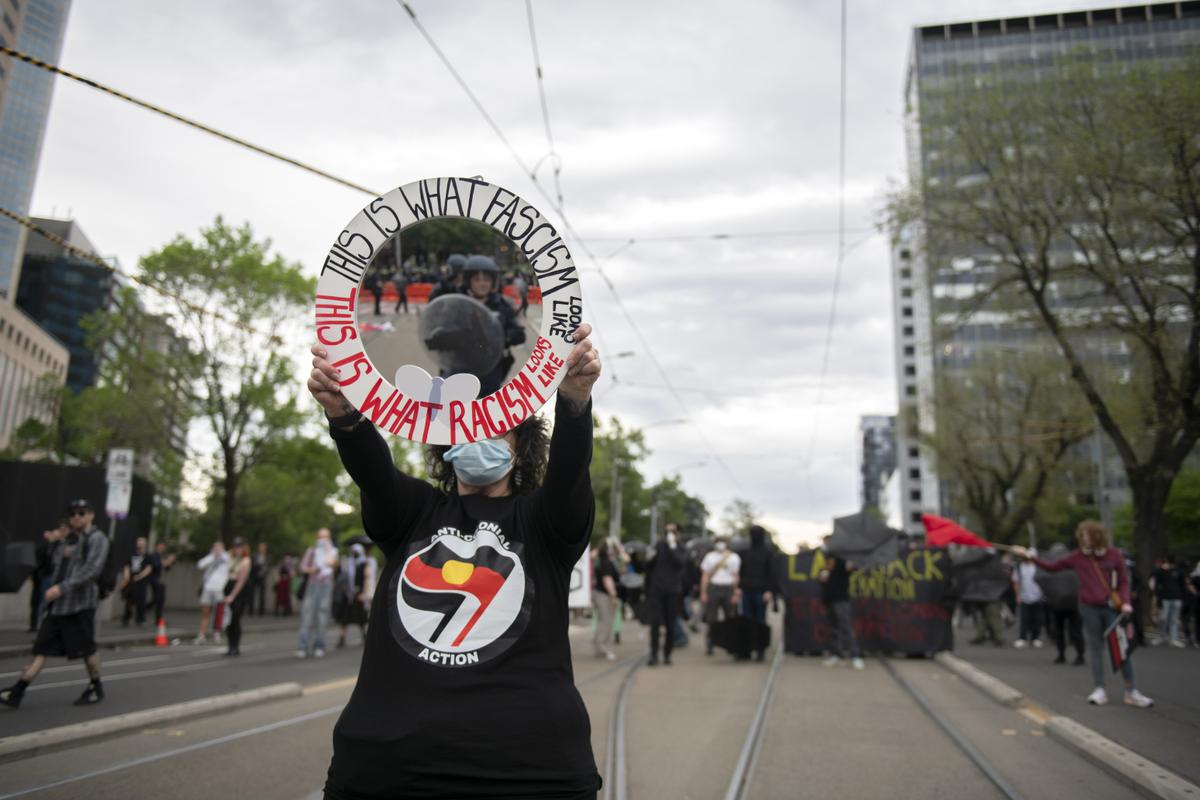
SA would also engage “anarchists” who were the “muscle” that regularly fought with police, and particularly liked fighting neo-Nazis, English said.

But he revealed that internally the environment was toxic saying there was “so much gossiping and talking behind people’s backs.”
“They were always primed to call out people who they suspected of not being communists.”
One of the big no-noes was being a “Hegelian.”
Georg Wilhelm Friedrich Hegel was a German philosopher who believed humanity was inherently spiritual and that society develops through dialogue and understanding. Karl Marx would later adopt some of his ideas but changed the focus, saying people were driven only by material gain, and society developed via fighting between classes.
“If you thought anything Hegel said had any merit you were just quickly thrown under the bus, because that was the worst thing to be—almost worse than being a Nazi,” English said.
‘Dying an Atheist?’
It was, however, one phrase that really shook English to the core, and it was Trotsky’s quote:
“I shall die a proletarian revolutionist, a Marxist, a dialectical materialist, and consequently, an irreconcilable atheist.”
English says the idea of being “wholly wedded to atheism” was something he could never agree to, and it was from that point he realised he had truly fallen in with the wrong crowd.
“I saw how many parallels there were between their tactics [in China] and the tactics of the socialists here,” he said.
Journey to the West
English stopped being a fee-paying member of Socialist Alternative around December 2018, and moved back to Western Australia in 2020, where he would reconnect with his past.
English first learned the ancient Chinese spiritual discipline, Falun Dafa, in 2013, however, it was his Tai Chi teacher in 2020 who would suggest he read the main text, Zhuan Falun, again.
Falun Dafa, also known as Falun Gong, consists of meditation exercises and espouses teachings based on the principles of truthfulness, compassion, and tolerance.
It was introduced to the public by Li Hongzhi in 1992 and attracted over 70 million followers in China due to its health benefits, before the former Chinese Communist Party (CCP) leader Jiang Zemin launched a brutal persecution 1999.
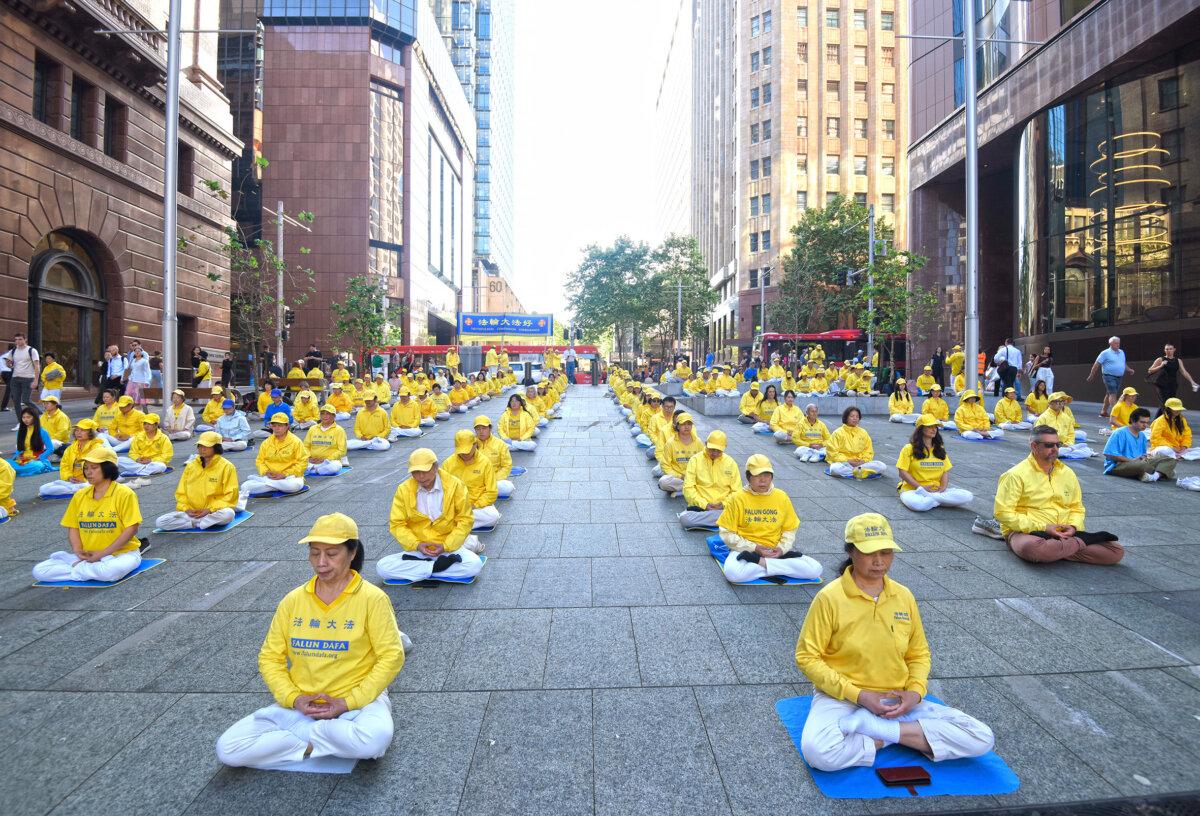
For English, rediscovering Falun Gong was like the return of the prodigal son.
“That was what I wanted you to say 10 years ago,” English said of his Tai Chi instructor’s remarks.
Within six months of practicing, he experienced significant mental, spiritual, and physical benefits, including healthy weight gain.
“I used to be very lonely but now I no longer am,” said English.
“I was a very promiscuous person with no regard for personal health and safety. I was also very combative with others and had a high degree of intellectual vanity, not to mention having been deceived by modern ways of thinking.
“All of these deviant mindsets and behaviours culminated in a deep hatred of self and I was truly lost.”
English says that nowadays, he’s much calmer and rational—a far cry from his days in SA.
“My eyes brightened for the first time since I was a child, and they were no longer sunken and withdrawn. I learned to be much calmer and also less critical of others and myself; my deeply rooted notions of self-judgement began to dissolve,” he said.
“I feel that I can improve on all of these things and many more.”
Recent Top Stories
Sorry, we couldn't find any posts. Please try a different search.