FDA to Probe Safety of RSV Shot for Infants, Citing Deaths Reported in Clinical Trials

Source: Children’s Health Defense
The U.S. Food and Drug Administration (FDA) has launched a renewed safety review of the RSV shots given to infants to protect against the virus, Reuters reported today.
The agency plans to investigate two monoclonal antibody shots: Beyfortus, made by AstraZeneca and Sanofi, and Enflonsia, made by Merck. Both are currently recommended for most infants in the U.S.
The monoclonal antibody shots are not traditional vaccines. Instead, they’re designed to temporarily provide infants with “passive immunity” — which means antibodies, not created by their own immune systems, to fight the virus.
Safety questions about the shots first surfaced during the summer, when Tracy Beth Høeg, Ph.D., then a senior adviser to the FDA, raised concerns, U.S. Department of Health and Human Services (HHS) spokesperson Andrew Nixon told Reuters.
Høeg, recently appointed acting director of the FDA’s Center for Drug Evaluation and Research, cited possible links to seizures and an “unfavorable imbalance” in mortality in the clinical trials, which showed that there were more infant deaths among babies who got the drugs than those that didn’t. The drugmakers said the number of deaths was not statistically significant.
The FDA reportedly convened a call last week with executives at Merck, Sanofi and AstraZeneca to inform them to expect additional data requests. Officials did not publicly reveal the specifics of their requests.
Nixon told Reuters that the FDA routinely reviews emerging safety information and will update product labeling if warranted, underscoring its commitment to evidence-based regulation.
Beyfortus generated combined global sales of more than $2.6 billion in 2024, according to Reuters. Merck’s Enflonsia is expected to make $250 million in sales next year.


FDA approved Merck’s RSV shot just months ago
Advisers to the Centers for Disease Control and Prevention (CDC) first recommended that newborns get the Beyfortus shot in August 2023, shortly after the FDA approved the shots in July 2023.
Members of the Advisory Committee on Immunization Practices (ACIP) made the recommendation despite concerns raised by critics at the time that there were several infant deaths, along with other adverse events, among infants who received the drug during the clinical trials.
The drugmakers determined the deaths weren’t related to the shots.
In June, the FDA approved Merck’s shot. ACIP voted to add it to the childhood immunization schedule later that month.
ACIP members recommended the drug even though committee member Retsef Levi, Ph.D., raised concerns about possible safety issues from the drug’s clinical trials.
Levi cited one trial that reported five deaths in the vaccinated babies and none in the placebo group. In another, when compared with an existing treatment, the death ratio was 5-1. In a third trial, it was 7-3.
In one of the trials, immunized babies admitted to the hospital for RSV-related illness stayed longer than non-immunized babies with the same condition. Levi said this raises concerns that the immunization may have worsened their illness — a phenomenon called antibody-dependent enhancement, which has complicated previous attempts to develop an RSV vaccine for infants.
He said the trials and the adverse events were small, but “should we perhaps be concerned?”
A Merck representative said investigators conducted an extensive analysis of the adverse events and determined none were related to the shot. She also noted that the FDA review was extensive and that the agency ultimately approved the shot.
About a month after ACIP recommended the shot, investigative journalist Maryanne Demasi, Ph.D., reported that CDC researchers presented misleading data to ACIP on Sanofi’s monoclonal antibody shots before their vote on Merck’s RSV shot, making the antibody shots seem safer than they were.
The CDC considered adverse effects from newborns separately from slightly older babies. Demasi argued that with data on both groups combined, there appeared to be a statistically significant risk of seizure.
ACIP member Dr. Robert Malone later said he regretted his vote approving Merck’s RSV antibody, as it relied on “manipulated data.”


This article was funded by critical thinkers like you.
The Defender is 100% reader-supported. No corporate sponsors. No paywalls. Our writers and editors rely on you to fund stories like this that mainstream media won’t write.
FDA review comes as childhood vaccine schedule debate heats up
The news comes amid an ongoing shake-up in U.S. vaccine policy.
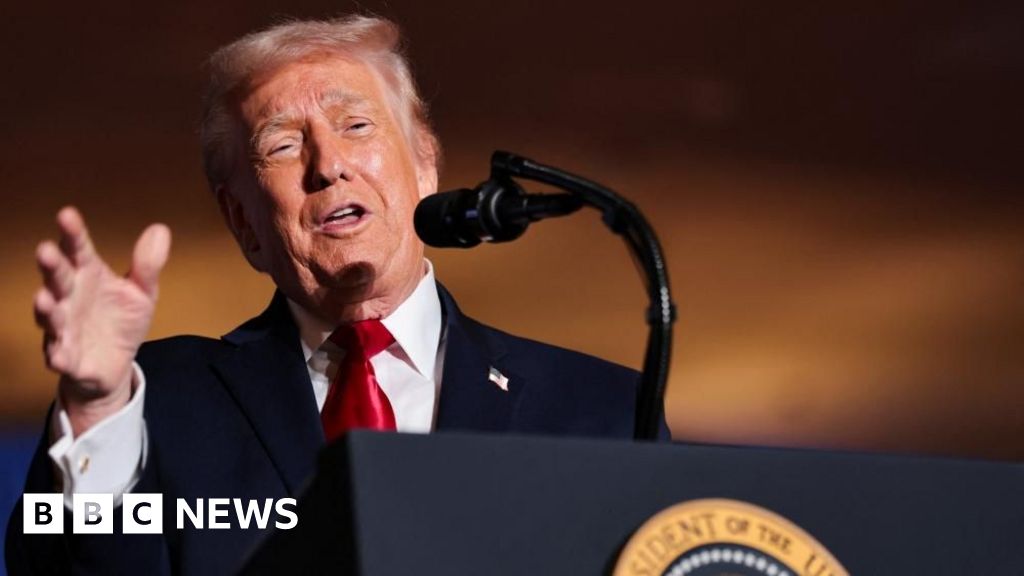
President Donald Trump last week directed HHS to “fast track” a comprehensive review of the childhood immunization schedule.
“The American Childhood Vaccine Schedule long required 72 ‘jabs,’ for perfectly healthy babies, far more than any other Country in the World, and far more than is necessary. In fact, it is ridiculous! Many parents and scientists have been questioning the efficacy of this ‘schedule,’ as have I!” Trump posted.
When ACIP met Dec. 4-5, the committee voted to end the recommendation that all infants receive the hepatitis B (Hep B) vaccine at birth — the committee’s most controversial decision to date.
Conflicts over vaccines on the childhood immunization schedule are causing an uproar in the mainstream public health community and the press.
Reuters reported that “vaccine skeptics” are behind the FDA’s latest move to review the safety of RSV shots.
However, concerns over the safety of RSV shots stretch back decades — when the first experimental vaccine developed for infants in the 1960s ended in infant deaths.
In the last several years, several vaccines have been developed, but many of them have also raised safety concerns.
Last year, Moderna was forced to abruptly halt clinical trials for its mRNA RSV vaccine in children ages 5-23 months after clinical trial data showed that rather than preventing RSV disease in small children, Moderna’s vaccine likely caused higher rates of severe RSV illness.
The FDA approved Pfizer’s Abrysvo for pregnant women in August 2023, after clinical trials of a nearly identical vaccine developed by GSK were halted because there were higher rates of preterm births among women who took the shot.
Post-marketing data have shown a similar safety signal for Abrysvo.
The CDC initially recommended Pfizer’s Abrysvo and GSK’s Arexvy RSV vaccines for all adults 60 and older. But in June 2024, the agency walked back the recommendation, narrowing the age group for RSV vaccines to adults 75 and older due to concerns the shot is linked to Guillian-Barré syndrome.
Related articles in The Defender
- New CDC Vaccine Panel Recommends Merck’s RSV Shot for All Newborns
- Exclusive: Two Infants Died Within Hours of Receiving RSV Shots, CDC Internal Emails Show
- Despite 12 Deaths During Clinical Trials, CDC Signs Off on RSV Shots for Newborns
- ‘Should Not Be Used in Any Infants’: Higher Death Risk in Beyfortus RSV Shot Clinical Trials
- CDC Predicts Jump in RSV Immunization Rates Amid Concerns Researchers Misled ACIP on Safety Data
- French Researchers Identify ‘Improbably High Rate of Deaths’ in Newborns Who Received New RSV Shot
- FDA Advisers Bullish on RSV Shots for Kids, Even as Safety Signals Shut Down Moderna Trials
Recent Top Stories
Sorry, we couldn't find any posts. Please try a different search.