F1 Q&A: Verstappen’s future, five-week break, how will Mercedes deal with Antonelli & Russell?
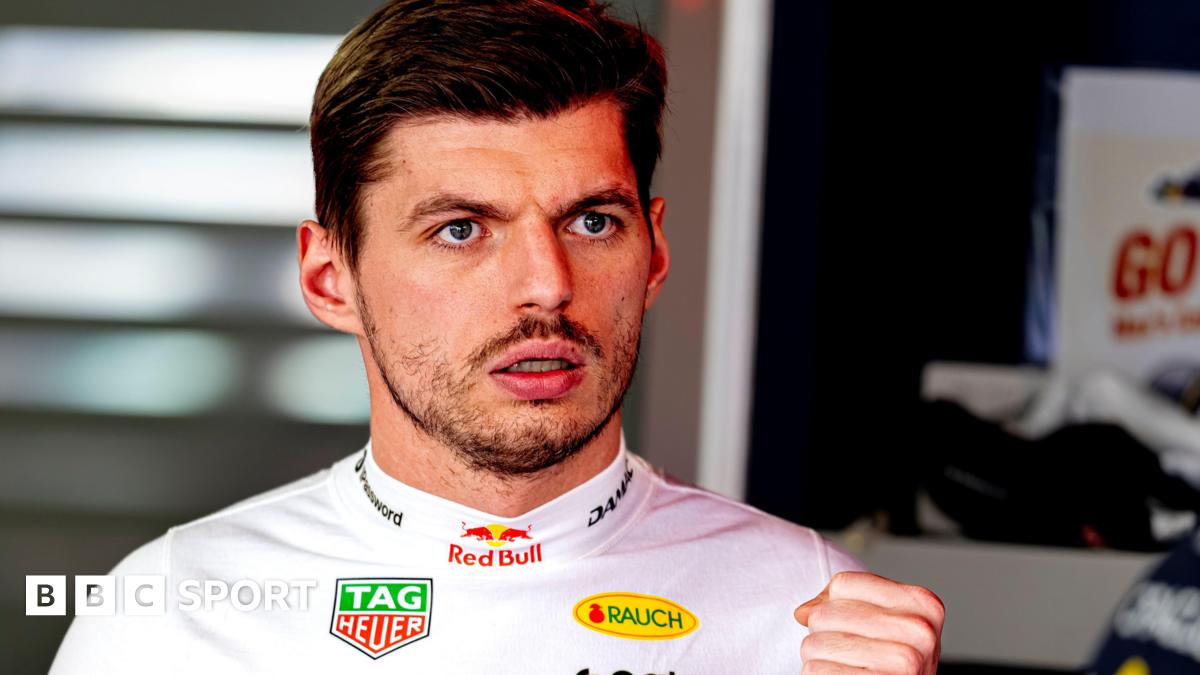
It would be unwise to view Verstappen’s remarks to BBC 5 Live pit-lane reporter Jennie Gow after the Japanese Grand Prix as primarily intended as leverage.
Verstappen would like F1 to change the rules, but that is because he has a fundamental, almost primal, objection to what they have done to the cars.
The Red Bull driver is talking from the heart. He has been saying similar things not just since the start of this season, but since he first tried the 2026 cars in the simulator a couple of years ago.
He does not like the way the power tails off in the later part of straights as the electrical motor runs out of power and starts to regenerate energy.
On the more energy-starved tracks, he does not like the way drivers have to lift and coast before braking to recover energy in qualifying. This has been commonplace in races for many years, it should be pointed out.
Because both these situations reduce the terminal speed of a car before the driver starts the corner-entry phase of braking and turning – which is the core test for a racing driver – they also reduce the challenge.
And in some cases, they are reducing the demands of high-speed corners, as they are being used to recover.
He does not like the artificiality of the racing with the overtake mode and boost buttons. Or perhaps more precisely, he does not like the massive offset in power they give one car over another.
There is, of course, without question, a superficial – and in many ways genuine – appeal to the kind of battling this has created, where cars repeatedly swap position as one and then the other benefits from the overtake mode before finally they settle down.
Ferrari’s Charles Leclerc is not the only driver to say he “actually enjoys these cars for the racing bit”. It’s exciting to watch, too, at least when it leads to genuine racing into corners, as between the Ferrari drivers in China, rather than simply ‘drive-bys’ on the straights.
But there is a whole other level of complexity baked into the rules by the FIA in an attempt to lessen some of what it perceived to be the problems created by the fundamental energy-starved nature of the cars.
All this has done is created a bunch of other consequences that are “anti-driving”, as Verstappen would put it, such as limited power modes, or snaps of oversteer leading to drops in electrical energy, “zero-kilowatt zones” where no electrical power is deployed, and so on.
Some of this will likely have to be unpicked to improve the situation in qualifying.
The interview Verstappen gave on Sunday was extraordinary. Not just for its openness, honesty and eloquence, but also for the fact he was happy to keep talking beyond the usual limits.
F1’s guidelines restrict broadcasters to two questions in the ‘pen’ after a race. But Jennie sensed Verstappen’s mood, and kept going, asking five in total. Anna Webster, Verstappen’s PR handler at Red Bull, realised he wanted to keep talking, so let them carry on.
The result was a profound insight into Verstappen’s state of mind.
The issue for the four-time world champion – and he knows it – is that while the teams and rule makers are determined to improve the situation this year, especially in making qualifying more on the limit, there is only so much that can be done in the context of the engines.
Next year, bigger changes may come – but that requires agreement on one level or another among the stakeholders, many of whom have competing agendas.
As Verstappen put it after qualifying on Saturday: “It depends what they decide for next year, I think.
“For this year I know they are trying their best, but it’s also political, right, which I fully understand of course from other manufacturers. Rightly so. I’m not bitter about that or anything.
“It’s also not about me being in the position that I am in terms of seventh to 11th or 12th. I just hope that it will be just a little bit more fun to drive, as you know.
“But of course for this year it will be tiny little changes that doesn’t really make a big difference. I just hope that the changes are big enough for next year.”
Oliver Bearman crashed at 191mph (307km/h) during the Japanese Grand Prix, as a result of a 31mph (50km/h) speed offset between himself and Alpine’s Franco Colapinto, who spooked the Briton by drifting left as Bearman lined up a move down the inside of Spoon Curve.
The drivers have been warning about the potential for this sort of accident for a while, and Williams driver Carlos Sainz, a director of the Grand Prix Drivers’ Association, said he was “not very happy with what we’ve had up until now” after the race.
Sainz added: “I really hope [the FIA] listen to us, and they focus on the feedback we’ve given them, rather than only listening to the teams.
“That’s the problem when you listen only to the teams, that they will think the racing is OK because maybe they’re having fun watching it on the TV.
“But from a driver standpoint, when you are racing each other, and you realise that there can be 50km/h speed delta, that’s actually not racing.
“[I hope] they come up with a plan for [the next race in] Miami that improves the situation and a plan also for the medium-term future of these regulations to keep improving it.”
These speed offsets are happening because one driver is still deploying energy while another is recovering it – either through what is known as “super-clipping”, which is the electrical motor working against the engine on full throttle, or “lift and coast”, which is what it sounds like.
It is the first big accident as a result of this scenario, but not the first near-miss. Ferrari’s Leclerc said his battle with Mercedes’ George Russell in Australia led to “some pretty tricky moments”.
The teams and the FIA recognise the issue. Both Mercedes team principal Toto Wolff and McLaren’s Andrea Stella said in Japan after the race that this needed to be looked at.
The FIA said in a statement: “It has been the consistent position of all stakeholders that a structured review would take place after the opening phase of the season, to allow for sufficient data to be gathered and analysed.
“A number of meetings are therefore scheduled in April to assess the operation of the new regulations and to determine whether any refinements are required.
“Any potential adjustments, particularly those related to energy management, require careful simulation and detailed analysis.
“The FIA will continue to work in close and constructive collaboration with all stakeholders to ensure the best possible outcome for the sport and safety will always remain a core element of the FIA’s mission.”
It might be the outside perception that the nearly five-week break between races created by the cancellation of the Bahrain and Saudi Arabia Grands Prix could give F1 personnel some time for rest.
That will be the case in some ways, in that teams and drivers get a break from travelling to races. But work never stops in F1, outside the enforced summer and Christmas breaks, and this will be no different.
As McLaren team principal Stella put it in Japan: “Importantly, it gives the staff the time to take a little bit of a breath because it’s been one of the most intense winters that I can remember in my career in Formula 1.
“So, it’s good that in what is going to be another long season, we have the time to catch up from an operational and technical point of view.”
As for the drivers, it’s possible some might find time for a holiday, but mostly they will be doing what Stella implies.
That means working with engineers, going over data, looking at ways to improve, and aside from that, focusing on their own fitness and wellbeing to ensure they are as prepared as possible for the season to resume.
Mercedes are – unsurprisingly – already being asked this question, given the strong position in which they have started the season.
Inevitably, their stance at the moment is it is far too early to think about the championship, let alone whether team orders are needed.
Mercedes team principal Wolff said on Sunday: “We’re three races in. The car is good. So we need to continue to do our job and give them a tool that they can continue to win or fight for the positions.
“And then towards the end of the season, we’re going to see how the points fall and whether anything needs to be done.
“But at this stage, absolutely off the leash, both of them, as long as there’s always this kind of margin between the cars. We are fine.”
Both Russell and Antonelli said in Japan, essentially, that at the moment they were simply thinking of maximising their situation at each race.
Ultimately, this comes down to common sense, in whatever situation arises.
If it is a straight fight for the title between Russell and Antonelli, Wolff will let them race, within the boundaries that they are not allowed to crash into each other, and deal with situations as they arise.
If other drivers emerge as threats, he will do the same, unless and until one of them is no longer in contention.
At the moment, it looks highly likely both Russell and Antonelli will be title contenders this season. As for others, it remains to be seen.
If I had to guess how Wolff will deal with it, it will look pretty similar to what McLaren did last year.
Recent Top Stories
Sorry, we couldn't find any posts. Please try a different search.