F1 Q&A: Verstappen and Red Bull, Newey and Aston Martin, Audi, Cadillac and F1’s sustainable fuel
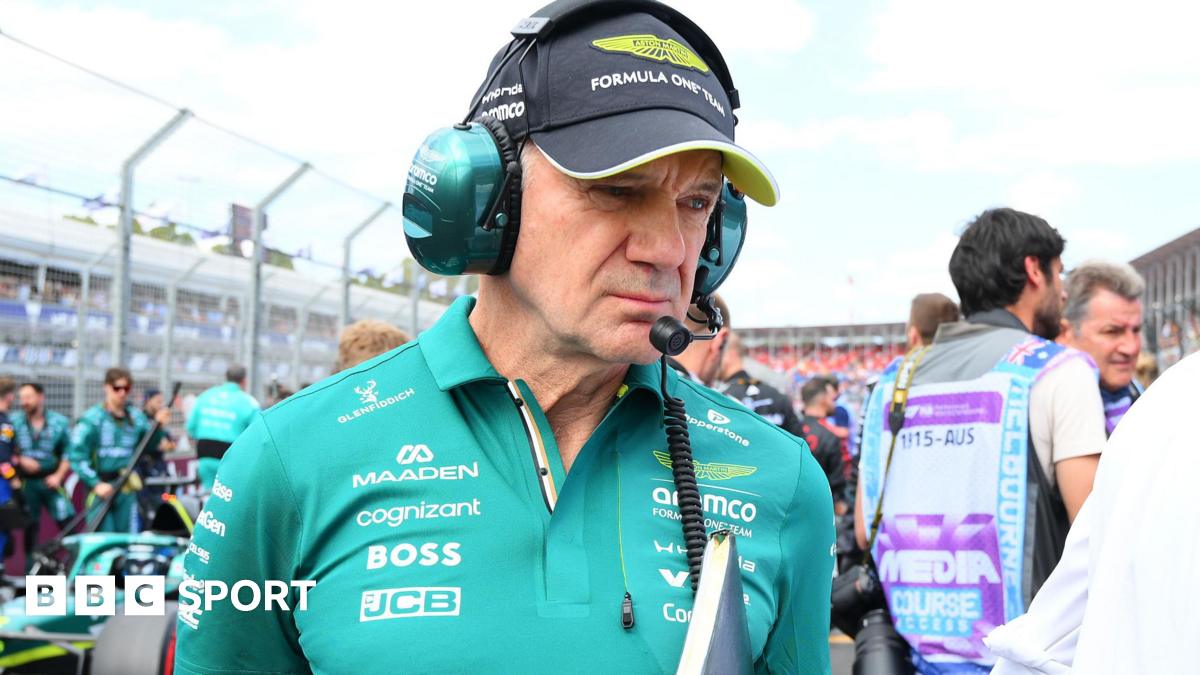
It’s easy to feel confused, or perhaps even a little dizzy, when contemplating the merry-go-round of changes in the senior team at Aston Martin in the past couple of years.
Focusing on Newey, he joined Aston Martin in March last year as managing technical partner and shareholder. His position, and his reputation, were always going to mean that he was the de facto operations boss of the Aston Martin F1 team under owner Lawrence Stroll, regardless of his title.
At the same time, it’s not a productive use of Newey’s time or ability to tie him up with some of the operational and bureaucratic aspects of a role such as team principal or chief executive officer.
Any team wants Newey focused where he can make the biggest difference – on car design – and not in places such as budgets, dealing with sponsors and media, personnel and so on.
Initially, that was the responsibility of Andy Cowell, in his role as team principal and chief executive officer.
On paper, that sounds like a good split – Newey’s design genius and Cowell’s engineering management expertise honed through two decades at Mercedes’ F1 engine factory.
The problem was that Cowell and Newey clashed. The details of the clash have not emerged but there was only going to be one winner. So, Cowell was sidelined into a new role of chief strategy officer.
It remains to be seen how long he sticks around, but for now that frees him up to work with Honda. He has been spending a lot of time in Japan trying to help them sort out their engine protect.
Stroll, though, was still of the mind that a figure of that type was needed, for the same reasons – to free up Newey to concentrate where he can make the most difference. So he has been looking around.
Stroll was quite close last autumn to recruiting Christian Horner as a CEO-type figure, BBC Sport’s sources have said. But Newey has not forgotten why he left Red Bull, and he doesn’t want Horner, so he said he would fill the gap for the time being.
Now, the team did not communicate all this at the time, of course. They simply said Newey would become team principal “from 2026”.
But it seems that the general idea that the team needed someone of that ilk never went away, and it’s easy to see why. Hence Stroll’s approach to Jonathan Wheatley.
Multiple sources have told BBC Sport Horner has been back in touch with Stroll, and met him as recently last last week. Newey still doesn’t want Horner involved, but Wheatley is believed to be an acceptable alternative. So that’s how things have ended up where they are.
The simple answer is that the top management of Aston Martin and Audi have felt things were not working at various junctures and decided to act.
As far as Audi is concerned, it was clear some time ago that not enough investment was being put into Sauber early enough for the team to be in good shape when Audi officially entered F1 in 2026.
Andreas Seidl, the first chief executive officer, had been concerned about that for a while, and there was a bit of a power struggle between him and Oliver Hoffmann, the chairman of the boards of all Sauber companies, through 2023 and 2024.
It was expected one would win out. In the end, Audi decided to remove them both, and appoint Mattia Binotto and Jonathan Wheatley in a dual leadership role, Binotto as chief operating and technical officer and Wheatley as team principal.
Many in F1 raised their eyebrows at that – dual leaderships rarely work. Add in that at Audi there was another senior figure, in chief executive officer Adam Baker, and many felt the leadership of Audi looked unwieldy.
So it was not a massive surprise when that structure was streamlined, with Baker removed, and Binotto made head of the Audi F1 project under Audi CEO Gernot Dollner.
That was supposed to be that. Binotto was in overall charge, Wheatley ran the race team.
But when Wheatley decided that he wanted to come back to the UK, his talks with Aston Martin leaked, and he and Audi agreed to split with immediate effect.
As for Aston Martin, Lawrence Stroll is an ambitious man, he wants success, and he has invested a lot of money in it.
So it’s hardly a surprise that, when he feels things are not working, he takes action.
All the changes he has made have seemed logical on one level or another. There was clearly a problem with car design – after they made a big leap forward in 2023 under new technical director Dan Fallows, the team failed to develop the car effectively in season. They started 2024 less competitively and fell backwards again.
At the same time, Stroll was recruiting Newey. Why wouldn’t he, given he was available having left Red Bull? And with Newey on board, and the team stumbling under Fallows, it’s hardly a surprise Fallows would be considered surplus to requirements.
Same with the leadership. Mike Krack became team principal but the team was not moving in a convincing direction. Hence Stroll looked for change. Andy Cowell is highly regarded; his recruitment made sense.
Stroll would not have expected a clash between Cowell and Newey, but he got one, so another change was made.
Each change is understandable in isolation. But success in F1 is founded on stability not disruption and there has been little evidence of that at either team for the past two or three years.
Two races into the new season, and things have not been going well for Red Bull.
Having said that, it’s only two races into the season, so divining any clear pattern would be premature.
In Australia, Isack Hadjar qualified his Red Bull third. So it’s reasonable to assume Max Verstappen would have been in the mix at the front had his rear axle not locked when he attacked Turn One on his first qualifying lap, leading to a spin into the gravel and a start at the back.
Hadjar retired from the race with an engine failure and Verstappen recovered to a creditable sixth.
In China, Red Bull were not competitive, struggling for grip and balance, and Verstappen eventually retired from the race, after showing little pace, with another power-unit-related failure.
But was Australia or China most representative of Red Bull’s actual pace? It’s too early to say.
Clearly, reliability is an issue, but that’s understandable in their first year as a power-unit manufacturer.
It’s going to take a few races before a proper read of Red Bull’s competitiveness emerges. Having said that, if they continue to struggle, you can bet that Verstappen’s future will become a subject for debate again, just as it was last year.
F1 is for the first time this year using fully sustainable, carbon-neutral fuels in 2026.
These can be made either from municipal waste and no-food biomass, or from synthetic industrial processes, which take carbon from the atmosphere to produce the fuel, or a mix of both.
It has to be manufactured and processed in a renewable manner and the whole process is independently certified as sustainable.
The renewable basis of this process is that the carbon that is produced by burning the fuel is the same carbon that was taken out of the atmosphere to make the fuel in the first place, or provide the raw materials for it, and so on. It becomes a circular process.
The manufacturers have so far been quite cagey as to which method they are using – understandably, as individual intellectual property is at stake, as well as competitiveness.
In theory, this could be a game changer for road transport in the future. There are billions of petrol and diesel-powered cars on the roads, and doubtless will be for many years to come, regardless of governments’ desires for personal road transport to become electric.
If these internal combustion enginereed cars could be powered by carbon-neutral fuel, it would have a massive impact on the climate crisis. That’s the appeal of F1 taking the lead on this.
The problem at the moment is that these fuels in F1 are incredibly expensive – figures of 300 euros per litre have been mentioned. Although I hear that if the fuel was reduced from 100% sustainable to just 98% or so, that could have a huge impact on price.
If companies can find a way to produce these fuels at marketable prices similar to fossil fuels, it’s obvious what kind of impact they could have.
Cadillac have deliberately under-promised for their entry to F1 this year. It’s a clever policy that has ensured they have escaped any criticism they might otherwise have received for their low level of performance.
Two races into the season, the car is an average of 4.4 seconds off the pace in qualifying – and nearly a second off even the Aston Martin, whose struggles are well known.
They can pass the Astons in the race – but that’s only because the Honda engine is so down on energy recovery capability.
For a team that has been built from scratch in what was without question a tricky process that’s a decent effort.
But it is also a long, long way from competitiveness.
Their first aim was respectability. They’ve achieved that. Their next, as team principal Graeme Lowdon puts it, is to “build on a solid foundation” and make obvious progress through this year and the next ones.
Cadillac is full of people with plenty of F1 experience, from chief technical officer Nick Chester down. But building the collective experience as a team to operate on the same plane as the top teams will take time, likely a considerable amount of it.
Recent Top Stories
Sorry, we couldn't find any posts. Please try a different search.