California bishops slam US immigration policies, claim ‘synodality’ can unite faithful on issue –

(LifeSiteNews) — The California Catholic Conference (CCC), representing the state’s 12 bishops in the public square, is growing increasingly outspoken in opposing federal immigration enforcement.
Held in dioceses across the state on the December 9 feast day of St. Juan Diego, the Holy Hour for Immigration was billed by the CCC as “a visible and spiritual act of solidarity, a statement of faith in justice, and a commitment to accompany those whose lives have been disrupted, detained, or displaced.”
The 12-page guide for the services included prayer intentions such as, “For policies and laws that have broken hearts and separated children and parents” and “For political or economic interests and agendas that make us blind and indifferent to human suffering and need.” The response was, “Have mercy and forgive us, Lord.”
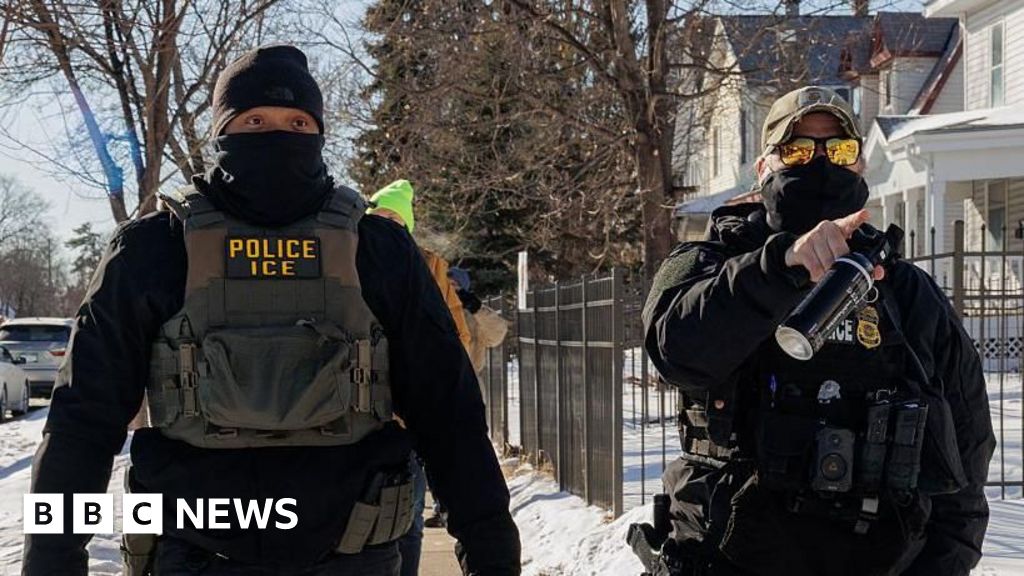
The left-leaning CCC has been criticizing the Trump administration’s immigration policies more directly since two protesters were killed by federal agents last month while interfering with enforcement activity in Minnesota.
“Deportation alone is not an immigration strategy,” read the January 28 statement from the California bishops, decrying “enforcement without proportionality and power without accountability.”
“In this moment, it is right to question whether our leaders truly seek peace, intend justice, or are concerned with treating all people humanely,” the statement said. “The actions of many who give orders and follow orders no longer reflect the values upon which our society is based, and certainly not the Christian command to love one’s neighbor as oneself.”
The bishops called upon “public officials, law enforcement, and immigration authorities to adopt de-escalation practices, conduct transparent investigations, and ensure accountability, mindful that peace and justice are inseparable.”
“Stop. Listen. Love. A Catholic Response to Fear, Raids, and Rising Violence” was the title of the CCC webinar held via Zoom and YouTube on February 6. The hourlong event featured Archbishop Jose Gomez, Bishop Oscar Cantu, and Bishop Michael Pham. It was moderated by Kathleen Domingo, executive director of the Sacramento-based CCC.
The webinar reiterated the talking points from the bishops’ statement: migrants (meaning illegal or undocumented immigrants) inherently possess human dignity; the current approach to immigration enforcement is morally wrong; and comprehensive immigration reform is urgently needed. Two of the three bishops went on to suggest that synodality can unite American Catholics on divisive immigration issues.
Bishop Cantu of the Diocese of San Jose cited Exodus 3:7 in the opening prayer. “Heavenly Father, as you summoned Moses on the mountainside, you exclaimed, ‘I have witnessed the affliction of my people in Egypt and have heard their cry against their taskmasters, so I know well what they are suffering.’”
READ: California bishops side with Democrats on bill critics call a ‘kidnapper’s dream’
“We too have witnessed the affliction of our brothers and sisters in Minneapolis, in Chicago, in Los Angeles, and in multiple cities and towns across the United States,” Cantu continued. “Commission us now to restore human dignity, to restore just and well-ordered communities, and to be agents of healing and peace.”
Archbishop Gomez of Los Angeles, the country’s largest archdiocese, praised the contributions of immigrants to American society and stressed it has been more than 40 years since the last major overhaul of national immigration policy. A native of Mexico and former head of the U.S. Conference of Catholic Bishops, Gomez wrote a book in 2013 titled, Immigration and the Next America: Renewing the Soul of Our Nation.
Gomez also described how parishes in Los Angeles are working to deliver groceries and other necessities to families who “are scared to walk out and go to church or go to the store.”
Bishop Pham of the Diocese of San Diego fled his native Vietnam at age eight with his father and two siblings in a small boat in 1980, following the communist takeover of the country. After reaching Malaysia, they immigrated to Minnesota as refugees in 1981 through the sponsorship of an American family.
Pham said news accounts of heavy-handed immigration crackdowns brought back painful memories of communist Vietnam. “When I saw the [American] government taking family members, parents, or children away from one another … I couldn’t believe I was living in this democratic country and experiencing what is going on.”
Pham recounted how a truck filled with ICE agents recently parked in front of a local church. Parishioners quickly contacted each other through a “neighbor watch” system, warning undocumented individuals to avoid attending Mass that morning. Some 600 people in his diocese, not all of them Catholic, are now being trained to assist migrants with legal proceedings.
The San Diego bishop said the Catholic Church’s response to the immigration crisis represents an “evangelizing moment for us. These people, wherever they may end up, might say one day that when they were in a difficult time, when their children were in a difficult time, we were there with them.”
Cantu, the current CCC president, condemned national policies most forcefully. “We’re speaking to our congressional representatives that we’re not okay with the aggressiveness that we’ve seen and the lack of due process that we’ve seen in immigration enforcement,” he said.
In addition to financially helping migrant families, Cantu said his diocese has “done a whole menu of things for reminding people of their rights.” The website of Catholic Charities of Santa Clara County includes extensive advice for interacting with federal agents.
CCC moderator Domingo asked if both sides of the violence in Minnesota and elsewhere might be at fault, referring to ICE personnel as well as protesters who may be “rioting or causing violence. They’re really not folks who are looking for justice, right?”
“We need to be careful not to present these different sides as equivalent, because they’re not,” Cantu answered. He said law enforcement officials should be held to a higher standard of conduct than citizen agitators because they represent the government and are funded by taxpayers.
Cantu said federal officials promised “to remove violent offenders who were not here properly. And everybody was for that. But when we saw moms and dads being snatched from working at grocery stores or in restaurants or from the fields, or even citizens being detained aggressively, violently, and without due process, that’s when people started speaking up and saying, this is not right.”
Domingo blamed authorities for conducting immigration sweeps based on racial profiling, claiming that some 70 percent of people now being detained in ICE facilities have no criminal convictions.
“Mass deportation policies are not good. Family separation is not good. It could even be called a grave moral evil,” Domingo said. Noting that American Catholics are “really split on an understanding of the morality” of ongoing enforcement actions, she wrapped up the webinar by asking the bishops how Catholics can “form our consciences in a way that meets the current situation.”
Pham and Cantu pointed to synodality, the process begun by Pope Francis through which laity, clergy, bishops, and even non-Catholics seek to jointly discern and implement the Catholic Church’s mission. Listening sessions with physical round tables are hallmarks of the approach.
Pham recalled that synodality within his diocese was started by Cardinal Robert McElroy, a prelate known for promoting “radical inclusion” and doctrinal heterodoxy.
“The people were able to sit together, listening and discerning and dialoguing without any judgments or pointing fingers at anyone,” according to Pham. He said synodality, if branded effectively, can enable Catholics who disagree about immigration to “come together as the people, seeing the dignity of the human person and the way we can come into solidarity with one another.”
Cantu took a group from his diocese to the Vatican last year as a follow up to the now-concluded Synod on Synodality. He said Pope Leo stated during a panel discussion that “synodality can be the antidote to divisions in society, to polarization.”
Synodality is a “discipline of forcing us to sort of shut up for a moment and just actually listen to someone else, even people we may not agree with,” Cantu said. “So I think there is a way forward with synodality, the gift that it gives us to the church and to society.”
Other Church leaders ranging from American Bishop Robert Barron to Chinese Cardinal Joseph Zen have sharply criticized the synodal vision. Catholics primarily concerned with the integrity of Church teaching generally oppose synodality, while Catholics who prioritize social justice tend to embrace it.
The California Catholic Conference webinar did not mention the Biden administration’s open border policies, a root cause of today’s immigration enforcement controversy.
Robert Jenkins is a Catholic writer living in Sacramento, California.
Recent Top Stories
Sorry, we couldn't find any posts. Please try a different search.