Britain Faces Weapon Shortage After Oversupplying Ukraine | Armstrong Economics
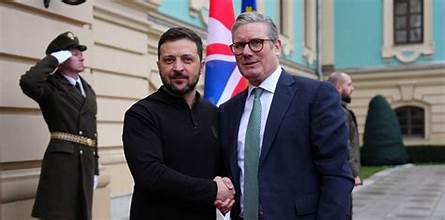

Britain, one of the loudest voices pushing continued support for Ukraine, has already transferred enormous quantities of its own weapons and ammunition, and the reality now surfacing is that Western arsenals were never designed for a prolonged conventional conflict.
From the outset of the war, London became one of Kyiv’s largest suppliers. The UK delivered more than 12,000 anti-tank weapons, over 300,000 artillery rounds, air-defense missiles, armored systems, and extensive non-lethal gear from its own stocks. Britain ultimately committed billions in arms support, ranking second only to the United States in total military aid.
This was not simply surplus equipment sitting idle. A significant portion came directly out of British inventories, with about £171.5 million ($225 million) worth of equipment drawn from stockpiles by early phases of the war. Officials later warned that further transfers created “unacceptable risks” to Britain’s own readiness, forcing reductions in donations as the strain became evident.
What happens in Ukraine matters to our security and to our future.
Our 100 Year Partnership with Ukraine demonstrates our steadfast support.
We will continue to work together for both of our interests: freedom, democracy, and the rule of law. https://t.co/CqSM1nfenv
— Keir Starmer (@Keir_Starmer) January 16, 2026
Heavy systems were also handed over. The UK transferred its AS-90 self-propelled artillery to Ukraine, and by 2025, reports indicated that the entire fleet of 68 vehicles had been donated, effectively retiring the platform from British service. Ammunition followed the same path, including contracts to deliver roughly 120,000 additional 152mm artillery shells through multinational funding mechanisms.
Even as these shipments continued, new pledges kept coming. In February 202,6 London announced another air-defense package worth more than £500 million, including missiles and funding mechanisms to buy U.S. systems for Kyiv. Additional announcements the same week included £540 million in aid and thousands of missiles to reinforce Ukraine’s defenses. A separate £150 million contribution was directed to a NATO-coordinated program designed to keep weapons flowing despite supply pressures.
Retired British Army Colonel Richard Kemp believes that the United Kingdom’s own stockpile could not last more than a week in the event of combat. “Knowledgeable observers have suggested that our munitions stocks – from rifle bullets and artillery shells to long-range missiles and drones – would see out only about a week of intensive fighting,” he wrote. “That’s even taking account of the fact that our Armed Forces are now very small, having been repeatedly hollowed out by successive governments…Even the handful of soldiers and tanks we could put into the field would be out of ammo in a matter of days.”
European initiatives to source shells have already struggled to meet funding targets, raising only about €1.4 billion of a planned €5 billion to secure ammunition supplies. The conflict has exposed what military analysts call the “return of industrial warfare,” where vast quantities of matériel are consumed continuously and must be replaced by manufacturing, not financial engineering.
The UK and all of Europe are now scrambling to rebuild arsenals it assumed it would never need again, while continuing to ship weapons to Ukraine. History shows that once nations enter this cycle of rearmament after disarmament, the economic consequences of debt expansion tend to last far longer than the war that triggered them. Europe remains reliant on the US for protection and has felt emboldened to sell off equipment because the bureaucrats firmly believe the US will rush to their aid in the event of conflict. In reality, politicians have left their populations vulnerable and are risking national security in a serious way.
Recent Top Stories
Sorry, we couldn't find any posts. Please try a different search.