Bangladesh election: First poll since Sheikh Hasina ouster pits Jamaat-e-Islami against BNP
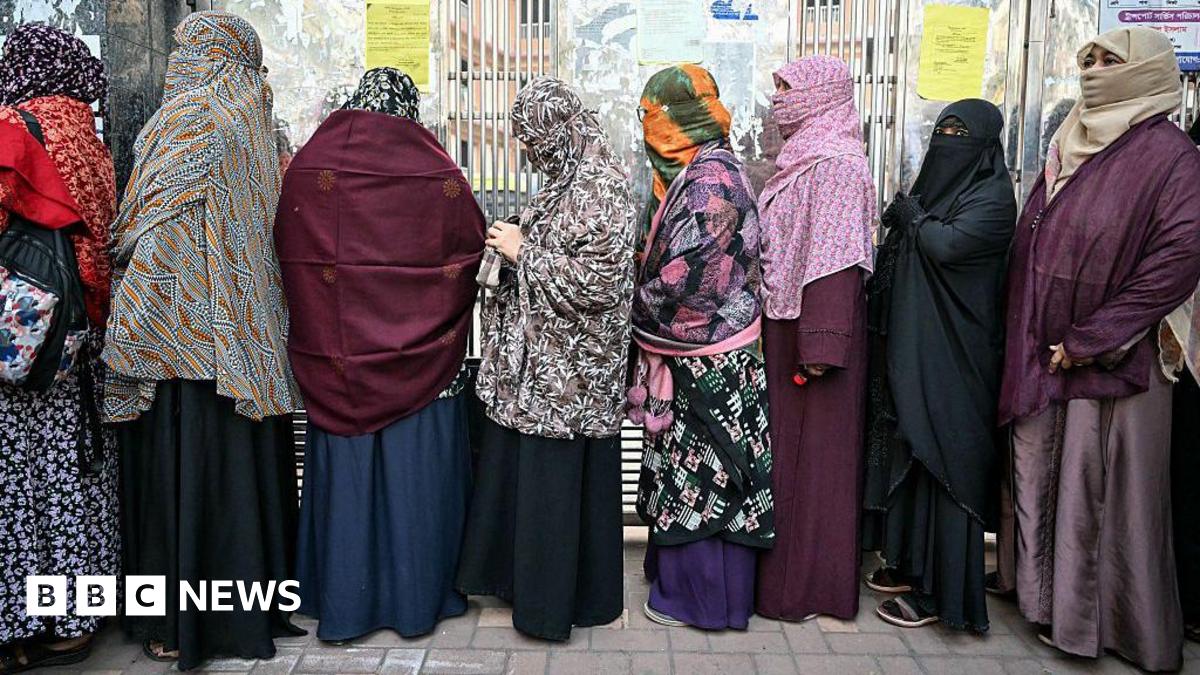
Unprecedented security for this year’s electionpublished at 03:35 GMT
 Anbarasan Ethirajan
Global Affairs Reporter
Since taking charge in 2024, Bangladesh’s interim leader Muhammad Yunus has been insisting on onething: his administration will ensure a free and fair poll.
The government, which has has been criticised over its failure to tackle incidents of mob violence, is aware that its credibility is atstake, so it’s leaving no stone unturned to prevent violence or irregularities.
Nearly a million security personnel have been deployed across the countryto maintain security until 14 February.
There will be mobile and strike units that can beswiftly deployed, and all polling centres willbe tightly guarded.
In a rare move, the government has bannedthe use of motorcycles from midnight on 11 February for threedays, and restricted the movement of other vehicles.
More than a thousand killed in 2024 protest crackdownpublished at 03:23 GMT
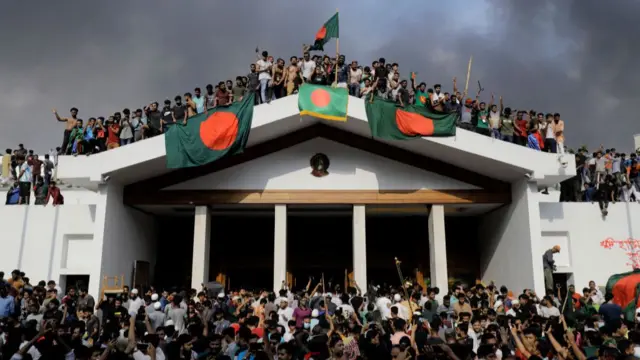 Image source, Getty Images
As many as 1,400 people were killed during 2024’s weekslong anti-government protests, most at the hands of security forces, according to the UN. It said the killings could amount to “crimes against humanity”.
The UN report documented the shooting at point-blank range of some protesters, the deliberate maiming of others, arbitrary arrests and torture.
The government maintained that officers only opened fire in self-defence or to protect state property.
After the protests toppled then Prime Minister Sheikh Hasina, an interim government, led by Nobel laureate Muhammad Yunus, was tasked with preparing Bangladesh for a new election.
What happened during the 2024 protests?published at 03:17 GMT
The year 2024 was a turning point for Bangladesh.
Protests began as peaceful demands from university students to abolish quotas in civil service jobs – a third of which are reserved for relatives of veterans from Bangladesh’s 1971 war for independence.
Campaigners argued the system was discriminatory when millions of young Bangladeshis were already contending with unemployment.
The protests soon transformed into wider demonstrations against the government, which critics said was rife with corruption and intolerant of dissent.
Finally our votes will count, says undergraduatepublished at 03:02 GMT
 Azadeh Moshiri
Reporting from Dhaka
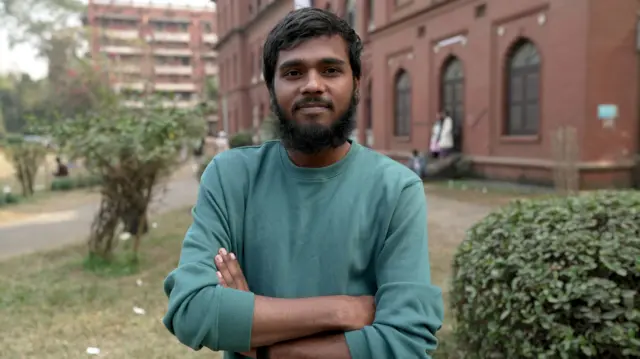
Many we’ve spoken to feel this is the first time their vote will truly count.
Mizanur Rahman is excited about an election where all “voters from all levels of society can exercise their voting rights… that is what I want”.
The 21-year-old undergraduate says his biggest wish today is that the elections proceed smoothly.
Supportersof the Awami League, though, would argue that isn’t happening today.
The party has been banned from politics after its leader, former PM Sheikh Hasina, was ousted in pro-democracy protests in 2024.
“By excluding the Awami League, a free andfair election is in no way possible,” a leader of the party told us.
What happened to Sheikh Hasina, Bangladesh’s ousted PM?published at 02:48 GMT
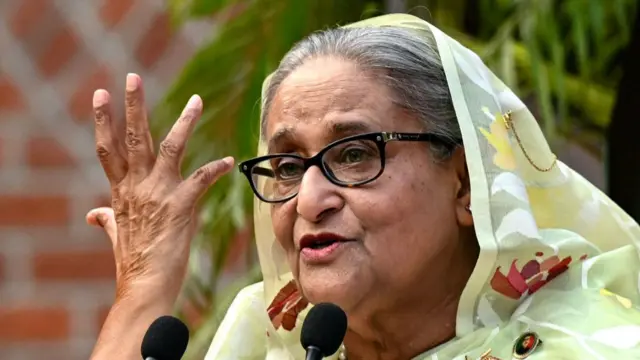 Image source, AFP via Getty Images
Sheikh Hasina has been in self-imposed exile in India since 2024, after she was deposed by a student-led uprising.
Bangladesh’s longest-serving prime minister, who led the country during two stints in office totalling 20 years, began her political career as a pro-democracy icon. She and her Awami League party were credited with overseeing the South Asian country’s economic progress.
But in recent years she was accused of turning autocratic and clamping down on any opposition to her rule. Politically motivated arrests, disappearances, extra-judicial killings and other abuses all rose under her rule.
Last November, a special tribunal in Dhaka sentenced her to death after convicting her of crimes against humanity over her crackdown on protesters – though the sentence can’t be enforced since Hasina remains in India. She denied all charges against her.
Meanwhile, her Awami League has been banned from politics until the Dhaka tribunal completes its trial of the party – which means it’s absent in today’s vote.
High hopes for a return to democracypublished at 02:35 GMT
 Yogita Limaye
Reporting from Dhaka
This is the most crucial election for Bangladesh in more than a decade. It’s the first since a mass student uprising ousted the country’s longest serving prime minister Sheikh Hasina in 2024.
There is palpable hope in Bangladesh that this election could see a return to a democratic path for a country that faced years of authoritarian rule under Hasina.
Now convicted and sentenced to death for ordering a brutal crackdown against protesters – as many as 1,400 were killed in just 46 days, according to the UN – Hasina is in exile in neighbouring India. She has rejected the charges against her and has questioned the legitimacy of this election. Her party, the Awami League, is banned from participating in the polls.
While that casts a shadow over authorities’ claims that this is a free and fair election, it is the first in a long while where the outcome cannot be predicted with certainty even before voters head to the ballot box.
This election, people feel they do have a choice.
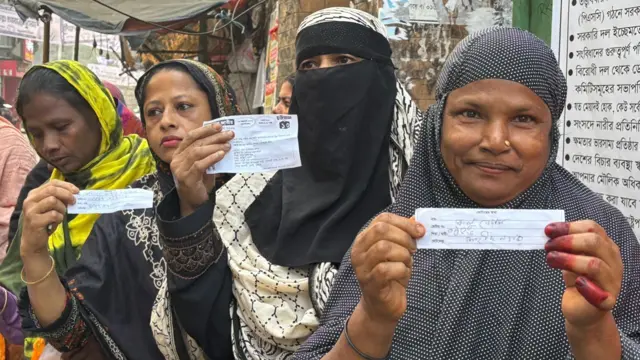
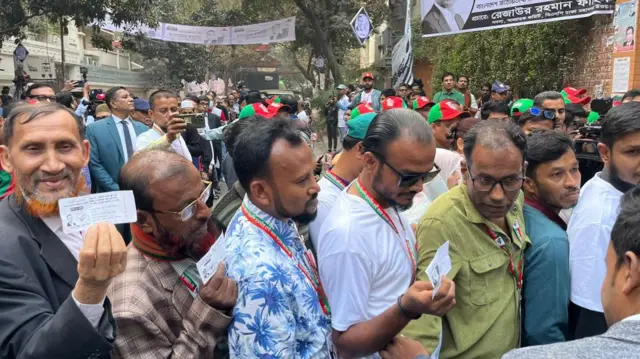
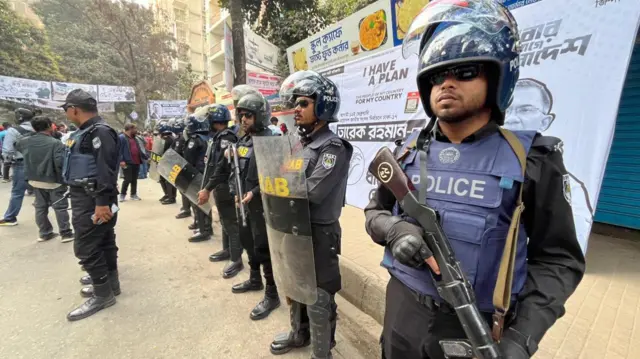
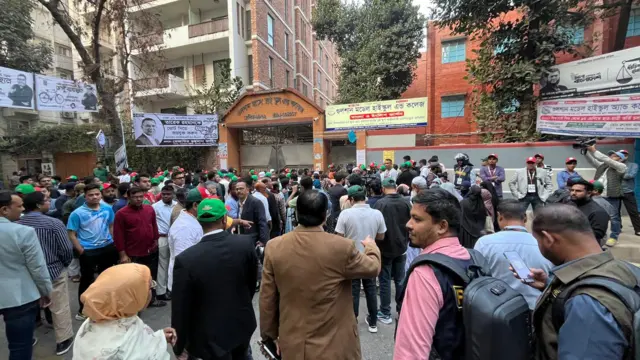
Scenes from a polling station in Dhakapublished at 02:16 GMT
We’re at a polling station in a Dhaka school and the sense of excitement is palpable. Crowds of people had arrived ahead of time and many held up their ballot papers as we approached them.
Armed police and security personnel have been deployed outside the polling station.
Here are some pictures from the ground.
Why is this election important?published at 01:55 GMT
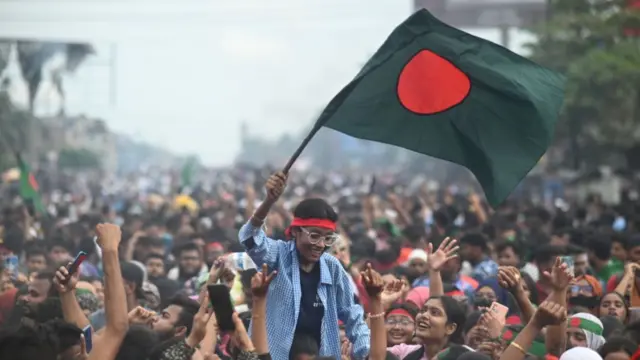 Image source, Anadolu via Getty Images
This is a notable election for several reasons.
It’s not just the first since the 2024 July uprising, but also the first time in decades that elections will be without either of Bangladesh’s two dominant political figures, Sheikh Hasina and Khaleda Zia.
With the Awami League banned, the country’s main Islamist party is for the first time a major player in a general election.
Voters aren’t just choosing a new government, either. They will also vote on a constitutional referendum that decides if the July Charter, a sweeping reforms package, will be implemented. Ballots sent by Bangladeshi voters outside the country are also being accepted for the first time.
This election will also be a test of whether democratic recovery is possible in a country reeling from years of political turmoil and instability.
Voting beginspublished at 01:39 GMT
Breaking
Polls are now open and voting will continue until 16:30 local time (10:30 GMT).
This the first time a parliamentary election and a referendum are being held simultaneously. Results are expected to come tomorrow.
More about Jamaat-e-Islamipublished at 01:25 GMT
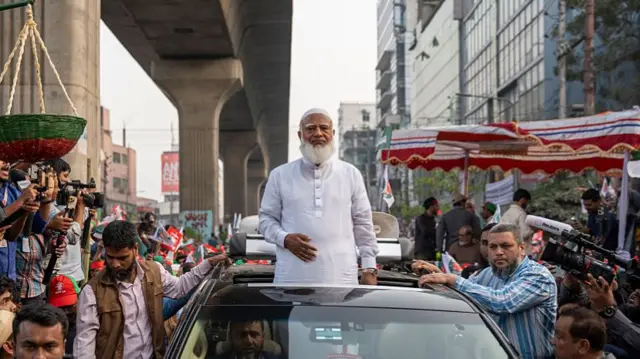 Image source, Getty Images
Jamaat-e-Islami is led by Shafiqur Rahman (centre)
Founded in 1941 by Islamic scholar Sayyid Abul Ala Maududi, Jamaat-e-Islami previously supported a BNP-led coalition between 1991 and 1996, and from 2001-2006.
As Bangladesh’s largest Muslim party, however, it was barred from contesting several elections because of its Islamist ideology. Its most recent ban, imposed by ousted PM Sheikh Hasina’s administration under anti-terrorism laws, was lifted last year.
The party has gained some ground over the last year, with its student wing winning majorities in two public university student union elections for the first time. But its support of what was then West Pakistan during the war of 1971 – that resulted in independence for East Pakistan, which became Bangladesh – continues to anger many Bangladeshis.
Jamaat-e-Islami has allied with the youth-centered National Citizen Party and the Liberal Democratic Party to contest this election. The alliance has promised economic prosperity, employment support, agricultural reforms and better protections for women, among other things.
More about the Bangladesh Nationalist Partypublished at 01:12 GMT
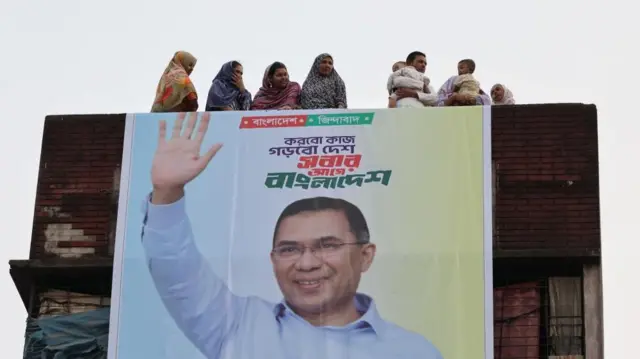 Image source, Reuters
People watch the BNP rally from their rooftops
Founded in 1978 by Bangladesh’s former president Ziaur Rahman, who was also one of the leading figures in the country’s independence war, the Bangladesh Nationalist Party (BNP) has ruled the country multiple times, often exchanging power with the now-banned Awami League.
With its main rival absent, many speculate the BNP will have a comfortable lead in this election. If it wins, Tarique Rahman, the son of Ziaur and late former PM Khaleda Zia, is expected to be the next prime minister.
In its manifesto, the BNP has vowed to build a “welfare-oriented and prosperous” nation. Among its key pledges are more financial support for low-income families, an expansion of the healthcare workforce, education reforms and a boost to climate resilience.
The BNP boycotted past elections, including the most recent one in 2024, accusing them of being neither free nor fair – yet has also been criticised for corruption and poor governance.
Who are the key parties?published at 00:52 GMT
Although several parties have thrown their hat into the ring, the real contest is between the centre-right Bangladesh Nationalist Party (BNP) and Jamaat-e-Islami, Bangladesh’s largest Muslim party, which was once barred from elections.
The centre-right BNP is widely seen as a front-runner, with its long-time rival the Awami League banned last year following a student-led uprising in 2024. Party leader Tarique Rahman, the son of the late former Prime Minister Khaleda Zia, has pledged to crack down on corruption, boost employment and improve infrastructure.
The Jamaat-e-Islami party, a former BNP ally, has now formed an alliance which includes the youth-focused National Citizen Party, and is a strong contender with its growing influence among young people. But its resurgence has sparked debate over whether the South Asian nation should be led by an Islamist party.
Two votes in a daypublished at 00:48 GMT
Each voter will receive two ballots today.
On the first white ballot, they vote for an MP from their constituency.
The second pink ballot is for a national referendum, where voters get to say Yes or No to the proposed package of reforms, including greater female representation in parliament, term limits for the prime minister, and a bicameral parliament comprising a 100-member upper house.
If the referendum passes, any constitutional amendment going forward will require approval by a majority of the upper house.
Bangladesh votes in first election after political upheavalpublished at 00:46 GMT
Gavin Butler
Live editor
More than 120 million people across Bangladesh are set to cast their votes today for a new government.
This is the first election since a youth-led movement dramatically ousted former Prime Minister Sheikh Hasina.
Those demonstrations in 2024 brought an end to 15 years of increasingly authoritarian rule under Hasina.
Many hope that today’s election will usher in a new era of representative governance for Bangladesh.
Stick with us as we bring you the latest updates and analysis.
Recent Top Stories
Sorry, we couldn't find any posts. Please try a different search.