Australia’s world-first social media ban for under-16s comes into effect – live updates
Summary
-
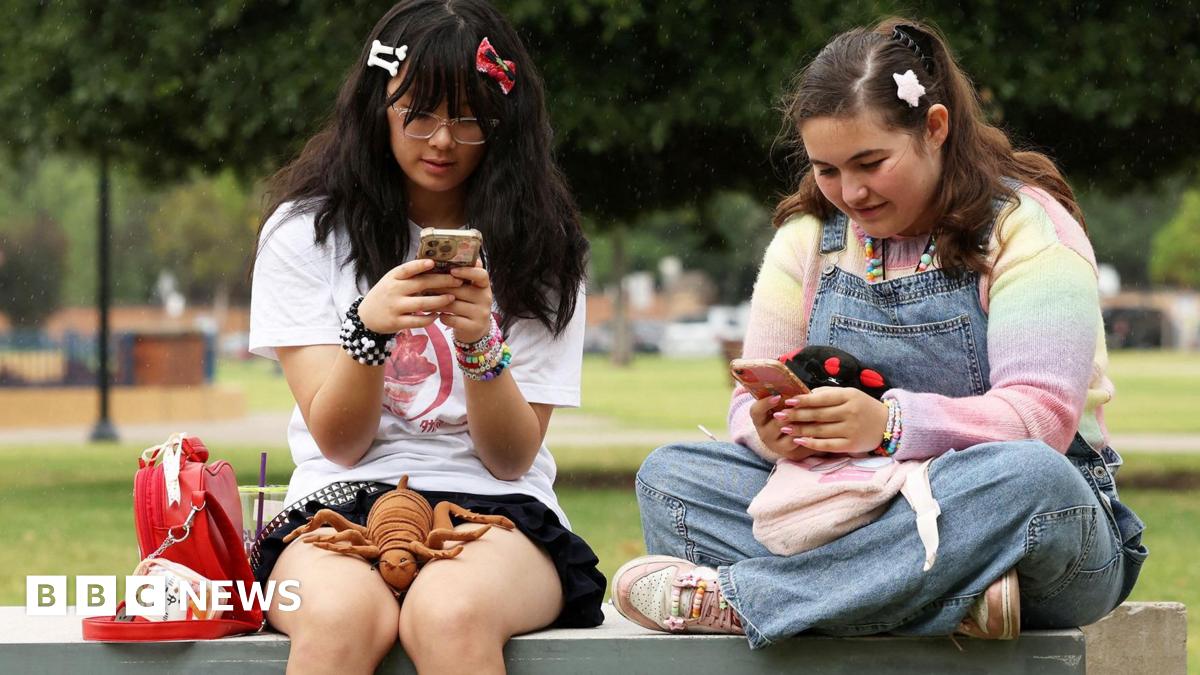
Millions of children and teenagers under the age of 16 lose access to their social media accounts in Australia after a world-first ban comes into effect
-
Instagram, Facebook, Threads, X, Snapchat, Kick, Twitch, TikTok, Reddit and YouTube are among the platforms required to enforce the new legislation
-
Parents and children won’t be punished for breaking the ban – but companies face fines of up to A$49.5m (US$32m, £25m) for breaches
-
The government says the ban is aimed at protecting young people from harmful content, but critics suggest it could isolate vulnerable teenagers and push children into unregulated corners of the internet
-
This is a bold move that many other countries are watching carefully – but how the government will judge success is unclear, writes our Australia correspondent
-
Australian teens have mixed views, with some “insulted” and others saying they’ll “quickly get over it” – send us your thoughts on WhatsApp: +44 7756 165803, external
Live Reporting
Edited by Sam Hancock and Angus Thompson
-
Social media laws for children around the worldpublished at 16:16 GMT
In our last post we looked at what the UK’s doing to protect children online. Here’s a whistle-stop tour of other countries’ legislation.
France: A law was passed in 2023 requiring parentalconsent to be obtained for under-15s to create social media accounts – but with no set date to begin and it’s yet to be enforced.
China: The country has some of the tightest internet controls in the world, with many sites banned, but there is no age-specific social media ban. New rules do regulate the amount of time young people spend online and on social media sites.
Denmark: The government in November announced plansto end social media access for children under 15, but parents would be able togrant their 13 and 14-year-olds access. It is unclear when or how the measureswould be imposed.
Germany: Children aged 13 to 16 can only use socialmedia if their parents give consent, but there are questions over how effectively the rules are enforced.
Spain: The government this year approved a draft law to lift the minimum age for social media use to 16, but it hasn’t yet come into law.
Malaysia: The government is moving to ban under 16sfrom having social media accounts – the plans are in their early stages but the government says it hopes they can come into force next year.
-
What is the UK doing to protect children online?published at 16:08 GMT
 Image source, PA Media
In July, the UK’s media regulator Ofcom rolled out new measures aimed at restricting what children can see online, including pornography and other harmful material.
They also put the onus on tech firms, including social media companies, to ensure children weren’t exposed to harmful content.
There are more than 40 guidelines companies must follow, or they risk big fines. They include:
- Algorithms must be changed to filter out harmful content from children’s feeds
- Stricter age checks for people accessing age-restricted content, like pornography
- Taking quick action when harmful content is identified
- Making terms of service easy for children to understand
- Giving children the option to decline group chats invitations which may include harmful content, and to block and mute accounts and to disable comments on their own posts
- Providing support to children who come across harmful content
-
Chief of media regulator Ofcom: It’ll be interesting to see how the ban plays outpublished at 15:53 GMT
Ofcom’s chief executive Melanie Dawes describes Australia’s social media ban as a “very big step to take”.
Speaking to the BBC before the legislation took effect in Australia, she says “it’s going to be interesting to see how it plays out”.
She says, in conversations with Australia’s eSafety commissioner, the ban has been described to her as a “delay” (something our correspondent touched on earlier).
“It’s about, actually, postponing that moment when children get social media, and they’re putting a lot of effort into education and support for those teenagers under 16 to prepare them for then what happens when they do go online with social media later,” Dawes says.
Watch her remarks in full below:
-
UK has ‘no current plans’ to follow in Australia’s footstepspublished at 15:35 GMT
 Brian Wheeler
Political reporterIt’s the middle of the night in Sydney, where a world-first social media ban came into place a few hours ago.
Here in the UK, the government says it has “no current plans” to follow suit.
PM Keir Starmer’s spokesman refuses to be drawn on whether the government will follow the progress of the Australian law, pointing instead to the safeguards it has introduced in the Online Safety Act.
“We understand parents’ concern about the impact of social media on children, which is why we have taken some of the boldest steps globally to ensure online content is genuinely age appropriate,” the spokesman says.
“There are no current plans to implement a smartphone or social media ban for children. It’s important we protect children while letting them benefit safely from the digital world without cutting off essential services or isolating the most vulnerable.”
Last week, Labour MP Jess Assato called on the government to follow Australia’s lead and raise the online age of consent from 13 to 16.
-
Australian parents share contrasting views on the banpublished at 15:15 GMT
The Australian government says its world-first ban is partly about having parents’ backs.
Emma Mason, whose daughter Tilly died by suicide at the age of 15 after she was bullied online, is a supporter of what the government is doing. She tells the BBC that she sees the move as “protection” rather than “control”.
“We have to have the rules, even if those rules are broken,” she says.
However, Kath Angus and her daughter Sadie, 13, think social media is important for children to build community.
Angus says Sadie, who received her Instagram account on her 13th birthday, is already being exposed to “amazing” role models, “particularly in the queer community, which I think is really healthy for young adolescents now”.
You can listen to their thoughts in this short video:
-
‘The ban is a really good thing… social media can be dangerous and addictive’published at 14:58 GMT
Kris Bramwell
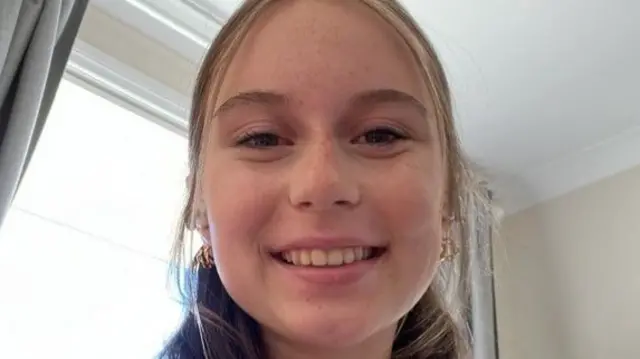
BBC News Image source, Emily
Emily, 14, lives in Australia’s capital city, Canberra, and says she believes the under-16 ban on social media is a good thing.
She describes social media as “dangerous and addictive” and believes the ban could help prevent bullying that some under-16s experience online.
“There are young people who think ‘we need a new PM [prime minister]’ or ‘we hate the government now’ because of the ban, but I think that’s ridiculous, and it will turn out to be a good thing.”
Despite her support, she says: “I communicate with friends from school or other people I know so I might fall out of touch with them or not be able to communicate with them as much, so I’ll miss that.
“I might get a bit bored, not being able to scroll so I’ll have to go outside or something,” she adds.

-
Watch: Learn a new instrument, read that book – Australian PM’s advice to under-16spublished at 14:56 GMT
Australian Prime Minister Anthony Albanese has told under-16s blocked from social media to “make the most” of the upcoming school holidays and has suggested some alternative activities.
“Start a new sport, learn a new instrument, or read that book that has been sitting there on your shelf for some time,” he says in a video message recorded ahead of the ban.
“Importantly, spend quality time with your friends and your family, face to face,” Albanese also says.
Young people “know better than anyone” of the pressure that comes from engaging with social media, he continues, adding the government has banned its use for under-16s to support them.
-
What about young adults, who won’t be affected by the ban?published at 14:40 GMT
BBC reporter Ottilie Mitchell has been asking young people in Sydney, aged between 18 and 20, what they think of Australia’s under-16s social media ban.
Eighteen-year-old Lui, who grew up in a world with social media, says he thinks the early stage of high school “probably would have been better” without it. However, Lui adds he doesn’t really support the ban and believes “they should keep the age restriction how it is instead of just banning it”.
Meanwhile, 20-year-old Tarushi says “there needs to be some regulation on it and I’m like so glad that there is”.
Watch what they have to say here:
Media caption, These young Australians grew up with social media – what do they think of the ban?
-
‘Remove harmful content, not us’: Teen influencers have their saypublished at 14:10 GMT
Content creators Ella and Zoey, both 14, have built followings on the video sharing app TikTok. They post vlogs, dancing videos and shopping hauls.
Ella says her account is “fully parent managed” and that she thinks “the intentions are good” behind the ban – but that older generations don’t understand the benefits of social media.
Zoey, meanwhile, says it will affect her daily routine. She won’t be getting up to make videos or have a “creative outlet”, she says.
Here’s more of what they told the BBC ahead of the ban taking effect:
Media caption, ‘Taking away my purpose’ – Influencers on Australia’s social media ban
-
‘As a young person with a disability, banning social media will make my world smaller’published at 13:55 GMT
Gabriela Pomeroy
Live reporter
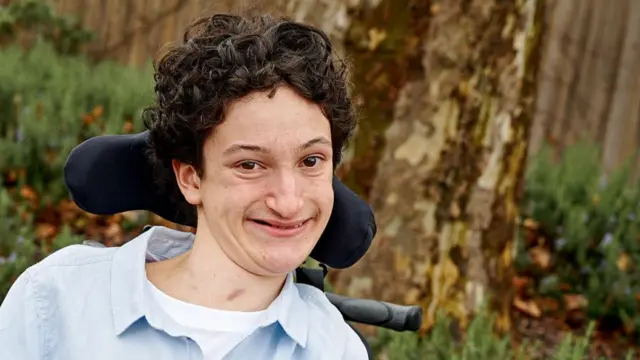
Ezra Sholl, 15, from Melbourne, is quadriplegic and says social media has given him access to a community of like-minded people.
Ezra was diagnosed with Hodgkin’s lymphoma, which triggered a rare nerve condition that has paralysed him.
“I follow the NBA, Australian rules football, I follow movie accounts and music accounts,” he says ahead of the ban coming into effect.
“Banning social media will make my world smaller,” he tells me via Facebook messenger. (Facebook is one of the platforms affected by the new rules.)
Social media accounts connect him with his friends, he says. “As a young person with a disability, taking away access to social media has the potential to cause harm as well.”
He agrees that social media can cause harm to young people, but “social media companies owe a duty to make their platforms safe. The ban itself is a band aid solution that doesn’t actually fix the issues”.
-
World’s first social media ban just kicked in – but it’s already facing a legal challengepublished at 13:49 GMT
Two 15-year-olds, Noah Jones and Macy Neyland, backed by a rights group, are arguing at Australia’s highest court that the legislation robs them of their right to free communication.
The Digital Freedom Project (DFP) announced the case had been filed in the High Court late last month.
The advocacy group argues teenagers rely on social media for information and association, and a ban could hurt the nation’s most vulnerable kids – young people with disability, First Nations youth, rural and remote kids, and LGBTQ+ teenagers.
After news of the case broke, Australia’s Communications Minister Anika Wells told parliament the government would not be swayed.
“We will not be intimidated by threats. We will not be intimidated by legal challenges. We will not be intimidated by big tech. On behalf of Australian parents, we will stand firm,” she said.
-
Watch live as BBC reporters answer your questionspublished at 13:35 GMT
A big thanks to everyone who has sent in questions so far – please do keep them coming.
You can now watch live at the top of this page as a crack team of reporters answer some of them.
On the panel we have:
- Technology reporter Chris Vallance
- Social media reporter Jonelle Ayomowi
- News reporter Emer McCarthy
Meanwhile, we’ll continue to bring you live updates, analysis and reaction from inside Australia and outside of it.

-
Paloma, 12, says she’ll miss communities she’s part of on Snapchat and TikTokpublished at 13:26 GMT
Gabriela Pomeroy
Live reporter
I’ve been speaking to 12-year-old Paloma, who lives in Sydney and says she is “sad” about the ban. She spends between 30 minutes and two hours a day on social media.
“I’m upset… because I am part of several communities on Snapchat and TikTok,” she tells me. “I’ve developed good friendships on the apps, with people in the US and New Zealand, who have common interests like gaming, and it makes me feel more connected to the world.”
Paloma says she regularly talks about the ups and downs of her life with a boy of the same age in New Jersey, in the US, who she knows through gaming and TikTok.
“I feel like I can explore my creativity when I am in a community online with people of similar ages,” she says.
Everyone Paloma knows is “a bit annoyed” about the ban. By stopping them from using social media, she says “the government is taking away a part of ourselves”.
-
Watch: Australia’s social media ban and how it’ll work… in 60 secondspublished at 13:08 GMT
Media caption, Australia’s social media ban explained… in 60 seconds
-

Some call it a ban, others a delay – whatever the term this is a bold movepublished at 13:03 GMT
Katy Watson
Australia correspondentIt’s the moment most teens have not been waiting for – the day they’re kicked off their social media platform of choice.
Australia’s government is proud of leading the world with this legislation – making it clear it’s siding with parents, not platforms, by trying to ensure kids are kept safe online.
People here call it a ban – the government prefers to use the word delay, giving children more time to grow up before being let loose on social media.
Whatever the term, it’s a bold move that many other countries are watching carefully. But how the government will judge success is unclear.
Ministers say it’s a treatment plan, not a cure – the rollout might be messy – but they won’t let big tech companies off the hook.
-
Australia’s social media ban for under-16s comes into effectpublished at 13:00 GMT
Breaking
It’s just turned midnight in Sydney, meaning Australia’s world-first social media ban for under-16s has come into effect.
There are five million children aged under 16 in Australia, and one million between the ages of 10 and 15, according to the country’s bureau of statistics.
While the vast majority of children affected by the ban are no doubt fast asleep, we’re on hand to bring you reactions both from within Australia and outside it. Stay with us.
-
Government IDs? Face recognition? How tech companies are being told to enforce new rulespublished at 12:56 GMT
As we touched on in our earlier post, Australia’s new legislation places responsibility for enforcing the ban on tech companies themselves.
The law stipulates that companies take “reasonable steps” to prevent children from accessing accounts and has advised using multiple age assurance technologies such as government IDs, face or voice recognition.
In anticipation of the rule coming into effect, Meta, which owns Instagram, Facebook and Threads, began removing Australian children under 16 from its platforms last week. A spokesperson for Meta told the BBC at the time that “compliance with the law will be an ongoing and multi-layered process”.
Snapchat has said users can use bank accounts, photo ID or selfies for verification.
Just how difficult it proves to enforce remains to be seen – with possibilities including fake profiles, joint accounts with family members and the use of VPNs.
Image source, Getty Images -
‘It’s kind of insulting’ and ‘I’ll get over it’: Australian children share differing views on banpublished at 12:51 GMT
We interviewed teenagers in Sydney, Brisbane and Canberra to hear their views on the ban.
They ranged from supportive, to undecided, to downright critical.
Jacinta, 14, says she’s “insulted” that the government “don’t trust me with the internet. She also says her family “love the idea of the ban.
Meanwhile, Oliver, also 14, says he’ll find the new rules “annoying”, but he thinks he’ll “quickly get over it”.
Watch their comments in full – and others – below:
Media caption, ‘We deserve to have a say’ – Australian teens on the social media ban
-
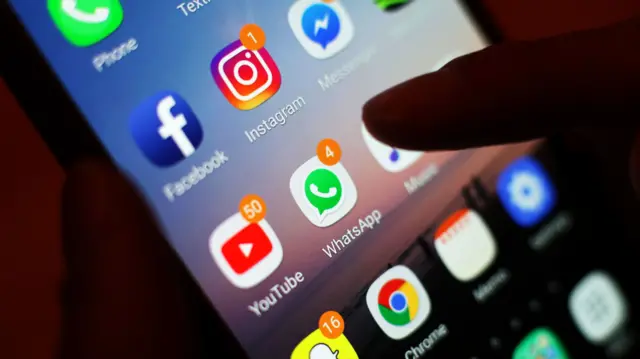
Snapchat, TikTok, YouTube, Kick, Twitch – let’s look at the affected platformspublished at 12:32 GMT
Image source, PA MediaFrom midnight in Sydney (13:00 GMT), new legislation will ban children under the age of 16 from having certain social media accounts.
Platforms falling within the legislation include Facebook, Instagram, Snapchat, Threads, TikTok, X, YouTube, Reddit and streaming platforms Kick and Twitch.
However, other sites such as YouTube Kids, Google Classroom and messaging apps like WhatsApp will still be available for young children to use.
It will be the role of social media companies to enforce the ban – and fines will be issued for those who breach the new law by not taking “reasonable steps” to ensure children can’t access the sites.
The Australian government has said it will keep the list of affected platforms under review.
-
The Australian government’s argument? ‘We want our kids to have a childhood’published at 12:29 GMT
“We want our kids to have a childhood and parents to know we have their backs,” Australian PM Anthony Albanese said just over a year ago when the new legislation passed the country’s parliament.
The government commissioned a study earlier this year which found that 96% of Australian children aged 10-15 use social media – and that seven out of 10 of them had been exposed to harmful content, such as misogynistic and violent material as well as content promoting eating disorders and suicide.
Anika Wells, Australia’s communications minister, says she isn’t intimidated by technology firms pushing back against the nation’s unprecedented social media ban.
“Anyone who has multiple small children will know how to negotiate against powers that seem beyond your control,” she tells the BBC – adding that “countless” stories of parents whose children have suffered online have kept her going.





Recent Top Stories
Sorry, we couldn't find any posts. Please try a different search.