Yields slide on soft US retail sales as attention turns to payrolls – Newsquawk US Market Wrap

- SNAPSHOT: Equities down, Treasuries up, Crude down, Dollar flat, Gold down.
- REAR VIEW: Soft US Retail Sales print; Import prices & Employment Costs Index soft, with export prices hot; Trump might send second carrier to strike Iran if talks fail; Lutnick said its more natural for the dollar to be at its current level; Average US 3yr note auction; Hawkish Fed speak from Hammack and Logan; NY Fed survey sees consumer delinquencies rise to the highest since 2017; EIA world oil production outlook raised for ’26 and ’27; DDOG earnings impress; Hotter-than-expected Norwegian inflation.
- COMING UP: Data: Chinese Inflation (Jan), ECB Wage Tracker, US NFP (Jan), Japanese PPI (Jan). Events: BoC Minutes (Jan), OPEC MOMR. Speakers: RBA’s Hauser; ECB’s Cipollone, Schnabel, Fed’s Schmid, Bowman, Hammack. Supply: Australia, Germany, US. Earnings: T-Mobile, McDonalds, AppLovin, Equinix, Motorola Solutions, Hilton, Kraft Heinz, TotalEnergies, Dassault Systemes, Michelin, Siemens Energy, Commerzbank, Heineken.
- NFP PREVIEW: Headline NFP expected at 70k (prev. 50k), the unemployment rate is expected to be unchanged at 4.4%. Click here for the full NFP Newsquawk Preview.
More Newsquawk in 2 steps:
- 1. Subscribe to the free premarket movers reports
- 2. Trial Newsquawk’s premium real-time audio news squawk box for 7 days
MARKET WRAP
US indices were broadly lower on Tuesday, albeit in contained ranges, as participants await the US jobs report on Wednesday, followed by CPI on Friday. Data on Tuesday was largely subdued, as retail sales disappointed, and the weekly ADP only saw 6.5k jobs added per week, for the last four weeks. Import/export prices saw the former come in as expected, while the latter was slightly lower, in addition to soft employment costs. Sectors were mixed, as Utilities, Real Estate, and Materials outperformed, with Financials and Communications lagging as further Alphabet weakness weighed on the latter. For Financials, weakness was led by names such as Charles Schwab and Interactive Brokers Group, which saw a sharp sell off in the US afternoon, albeit with no clear driver, but some touted Altruist adding AI tax planning to its Hazel platform. One of the other stock-specific highlights included impressive DataDog (+11%) earnings, which helped support other software names. The Dollar pared some of its earlier weakness and stopped the rot from its sell-off on Monday, with the Yen the G10 outperformer and continuing to benefit post-election. CAD saw marginal gains, while other G10s saw losses to varying degrees. Oil was slightly lower, albeit within tight parameters, with the main update being Trump informing Axios that he is considering sending a second aircraft carrier strike group to the Middle East to prepare for military action if negotiations with Iran fail, adding that either we will make a deal or we will have to do something very tough like last time. Spot gold was lower and fell back beneath USD 5,050/oz and Treasuries caught a bid after the aforementioned soft retail sales and ECI, and saw little reaction on an average 3yr auction. Elsewhere, there was hawkish Fed speak from Logan and Hammack, with both of them seemingly happy with where rates are presently. The latest NY Fed survey saw consumer delinquencies rise to the highest since 2017, while mortgage defaults surged in lower-income areas, with student loan delinquencies rising to a record.
US
RETAIL SALES: The December Retail Sales report was soft, with the headline unchanged vs November despite expectations for a 0.4% increase and cooling from the prior 0.6% pace in November. Within the report, ex-autos were also unchanged and softer than the 0.3% forecast, cooling from the prior 0.5%. The control group, a good gauge for consumer spending within the GDP report, was also soft, falling 0.1% after rising 0.1% in the prior month, missing expectations of a 0.4% rise. For the headline, across sectors, the only real strength was seen in building materials, rising 1.2%, while sporting goods rose 0.4% and gasoline stations +0.3%. On the flip side, miscellaneous and furniture stores declined by 0.9%, with other businesses around flat. Pantheon Macroeconomics writes that weak underlying sales are probably a sign of what is to come. The desk notes that this data, mapped with other leading indicators, points to a 0.1% increase in real consumer spending in December, and some slight downward revisions to spending growth in October and November. Pantheon adds that this suggests, albeit with a meaningful margin of error, to 2.5% spending growth in Q4, slower than the 3.5% in Q3.
IMPORT/EXPORT PRICES: Import prices rose 0.1% in December, in line with analyst forecasts, easing from the prior 0.4% pace seen over September to November. Export prices rose 0.3%, above the 0.1% forecast but cooler than the prior 0.5%. Analysts at Oxford Economics highlight that weak fuel prices continue to weigh on headline import prices, but prices for other goods continue to rise, including capital goods, which reflects strong business investment. The desk also notes that a weaker Dollar lends upside risk to import prices in the months ahead. Nonetheless, OxEco still expect inflation to moderate throughout 2026, allowing the Fed to cut rates in June and September.
EMPLOYMENT COSTS INDEX: The Q4 Employment Cost Index rose 0.7%, a touch softer than the 0.8% forecast and prior. Within the report, wages and salaries rose 0.7%, while benefits costs also increased 0.7%, vs the prior 0.8%. Summarising the data, Pantheon Macroeconomics says labour cost growth is continuing to moderate despite solid productivity gains, which opens the door to further easing from the FOMC later this year. Pantheon highlights that “With 2% growth in productivity looking sustainable, unit labour costs are rising at a mere 1.5% pace, easily low enough to return core PCE inflation to the 2% target.”
FED
HAMMACK (2026 voter): Said the Fed is in a good position with policy ‘to see how things play out’, and that the current Fed target rate ‘in the vicinity of neutral’ (Powell has previously said in a plausible range of neutral, albeit towards the higher end), adding that Fed rate policy could be on hold ‘for quite some time’. On the inflation side of things, the Cleveland Fed President remarked it is ‘still too high’ and tariff issues still in play, and she expects it to ease as year moves forward, but that’s just a forecast. Added that there’s a risk inflation could stick at 3% this year and needs to come down, worries that inflation could become entrenched, but expectations are currently contained, and that it is important to get to 2% inflation before changing rates again. On the labour market, Hammack said the job market stabilised into low hire, low-fire landscape. She further added she is ‘cautiously optimistic’ about the economic outlook. In the Q&A section, Hammack echoed that interest rates could remain on hold for an extended period while economic data is assessed, and flexibility will be maintained to raise rates if needed.
LOGAN (2026 voter): Said in the coming months, if inflation falls and the labour market stays stable, no further rate cuts will be needed. On inflation, Logan is more worried about inflation remaining stubbornly high and is not fully confident that inflation is heading all the way back to 2% and anticipates progress on inflation this year; have already seen some tentative signs. On the other side of the mandate, if Logan sees further material cooling in the labour market, cutting rates could be appropriate. The labour market is stabilising, and downside risks have meaningfully dissipated. Regarding policy, she believes that the current policy stance may be very close to neutral, providing little restraint. The 2026 voter is cautiously optimistic current policy stance will get inflation down to 2% and sustain a balanced labour market. The real FFR now sits squarely within the range of neutral rate estimates. The Dallas Fed President has taken note of growth in Treasury cash-futures basis trade and does have vulnerabilities if there’s stress, potential to de-lever rapidly.
FIXED INCOME
T-NOTE FUTURES (H6) SETTLED 10+ TICKS HIGHER AT 112-16+
T-notes catch bid after soft US Retail Sales and Employment Costs. At settlement, 2-year −2.9bps at 3.454%, 3-year −3.8bps at 3.515%, 5-year −4.5bps at 3.698%, 7-year −5.2bps at 3.912%, 10-year −5.5bps at 4.143%, 20-year −6.5bps at 4.727%, 30-year −6.4bps at 4.785%.
THE DAY: T-notes ultimately meandered throughout the overnight and morning session, but upside ensued in wake of the US data which saw soft December Retail Sales and Q4 Employment Costs, helping T-notes advance higher. Retail Sales missed across the board, adding to some fears of a consumer slowdown with the control group, a good gauge for consumer spending in the GDP report, declining by 0.1%, below the 0.4% forecast. The focus this week remains largely on the US NFP on Wednesday and CPI data on Friday to help shape Fed rate cut expectations – the data is also for January, more timely than the delayed December Retail Sales report. After the data today, the Atlanta Fed GDP Now estimate was downgraded to 3.7% from 4.2%.
For treasuries specifically, supply will also be in focus after the three-year auction today was relatively in line with recent averages. With the majority of earnings behind us, corporate supply continues to ramp up with Google (GOOGL) entering global debt markets after its USD 20bln launch on Monday. Today, it added GBP 5.5bln in UK markets, including a 100-year bond, and CHF 3.0455bln in Swiss markets. Elsewhere, Disney (DIS), Loews (L), Pulte (PHM), Alexandria Real Estate (ARE), Cencora (COR), Sysco (SYY), Disney (DIS) and Tyson Foods (TSN) also entered the market. The slew of issuance didn’t seem to have any direct downward impact, but it perhaps limited gains post-data, particularly with 10- and 30-year Treasury supply due this week.
Elsewhere, the latest NY Fed survey saw consumer delinquencies rise to 4.8% of household debt in Q4, the highest since 2017, while mortgage defaults surged in lower-income areas, with student loan delinquencies rising to a record. Delinquencies in credit cards and auto loans also rose.
Fed speak saw 2026 voter Hammack, who said policy is in a good position to see how things play out, noting the current target range is in the vicinity of neutral and the Fed could be on hold for quite some time.
SUPPLY
Bills
- US sold 6-week bills at a high rate of 3.635%, B/C 2.96x
- US to sell USD 90bln of 6-week bills on February 10th; to settle on February 12th
Notes
- US sold USD 58bln of 3-year notes with a high yield of 3.518%, stopping through the when issued by 0.1bps, matching the prior auction but not as strong as the six auction average 0.5bps stop through. The bid-to-cover fell slightly to 2.62x from 2.65x, below the 2.68x average. However, the breakdown saw direct demand rise to 31.92% from 29.5%, above the 24.7% average. Indirect demand also rose, to 57.15% from 56.5%, but below the 63.7% average. This left dealers with 10.94% of the auction, an improvement from the prior 14% and slightly better than recent averages, 11.6%.
- US to sell USD 42bln in 10-year notes on February 11th, and USD 25bln in 30-year bonds on February 12th.
STIRS/OPERATIONS
- Market Implied Fed Rate Cut Pricing: March 4.9bps (prev. 3.7bps), April 10.7bps (prev. 8.2bps), June 25.7bps (prev. 23.2bps), December 57.9bps (prev. 55.7bps).
- NY Fed RRP op demand at USD 1.45bln (prev. 1.31bln) across 5 counterparties (prev. 10).
- EFFR at 3.64% (prev. 3.64%), volumes at USD 92bln (prev. 106bln) on February 9th.
- SOFR at 3.63% (prev. 3.64%), volumes at USD 3.132tln (prev. 3.195tln) on February 9th.
CRUDE
WTI (H6) SETTLED USD 0.40 LOWER AT 63.96/BBL; BRENT (H6) SETTLED USD 0.24 LOWER AT 68.80/BBL
The crude complex saw slight losses, albeit within tight parameters, as US/Iran tensions remain in focus. The main update came in the US afternoon, as President Trump told Axios in an interview that he is considering sending a second aircraft carrier strike group to the Middle East to prepare for military action if negotiations with Iran fail. He added that either we will make a deal or we will have to do something very tough like last time, and he expects the second round of US-Iran talks to take place next week. No reaction was seen in oil, as traders await to see how this plays out. On the supply side of things, reports noted that Venezuela’s largest refinery, Amuay (645k BPD), is restarting basic operations after a power blackout. Elsewhere, headline-specific newsflow was light and highlighted by WTI traded between a contained USD 63.65-64.71/bbl and Brent USD 68.44-69.49/bbl. Despite saying that, we got the monthly STEO, which saw 2026 world oil demand unchanged at 104.8mln BPD and 2027 unchanged at 106.1mln BPD. After-hours, we await the weekly private inventory metrics, whereby current expectations are (bbls): Crude +0.8mln, Distillates -1.3mln, Gasoline -0.4mln.
EQUITIES
CLOSES: SPX -0.33% at 6,942, NDX -0.56% at 25,128, DJI +0.10% at 50,188, RUT -0.34% at 2,680
SECTORS: Communication Services -0.84%, Financials -0.75%, Health -0.63%, Consumer Staples -0.63%, Technology -0.58%, Energy -0.08%, Industrials +0.12%, Consumer Discretionary +0.45%, Materials +1.29%, Real Estate +1.39%, Utilities +1.59%.
EUROPEAN CLOSES: Euro Stoxx 50 -0.18% at 6,048, Dax 40 -0.12% at 24,986, FTSE 100 -0.31% at 10,354, CAC 40 +0.06% at 8,328, FTSE MIB -0.04% at 46,803, IBEX 35 -0.43% at 18,118, PSI -0.42% at 8,953, SMI -0.05% at 13,511, AEX +0.51% at 1,004
STOCK SPECIFICS:
- Datadog (DDOG): EPS, revenue and operating income beat, although guidance was weak.
- Spotify (SPOT): EPS, MAUs and total premium subs topped with strong guidance.
- TSMC (TSM): 37% Y/Y rise in January revenue to USD 12.7bln
- DuPont (DD): Sees FY sales and profit above expectations after Q4 metrics beat, helped by higher sales in healthcare segment & by business restructuring
- Hasbro (HAS): Top & bottom line surpassed expectations.
- Quest Diagnostics (DGX): EPS, revenue beat with better than expected FY outlook.
- Amazon (AMZN) plans to launch an AI content marketplace, allowing publishers to sell content to AI firms.
- Coca-Cola (KO): Revenue fell short.
- Fiserv (FISV): FY profit guide midpoint was shy of Wall St. expectations.
- On Semiconductor (ON): Mixed next quarter guidance.
- S&P Global (SPGI): Profit weak with disappointing FY outlook.
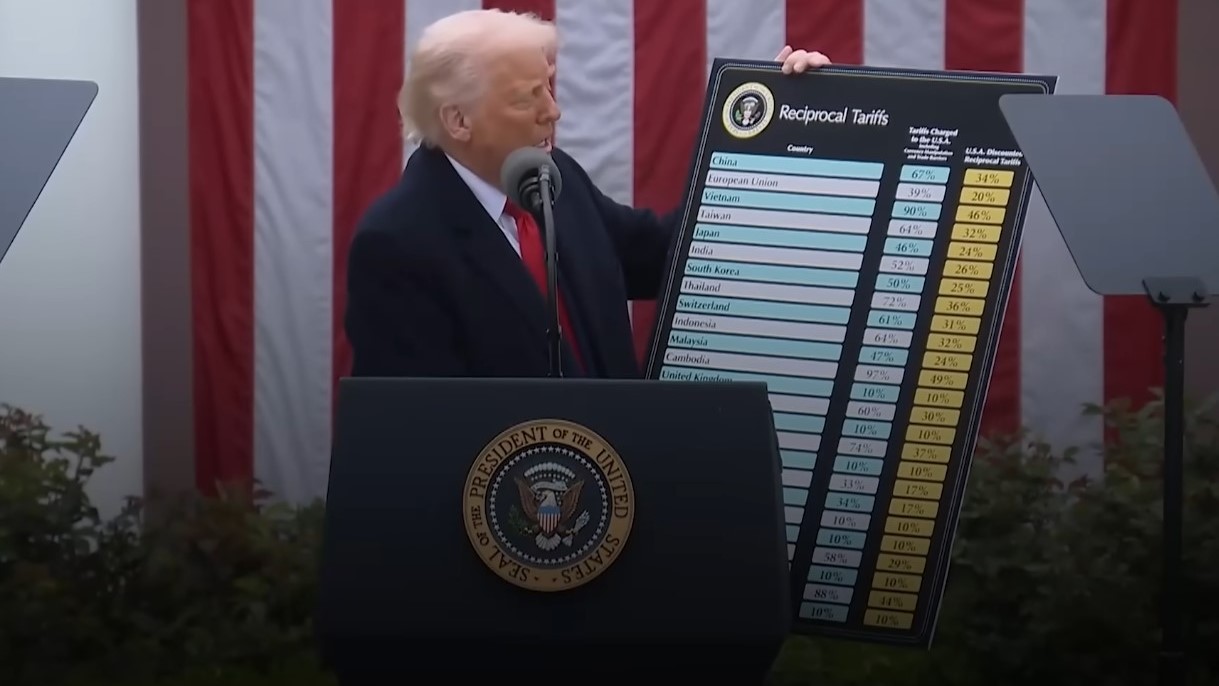
- Trump admin plans tariff carve-outs for US hyperscalers, including AMZN, GOOG, and MSFT linked to TSMC’s US investment commitments.
- Altruist has launched AI-powered tax planning within Hazel, enabling Advisors to create personalised tax strategies by analysing clients’ 1040s, pay stubs, account statements and other financial documents; the news sparked AI disruption concerns within the space, Charles Schwab (SCHW), Raymond James (RJF), LPL Financial (LPLA) were hit the hardest.
- Paramount SkyDance (PSKY) is enhancing its USD 30/shr all-cash offer for Warner Bros Discovery (WBD) to add a USD 0.25/shr “ticking fee”, payable to WBD shareholders for each quarter its transaction has not closed beyond December 31st 2026.
FX
The Dollar was mainly bid against major peers as the notable weakness seen in the last two trading days took a breather, as repositioning was likely at play ahead of NFP on Wednesday. In the background, data came in soft, highlighted by an underwhelming Retail Sales report, with the headline unexpectedly showing no growth in December despite expectations of +0.4% with the core gauge, Retail Control, unexpectedly declining 0.1%, albeit marginally. This sent US yields across the curve lower, but with the dollar seeing notable selling pressure since Friday, further weakness seemed exhausted. Earlier in the week, a Bloomberg report noting that China is urging banks to curb UST exposure had renewed some concerns over international demand for US assets. That said, today’s US 3yr note auction saw an uptick in indirect demand, suggesting foreign buyers aren’t going anywhere, at least for now. As mentioned, NFP is to be the highlight on Wednesday, expected to show +70k payroll growth with an unemployment rate seen steady at 4.4%. DXY was only modestly lower, trading at ~96.80 from earlier 97.007 highs as strong JPY gains largely offset weakness in other G10 currencies.
JPY was the clear outperformer amongst G10 currencies vs USD, also seeing strength across other peers. Optimism has continued to build following PM Takiachi’s landslide victory in the Lower House, with JGB yields on the long end continuing to ease while the 2yr yields remain firmer than pre-election levels as bets over a faster BoJ normalisation help JPY’s bull case. USD/JPY now trades around 154.30 from the 157.56 seen at the start of the week.
EUR/NOK traded lower in response to hotter-than-expected Norwegian inflation. Core Y/Y printed 3.4% in January above the expected 3.0% (Norges Bank exp. 2.9%, prev. 3.1%). Nomura now sees one more cut (prev. three cuts) by the Norges Bank. EUR/NOK now trades around 11.3180 from earlier 11.4255 highs.
The Chinese Yuan was little changed vs USD. Latest updates from the PBoC showed the central bank is to continue implementing appropriately loose monetary policy and vows to expand the use of CNY in cross-border trade.
Loading…
Recent Top Stories
Sorry, we couldn't find any posts. Please try a different search.